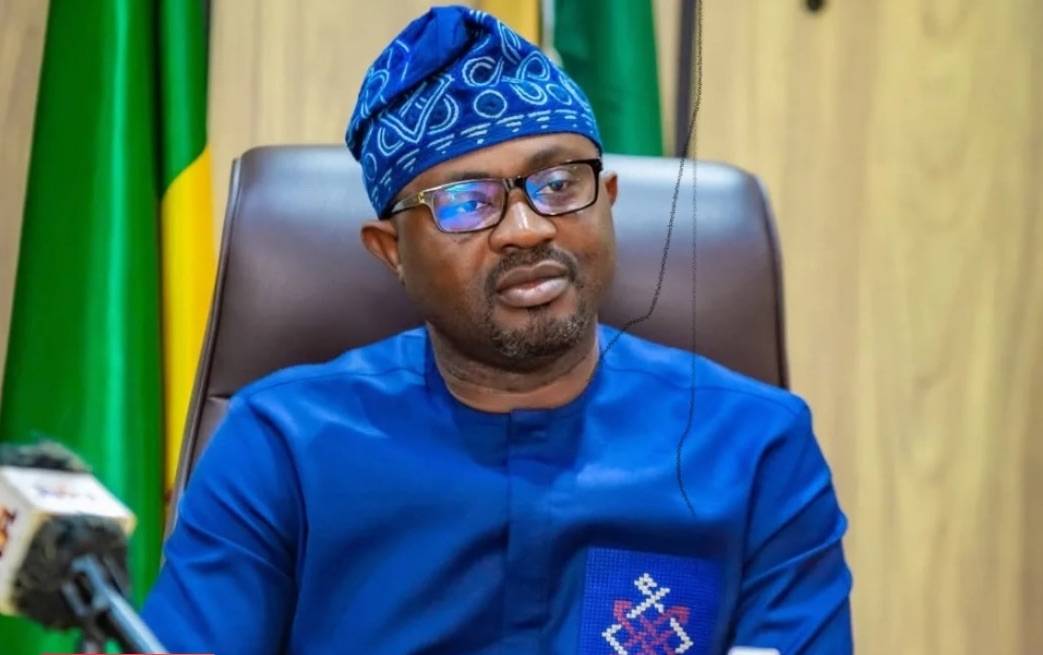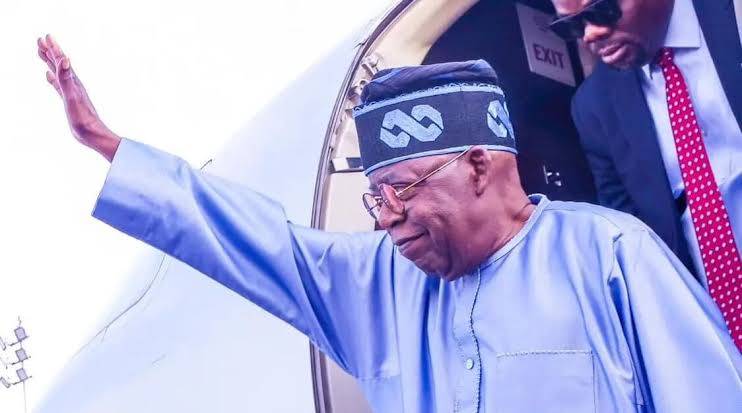



Mr Adedayo Oketola, is the Chief Press Secretary/ Media Adviser to the INEC Chairman, Prof Joash Amupitan and in this interview with Adeyemi Lahanmi, he discusses the last Ekiti Elections, the issues of political parties and challenges going forward as it prepares for the next general elections.
Q1: Congratulations on the successful conduct of the Ekiti Elections. What were the core successes achieved?
Thank you. Congratulations are indeed in order, not just for the Commission, but for the entire Nigerian electorate. The Ekiti State Governorship Election on June 20, 2026, marks the third major off-cycle election successfully delivered under the leadership of our Honourable Chairman, Professor Joash Amupitan, SAN. This follows the successful conduct of the Anambra State Governorship Election on Saturday, November 8, 2025, and the FCT Area Council Elections on Saturday, February 21, 2026. Alongside the Ekiti poll, we also successfully conducted six concurrent legislative bye-elections in Ondo, Nasarawa, Kano, Rivers, Kebbi, and Enugu on that very day. With 1,059,360 total registered voters and an impressive 1,028,929 Permanent Voter Cards (PVCs) collected, the Ekiti poll has been generally adjudged as highly peaceful, transparent, and credible.
Before Election Day, the Commission made a commitment to simultaneously activate all 2,445 Polling Units in Ekiti at exactly 8:30 a.m. The Chairman always says that your election is only as good as your logistics, which is why he aggressively overhauled the Commission’s logistics framework upon assuming office. That strategic review paid off beautifully in Ekiti. Thanks to the early morning deployment of men and materials, over 93 percent of the polling units opened and commenced accreditation strictly by 8:30 a.m. The BVAS devices performed optimally across the state, and the security agencies, under the Inter-agency Consultative Committee on Election Security (ICCES), provided the right environment that allowed voters to exercise their franchise without fear.
Q2: There were irregularities raised by some of the contestants from the PDP and the ADC based on intimidation, vote buying and transfer of PVC to non-indigenes of the state. What is your view?
Let me start with vote-buying. Vote-buying is a malignant contaminant in our electoral ecosystem, and the Commission condemns it in the strongest possible terms. However, we must constantly clarify that INEC’s statutory responsibility is to organise and conduct elections. Even though the law mandates INEC to prosecute electoral offenders such as vote traders, we do not have our own police, we rely on security agencies to make arrests and investigate, which makes it a herculean task because of the process involved. We will continue to rely on the security agencies to aggressively stamp out this menace, while we continue to engage and sensitise the public on the dangers of trading their votes. We also continually call on stakeholders including the media to join the Commission to tackle this menace.
On the allegations regarding the transfer of PVCs to non-indigenes, that is a completely baseless narrative and a calculated attempt to mislead the public. Under our current technological dispensation, a PVC is completely useless in the hands of an impostor. The Bimodal Voter Accreditation System (BVAS) acts as an uncompromised biometric gatekeeper using a strict verification process. The device must successfully match your fingerprint or scan your facial features against our database before a ballot paper can legally be handed to you. If the biometrics don’t match the specific identity embedded on that physical card, the BVAS locks out the bearer. You cannot bypass it, meaning proxy voting is an impossibility in modern Nigerian elections.
Q3: What is your view on primaries conducted after the INEC deadline?
The position of the Commission is firm, legally unyielding, and governed strictly by the Electoral Act. Deadlines contained in the official INEC Timetable and Schedule of Activities are not tentative suggestions, they are hard statutory boundaries.
Any political party that conducts its primaries outside the designated window is engaging in an exercise in futility. INEC will simply not accept or recognise candidates emanating from such exercises. We cannot adjust national timelines to accommodate internal party disorganisation. If a party fails to conduct valid, transparent primaries within the legal timeframe, they simply lock themselves out of the ballot. The rules apply equally to everyone.
Q4: What is the Electoral Commission doing regarding the issue of data breach raised recently, specifically the allegations that confidential information from INEC’s database leaked out to the public?
There was absolutely no external breach or hacking of the INEC database. What occurred was an isolated, unauthorised internal disclosure of confidential documents by a staff member. As part of our nationwide Continuous Voter Registration (CVR) exercise, the Commission grants restricted, controlled access to specific backend components to our Registration Officers so they can process new applicants, handle voter transfers, and update records. This access is strictly monitored and withdrawn the moment an exercise closes.
In the specific case being referenced on social media, which involves the personal data of a prominent actor, a staff member unlawfully pulled confidential documents and passed them to an aide of a sitting Minister.
INEC frowns heavily on any violation of data privacy. We took immediate administrative action: the staff member was promptly handed over to the security agency, while the minister’s aide was thoroughly grilled by the Police. Investigations are currently active and ongoing. We want to reassure the Nigerian public that voters’ biometric and personal data remain protected, secure, and entirely inaccessible to third-party political actors.
Q5: What are your thoughts about the apparent lack of internal democracy within the political parties?
The integrity of our broader electoral process is being heavily strained by the persistent, toxic leadership squabbles within various political parties. The very essence of a democracy relies on political parties behaving like mature, rule-bound institutions that respect fair play. Unfortunately, the current wave of internal infighting shows a severe collapse of internal democracy.
This internal chaos doesn’t just damage the parties involved; it spills over into a deluge of pre-election litigations that unnecessarily choke our judicial system and drain public resources. INEC routinely finds itself dragged into these internal court battles as a nominal party, which consumes our critical administrative time and distracts us from core logistical duties.
The success of the 2027 General Elections depends heavily not just on the Commission but also the political parties. They must understand that INEC cannot be blamed for the crises bedeviling them. Cohesive, transparent leadership is essential for the health of our democracy. We strongly urge party leaders to prioritise constructive internal dialogue over divisive court dramas, and to strictly adhere to the legal frameworks of the Electoral Act and their own party constitutions.
Q6: Let’s talk about the court orders affecting political parties and the role of INEC. How does the Commission handle being caught in the middle of these factions?
INEC remains a completely dispassionate, neutral umpire. We do not side with factions, nor do we take a vested interest in who wins a party’s internal ticket. Our constitutional mandate is simply to obey valid orders coming from courts of competent jurisdiction.
However, where necessary and appropriate, the Commission has stepped in to mediate administratively between warring factions—not to dictate terms, but to help them find a lawful middle ground and resolve disputes before they escalate into logistical nightmares for the country. We will continue to push political parties to internalise democratic principles and adopt robust alternative dispute resolution mechanisms rather than defaulting to destructive internal warfare.
Q7: There is a concern about politicians’ tendency to shop for favourable judges of coordinate jurisdiction. What is your view?
Yes, there are concerns over politicians going forum shopping, that is looking for favorable judges of coordinate jurisdiction across different states to get conflicting orders. Forum Shopping is a deeply retrogressive practice, a blatant abuse of the judicial process, and a direct threat to electoral stability. It creates a chaotic situation where the Commission is served contradictory court orders on the exact same matter from courts sitting in entirely different states.
It is highly condemnable. Thankfully, the leadership of the Nigerian Judiciary, through the National Judicial Council (NJC), has taken an aggressive stance against this practice by penalising errant judicial officers. For democracy to thrive, politicians must stop treating the courts like a supermarket where they can shop for custom-made injunctions to upend legitimate democratic processes.
Q8: There is an undercurrent of fear in some quarters that the upcoming general elections might not be credible. How do you soothe those anxieties?
Fear and anxiety are common in any high-stakes political cycle, but our response to fear will always be empirical performance. Look at our performance from Anambra in 2025 to the FCT and now Ekiti in 2026, the data shows steady, measurable improvement in poll opening times, technological stability, and result transmission transparency.
The 2027 General Elections will be credible because our technological frameworks, especially the BVAS and the INEC Result Viewing Portal (IReV), have been safeguarded against manipulation. We have eliminated the human vulnerabilities that used to define old Nigerian elections. Our systems guarantee that only the actual numbers stamped by the voters at the polling units will dictate the final outcome. The public should trade their fears for confidence; the Commission is fiercely committed to protecting the sanctity of every single ballot.
Q9: Finally, how prepared is INEC for the upcoming Osun State Governorship Election and the 2027 General Elections next year?
We are in a state of continuous, active readiness. The successes recorded in Ekiti have provided us with invaluable operational data that we will inject into our planning for the Osun State Governorship Election. Our logistics lines are fully awake, our staff are undergoing continuous specialised training, and our technological assets are constantly being audited and upgraded.
As for the 2027 General Elections next year, we are not waiting for election year to prepare; we are preparing every single day. Under Professor Amupitan’s leadership, INEC is completely focused, systematic, and structurally ready to deliver a general election that Nigerians can be genuinely proud of.