
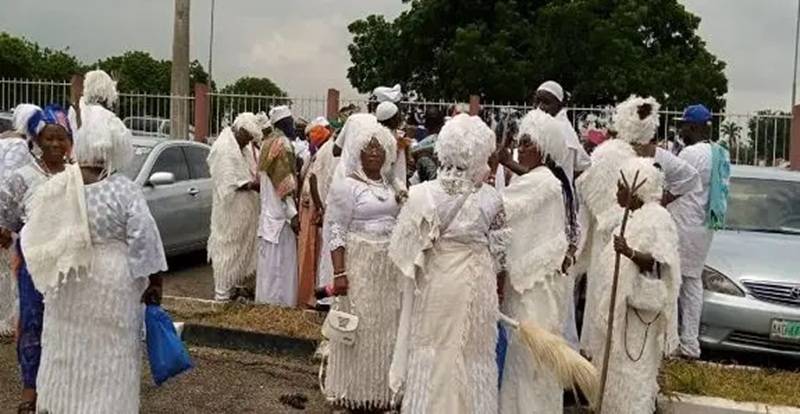

The Lagos State Government has declared Thursday, August 20, 2026, a work-free day to enable residents and visitors to participate in activities marking the 2026 Ìṣẹ̀ṣe Day celebration.
The Special Adviser to the Governor on Tourism, Arts and Culture, Idris Aregbe, announced the decision in a statement issued on Wednesday.
Aregbe said the declaration was intended to enable Lagos residents and visitors to participate fully in the celebration, which is expected to attract more than three million traditional worshippers.
He described Ìṣẹ̀ṣe Day as more than a public holiday, stressing its significance to Yoruba spirituality and cultural heritage.
“Ìṣẹ̀ṣe is not a relic. It is a living expression of our traditions and a celebration of Yoruba spirituality as an important part of Nigeria’s cultural and religious landscape,” he said.
According to Aregbe, the Yoruba people, estimated to number more than 55 million globally, have continued to preserve their cultural heritage and transmit it to younger generations.
He noted that the preservation of Yoruba traditions had also sustained Ìṣẹ̀ṣe festivals in countries such as Cuba, Brazil and parts of the Caribbean, where Yoruba descendants live.
“When the drums sound in Lagos on Thursday, they answer drums in Havana, in Salvador, in Port of Spain. Fifty-five million people and counting. Lagos is not observing a local holiday. Lagos is standing at the centre of a global heritage,” Aregbe said.
Ìṣẹ̀ṣe Day marks the culmination of a week-long programme of traditional activities and has been observed as a work-free day in Lagos since 2023, following a request by the Lagos State Council of Obas and Chiefs.
Governor Babajide Sanwo-Olu has maintained the practice annually as part of his administration’s commitment to indigenous values and religious inclusiveness under the THEMES+ Agenda.
Aregbe commended the governor for supporting the celebration and also paid tribute to traditional rulers and custodians of Yoruba culture for preserving the heritage.
“We thank His Excellency, Mr Babajide Olusola Sanwo-Olu. It takes real conviction for a leader to stand publicly with heritage, and he has done so without hesitation and without apology,” he said.
He also acknowledged the contributions of the Oba of Lagos, Oba Rilwan Akiolu I, traditional chiefs, Babaláwo, Ìyánífá, Olóòrìṣà and other custodians of Yoruba traditions.
“Governments come and go. Custodians carry the culture,” Aregbe said.
The 2026 celebration will feature prayers, rituals, processions, drumming and cultural displays dedicated to the Òrìṣà.
The activities will be coordinated by the Association of African Traditional Religion Nigeria and Overseas.
Aregbe urged participants to celebrate peacefully and respectfully, saying the event was intended to promote cultural pride and unity.
“Three million voices rising in honour of tradition is not noise. It is history, faith and cultural pride in harmony,” he said.
He added: “Whether you worship in a mosque, a church or a grove, Ìṣẹ̀ṣe Day belongs to you, because heritage has no denomination. Lagos remains the city where every heritage finds its place.”