

The nation is in a frenzy as the countdown to the 2027 general elections begins. Parties and their candidates have adopted multi-faceted electioneering strategies. The objective is clear: to market themselves and de-market their opponents.
To be clear, the most consequential contest will be the presidential poll scheduled for January 16. According to INEC’s timetable, the presidential and National Assembly elections will be held on January 16, 2027, while governorship polls follow on February 6. Its outcome will either sustain the status quo or change it.
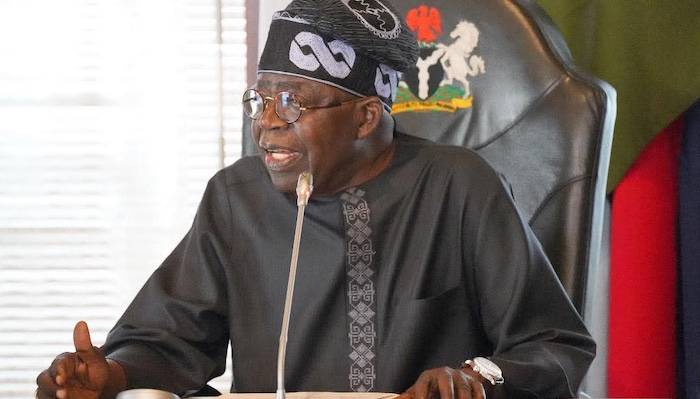
President Bola Tinubu and his All Progressives Congress political machine believe they have done well and deserve a renewed mandate to consolidate the Renewed Hope Agenda.
■It’s the economy, stupid!
The Tinubu camp argues that it has built resilience into the economy and achieved macro-economic stability in its first term.
But there is a fundamental disconnect between the macro-economic stability being touted and the lived economic condition of Nigerians. The administration inherited alarming poverty figures, with multi-dimensional poverty at 133 million under Buhari, and the hardship occasioned by subsidy removal and naira floatation has worsened household welfare.
Fuel subsidy removal has saved money for government, but given inherited infrastructure gaps, the savings have either been invested in wrongly prioritised areas or spread so thin that their impact is not felt. The administration needs to communicate its challenges and mitigation efforts in a language Nigerians understand.
That is why the intervention by former Central Bank Governor and Emir of Kano, Muhammadu Sanusi II, on November 3 at the Oxford Global Think Tank Leadership Conference convened by Arunma Oteh in Abuja, was significant.
Sanusi, known for frank economic analysis, was cautiously critical, yet helpful.
Hear him: “This government doesn’t express itself properly. It sees every suggestion and contribution it does not like as an attack, and it doesn’t have good spokespersons.”
One can imagine how the presidential communication team felt at that verdict. Even the performance last week at the Yar’Adua Centre in Abuja during the unveiling of the APC manifesto titled “From Reforms to Prosperity” – where the Minister of Solid Minerals, Dele Alake, acting as spokesperson of the Presidential Campaign Council, alongside Minister of Information Mohammed Idris and the Director-General of the Campaign Council, Senator Abdulaziz Yari, defended the administration – only begged the issue. The claim that the Tinubu administration is the most coherent in Fourth Republic reforms missed the point and proved Sanusi’s charge.
Debates would be needless if the disconnect between touted reforms and the lived experience of Nigerians had been intentionally addressed with measures to mitigate hardship at the micro level. It is micro-economic stability that speaks directly to the vast majority who struggle to feed, pay school fees and healthcare bills.
This is not the elephant in the room; it is the room. Government talks about building foreign reserves to $55 billion, unification of forex windows and floating of the naira. But these have not lifted living standards.
For the vast majority, it is the economy of personal wellbeing, stupid, that will shape the January 16 poll.
Will Sanusi’s admonition that Nigerians should look at the good side be taken?
His figures: GDP in Q2 2026 was 4.48% – official NBS figure is 4.43% – which, while not as high as under Yar’Adua/Jonathan, is progress compared to the average 0.9% growth under Buhari.
He said inflation had declined from about 30% at inauguration to 14.6% with projections of 12.5% by year-end, that GDP per capita in dollar terms had risen by 47% since 2023, and that reserves had hit about $55 billion.
“There are clearly foundations being laid for stability. It’s not the end, but the first step towards stability,” he said. “I’m not a fan of politicians, but we need to give credit to President Tinubu’s administration for bringing us back from the brink.”
That was as far as Sanusi could go. He skirted the poverty question at the micro level.
And that is the bomb that can blast electoral dreams into smithereens. The campaign line that government focused on macro stability in term one and will focus on micro stability in term two suffers a credibility deficit. Nigerians are not buying it.
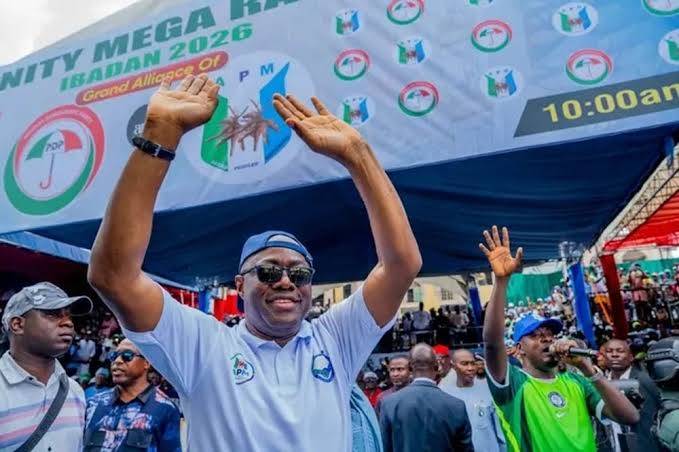
Perhaps that is why Governor Seyi Makinde of Oyo State, now confirmed as presidential candidate of the Allied Peoples Movement – details on the Independent National Electoral Commission candidate nomination portal indicate his candidacy and INEC’s published list records Makinde and Lawal Daura for the APM – declared that 2027 is a referendum on the Tinubu administration, not between Tinubu and the opposition, but between Tinubu and Nigerians.
■ So, President Tinubu’s convoy was pelted after all…
Last week, opposition handles posted a video claiming President Tinubu’s convoy was pelted with stones by hungry, angry youths at a mosque in Garki Area 1.
The President’s communication team pushed back with a counter-clip showing youths hailing Tinubu as he emerged through the open roof of his vehicle.
The rebuttal was effective until yesterday, Monday November 16, when the FCT Police Command confirmed the incident.
The Federal Capital Territory Police Command has said 78 suspects arrested over the attack on President Bola Tinubu’s motorcade in Abuja are to be freed after the President granted them clemency. The command disclosed this in a statement on Monday by its spokesperson, CSP Josephine Adeh.
The police said the attack occurred on Friday, November 13, shortly after Jumu’ah prayers at the Garki mosque, when individuals attacked the departing convoy with stones and dangerous objects.
You cannot sustain propaganda when your own police statement confirms the incident.
■ Tinubu loses presidential gravitas
What is obviously missing as electioneering momentum builds is discipline and presidential restraint. This is expected from the opposition. It is inexcusable from the incumbent.
A sitting President should steer clear of the maddening crowd. He should showcase his achievements and what he has in store post re-election, leaving pushback to aides.
The President should not waste precious time on side-swipes at Peter Obi or Atiku Abubakar from the soapbox. I refer to his outing in Anambra where he taunted Obi for not tackling gully erosion as governor and now wanting to be President; and his question about how Atiku got money to build a university. These were double-edged swords capable of collateral damage.
If I were Tinubu, I would remain dignified and avoid _argumentum ad hominem_, except I were desperate and unable to showcase my administration’s achievements.
■ Conclusion: The vote is personal
Sanusi has given Tinubu the best defence any non-partisan economist can give – the macro numbers are turning. But elections are not won on NBS spreadsheets.
In 2027, Nigerians will not vote GDP or reserves. They will vote their stomachs, their school fees, their hospital bills, and their sense of dignity. Until the government translates $55 billion reserves into a $2 bag of rice, reduced transport fares and stable power in the home, its achievements will remain a PowerPoint presentation.
That is the miscellany of the transition. And that is what will be on the ballot on January 16.
NOTE: Views expressed by contributors are strictly personal and not of Theliberationnews