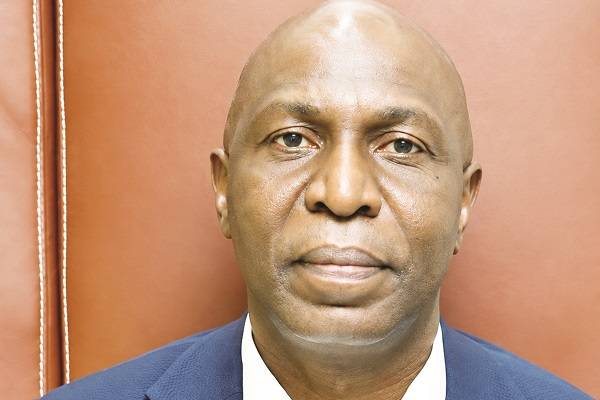


On Friday, November 13, 15 ambassadors stood in the Sefako Makgatho Presidential Guest House in Pretoria to present their letters of credence to President Cyril Ramaphosa, and the ceremony was livestreamed. Nigeria’s High Commissioner, Femi Fani-Kayode, said every envoy was introduced and heard except him. By his account, the feed dropped his introduction and address, then returned when he finished. The irony is almost too neat, because his address was a history lesson. Nigeria and South Africa, he told his hosts, are historic allies, and Nigeria “gave our blood and our treasure for you during your dark days.” Within hours of his public protest, the Presidency uploaded the full recording to its YouTube channel.
Then came the argument. Pretoria’s spokesman, Vincent Magwenya, said the SABC had streamed the ceremony, that the president does not intervene in the operations of public broadcasters, and that the Nigerian mission had misrepresented Mr Ramaphosa’s role. The SABC replied that it is a public service broadcaster, not a state one; that the Presidency’s livestream arrangements and its own editorial coverage are separate; and that Fani-Kayode declined an interview. Each institution points at the other, one speech went missing, and nobody owns the omission. That is how neglect looks when it has no author, and it is no defence. If it was design, it was an insult. If it was muddle, it was a muddle that, by his account, fell on one envoy in 15. His account is not independently confirmed, and I need not settle the motive to say that a state cannot let a slight pass as a technicality.
What followed on Tuesday is where the story turns. DIRCO’s Director-General, Zane Dangor, received the High Commissioner and delivered a demarche, a formal diplomatic representation, voicing concern about events after the ceremony and about his subsequent remarks on social media. According to reports of the statement, Dangor pointed to Article 41 of the Vienna Convention on Diplomatic Relations, which directs that a mission’s official business with the host state run through its foreign ministry. Minister Ronald Lamola has called the reprimand a closed matter, while saying Pretoria will keep watching.
Consider, then, what Pretoria has declined to say. In the account of the meeting that DIRCO has put out, there is concern about the High Commissioner’s remarks and a reminder about channels, but no evidence that his speech was heard and no explanation of why it was not. The Presidency’s spokesman has told us who did not cut the feed, and the SABC has told us who did not order it. Between them, they have produced a thorough account of non-responsibility and no account at all of the event itself. However, the full recording appeared on the Presidency’s own channel within hours of the protest, and a government certain of its position had less reason to hurry. Silence of this kind is itself a form of testimony. A state that disputes a charge usually says so, and one that quietly repairs the damage while reprimanding the man who named it has told us something about the merits that its statements will not.
Fani-Kayode says he raised the omission with Mr Ramaphosa in the photograph session and that the president told officials to attend to it; Pretoria has not confirmed this. But the order of events, protest first and publication after, stands on the record, and it is an awkward order for anyone who wants the matter filed as a misunderstanding.
So, the grievance was legitimate and, if the reports are accurate, the instrument was flawed, and the second fact does not cancel the first. The case for Fani-Kayode is that diplomacy among unequals is often settled by whoever will make a scene, and the scene produced the video. The case against him is that a diplomat accredited days earlier chose public protest over the ministry that exists to receive complaints.
The philosopher Charles Taylor put the principle in a sentence: “Due recognition is not just a courtesy we owe people.” He called it a vital human need and warned that its denial can wound, an idea that descends from Hegel, who held that a self exists only by being acknowledged by another. Nations share the need. Diplomacy is the formal discipline of recognition, and the credential, the seat, the speech and the broadcast are the grammar in which one state tells another that it is seen. Article 41 belongs to that class too, and a diplomat who bypasses it, however good his cause, weakens the claim he is making. Status is defended best by those seen to honour the rules that confer it.
Nigeria has earned recognition in Pretoria as few countries have. Africa has long been described as the centrepiece of Nigeria’s foreign policy, and the record supports it: Nigeria helped found the OAU in 1963 and ECOWAS in 1975. On apartheid, it did more than speak. In 1976, after Soweto, it created the Southern Africa Relief Fund, remembered as the “Mandela Tax”, and Olusegun Obasanjo confirmed in 2012 that civil servants gave part of their salaries to it. It brought South African students into Nigerian classrooms, and the Nigerian High Commission in Botswana issued passports to South Africans in flight, according to Ibrahim Gambari. Nigeria also chaired the United Nations Special Committee Against Apartheid, whose last chairman, Gambari, received Mandela in New York in June 1990. Mandela is quoted as saying Nigeria was “among the most generous donors” to the movement. The South African Institute of International Affairs has estimated Nigeria’s total contribution at about $61bn.
The thanks have been uneven. In June, gangs marched through South African towns demanding that people without residency papers leave by 30 June, and Nigeria began flying its citizens home. By 15 July, the government said 1,490 Nigerians had returned in seven flights. It was not the first time; in 2019 officials preferred the word criminality to xenophobia. The reprisal attacks on South African businesses in Nigeria that followed were wrong, and Nigerians should say so plainly. Even so, the country that once enrolled the children of Soweto now sends aircraft to bring its own citizens out of South Africa. Millions of South Africans share none of this hostility, and the complaint is against a state that too often receives such violence with a shrug.
The money tells the same story, and shows where Nigeria’s real leverage lies. In the half-year to June 2026, MTN Nigeria supplied 30.6 per cent of MTN Group’s service revenue and 35.5 per cent of its EBITDA, about R19.9 billion, ahead of Ghana at 24.5 per cent and South Africa at 15.2 per cent. Nigeria is the largest single contributor to the earnings of one of South Africa’s most celebrated companies, with some 92 million subscribers. Weight of that kind is exercised in ministries, boardrooms and quiet conversations with people who have reason to listen. It needs no hashtag, and it is wasted when spent on one.
Fani-Kayode comes to public argument by inheritance. His father, Remilekun Fani-Kayode, known as “Fani-Power” for the weight he carried in the old Western Region, was a nationalist lawyer who, in 1948, co-founded the first indigenous Nigerian law firm with F.R.A. Williams and Bode Thomas, and in 1993 spoke out against the annulment of the June 12 election. Whatever one makes of the politics of his day, and the Western Region of the 1960s invites argument, the habit he left his son is plain: the habit of making power to answer, in public, in words. The son has kept it in Pretoria, and the week has tested whether a habit that serves a lawyer serves a diplomat equally, whose trade rewards patience as much as speech.
In As You Like It, Shakespeare’s Amiens sings that the winter wind is “not so unkind as man’s ingratitude”. The wind at least has the excuse of nature, and a state has none. Gratitude between nations is a form of memory, and a government that forgets who paid for its freedom will in time mistake it for something it bought itself. Nigeria was right to want the record kept, and it is entitled to say so in Pretoria with a force proportionate to its history. How that force is applied matters nearly as much as the grievance, because a debt is collected best by a creditor whose own accounts are in order.
The conversation does not end here. You can continue it with me on X via @folorunso_adisa, LinkedIn: Folorunso Fatai Adisa, or on Facebook at Folorunso Fatai Adisa.