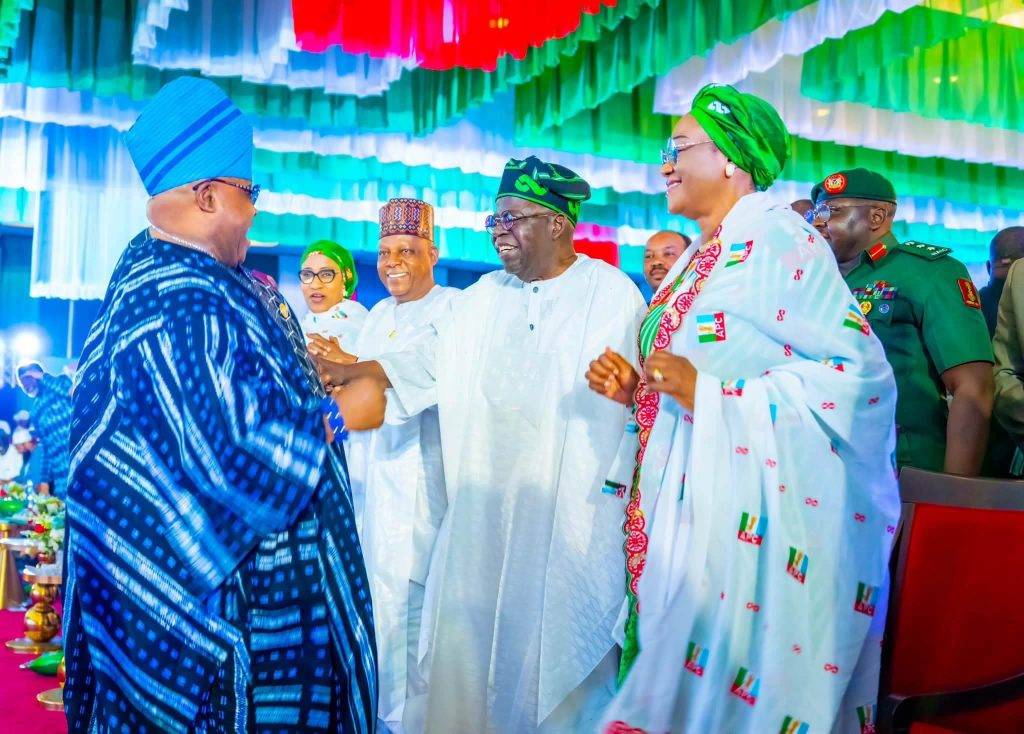


On July 28, nine representatives of Catholic bishops met with President Bola Tinubu on several national issues. Still locked in the grip of the Obasanjo-Atiku tiff, newspapers and the social media, however, struggled the next day to accommodate the Catholic Bishops’ Conference story, barely dignifying it with a few paragraphs. Yet the president and the bishops had a robust exchange, with the bishops appearing testy and trenchant, and the president insistent and vehement in his own defence. The poor coverage seemed a stunning conspiracy of silence.
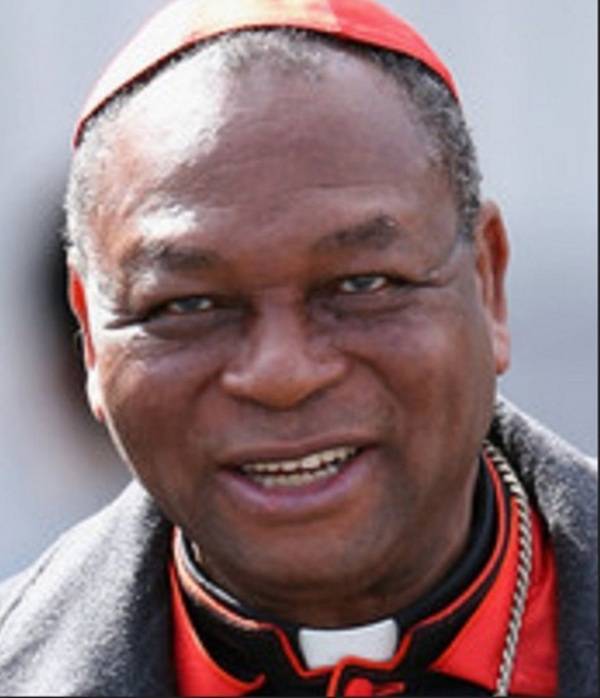
Whether by design or accident, John Cardinal Onaiyekan was on Arise Television on July 31 to amplify the bishops’ angst with far more candour and insinuations that raised eyebrows. He was not their spokesman, nor even their genial president, Matthew Ndagoso, but he hinted that his views were not dissimilar to the opinions the bishops traded with the president when they met him two Tuesdays ago. Politics
As soon as the cardinal gave the Arise TV interview, all hell seemed to have broken loose. Of the few prominent issues the bishops advocated, two stood out, one of which the cardinal perhaps unintentionally catalysed into a huge controversy. The bishops asserted that the nation was bleeding, while the cardinal read the face of the president and drew some parallels and conclusions. The president had in the meeting told the bishops that their conclusions on the ‘bleeding nation’ issue, especially the economy, was far-fetched and a disservice to the significant economic milestones achieved by the administration. He gave proof. But it seemed John Cardinal Onaiyekan was not too pleased with the president’s seemingly stiff responses. So, when the Arise Prime Time programme anchor asked him what he read on the president’s face regarding the issue of one-party state, the new singsong of the opposition, it was an opportunity for the cardinal to unburden himself.
The problem with unburdening himself, however, was that it somehow betrayed the cardinal’s cynicism as well as made many people question his political and ecclesiastical bona fides. Some commentators recalled his political preferences in 2023, his intemperate reaction to the defeat of his preferred candidate, Peter Obi of the Labour Party (LP), and his total aversion to the same-faith ticket tactically deployed by the All Progressives Congress (APC) to win the last presidential poll. It was, therefore, inevitable to draw parallels between his current and past political standing. Probably dissatisfied with how the president responded to the question of illiberal democracy and one-party state issue, the cardinal, on television, deployed phrenology to make his point as a mind and brain reader. The president had said: “Those who would take it (presidency) from me will try. They will try. All is fair in politics, and there is equal opportunity. I won’t offer them a red carpet. I won’t offer them the leash to tie me at home. No, we will wrestle each other to the finishing point. That’s the truth. That is fair in politics…INEC is neutral. They have never intimidated anybody. If political opponents are crying wolf, then they are afraid of their own shadows and the uncertainty in the company they keep.”
The bishops met a resolute president unwilling to be browbeaten, a politician and leader forged in the furnace of many political and electoral battles, a man who recognises when he is besieged and is eager to break the siege. Flowing from his television interview, the cardinal seemed perplexed by the president’s confident posture and defence of his programmes and achievements. But he couched his bewilderment in terms presidential aides found truly disconcerting, leading them to launch broadsides against what they described as his partisan views, and to decry his reading of the president’s countenance as inaccurate and pejorative. The cardinal had said of the president: “I was not surprised that he was not looking very happy nor even his colleagues who were there. We knew that this is different from the kind of statements that our president keeps receiving from all kinds of people. And that is one of the things that worries us, that there are so many people hanging around Mr President giving a rosy picture of what the country is, which it is not. We are worried about the fact that we see clearly that our government is bent on winning by all means. Unfortunately, they have a lot of means at their disposal to win. Even if we had a free and fair election, the votes of the people may not count.”
The problem with the cardinal’s generalisations is not whether he has the right, despite his cassock, to hold political opinions or support a candidate he likes; he does, as many commentators have pointed out. But deciphering the president’s mood from his countenance, especially declaring that the president had by some strange means communicated his desire to win the poll by any means, unfortunately opened the cardinal to allegations of bias and extremism. And by going much further to say votes might not count if a free poll was nevertheless achieved, an insinuation of electoral malpractice, the cardinal exposes both his dislike for the president and his barely hidden support for some other candidates, probably Mr Obi with whom he has been infatuated.
John Cardinal Onaiyekan should have excused himself from the July 28 meeting with the president, having previously supported Mr Obi in 2023 on religious grounds. Instead, a few days later, he went on air to incite the public over an election still some six months away. His critics have not disparaged him by calling him out; it was he that undermined the robes he wears and the office he occupies. Much worse, it shocked everyone to realise that the bishops went to meet the president without doing their homework on the Nigerian economy. The Conference of Bishops had no economic think tank to educate and advise them, leading to their occluded understanding of how a modern economy runs and their inability to properly contextualise what they described in hyperbole as a bleeding economy.
Apart from presidential aides and other freelance supporters of the president in the media, some of the cardinal’s less obvious critics have been Christians like him whom he claimed to be fighting for, and the poor whom he hopes to bring relief by his activism. They do not of course mind him channelling his efforts towards fighting the cause of Christians long discriminated against and even killed for their faith in some parts of the country, but they wonder how the cardinal hopes to achieve economic stability, religious parity and political tolerance through inuendoes and outright hostility toward the administration. They see a striking incongruousness between what he represents and the disturbing methods he has chosen as battle cry. If his speech could not be seasoned, and his characterisations are laced with cynicism and unkind and misplaced allusions and attributions, it will be hard to reconcile his robes with love, the central and sublime doctrine of Christianity. His forebears in the early church deployed love and prayer to win hostile kingdoms; the present generation of church leaders appear ready, in stark repudiation of their faith, to take up arms and use unedifying measures and speeches against their persecutors.
John Cardinal Onaiyekan is not being denounced for his political position or affiliations, though he seeks to reenact the atrocious crisis of 2023, or even for his views on the economy and the poor; he is being cautioned for bringing the facilities of the Middle Ages and the amenities of his cassock into the cause of purely secular matters that stand in contrast to his ecclesiastical confessions.
NOTE: Views expressed by contributors are strictly personal and not of Theliberationnews