

Democracy is not measured by how often the ruling party wins elections. It is measured by whether the people retain the freedom to choose who governs them-and whether that choice is respected, even when it produces an outcome inconvenient to those in power.
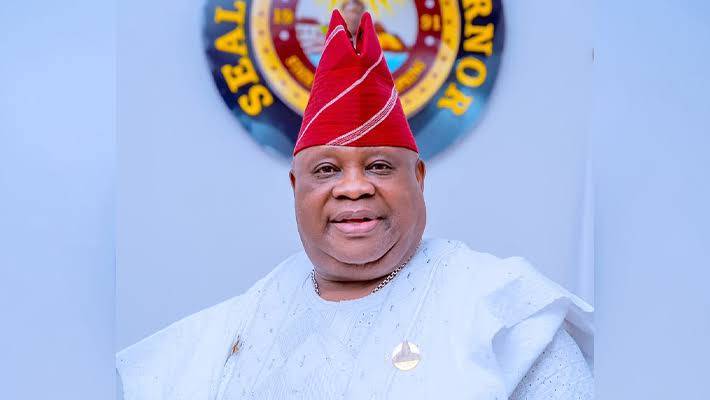
The re-election of Governor Ademola Adeleke in Osun State is therefore much bigger than the victory of one candidate, one political party or one state. It is a significant statement about the resilience of Nigeria’s democracy and, importantly, a powerful rebuttal to the increasingly fashionable narrative that Nigeria is drifting towards a one-party state.
Adeleke’s victory carries symbolism that extends far beyond Osun. It demonstrates that Nigeria’s political space remains competitive, that the electorate cannot be permanently taken for granted and that the ballot box retains its capacity to surprise even the most confident political strategists.
The Myth of the One-Party State
For months, political conversations have been dominated by the spectre of a possible one-party Nigeria. The movement of politicians across party lines, defections into the ruling APC and the emergence of new political alignments have understandably generated concerns about the health of opposition politics.
But Osun has provided a useful reality check.
If Nigeria were indeed inexorably marching towards a one-party state, an incumbent governor contesting under a platform outside the ruling party and securing re-election would hardly be the most compelling evidence of a vibrant opposition space.
Yet, the electorate had the final word.
This is the beauty of democracy. Parties may mobilise. Politicians may strategise. Governments may campaign. Influential individuals may deploy their networks. But at the end of the day, it is the voter who possesses the sovereign authority to determine who occupies elective office.
The Osun result has therefore punctured the exaggerated narrative that the APC’s growing political strength automatically translates into the capture of every electoral space.
It does not.
The ruling party can win elections-and lose elections. Opposition parties can be weak in one place and victorious in another. Political fortunes can rise and fall. That is precisely what competitive democracy is supposed to look like.
There Is No “Invincibility of the Ruling Party”
There is nothing in democracy called the “invincibility of the ruling party.” Absolutely nothing.
This is perhaps one of the most important lessons from the Osun election.
No ruling party, regardless of its structure, influence, resources, incumbency or political pedigree, possesses a permanent certificate of victory. Democracy is inherently uncertain because the people reserve the right to change their minds.
Political fortunes change. Circumstances change. Performances are assessed. Candidates change. Alliances change. And, ultimately, voters make their choices.
Absolutely nothing can be taken for granted in a democracy.
A ruling party may possess enormous political machinery and still lose an election. An opposition party may appear disadvantaged and still emerge victorious. The Osun experience is a timely reminder that electoral victory must always be earned afresh.
This should be a sobering lesson for every political party, including the APC. Political strength must never become political complacency. Every election must be approached as a new contest, every mandate must be fought for and every voter must be treated as a sovereign participant-not as a guaranteed supporter.
The suggestion of an inevitable one-party state was therefore always more political anxiety than democratic reality. If a ruling party can lose at the polls, then it is not invincible. And if an opposition party can still win, then the democratic space is certainly not closed.
The ultimate power in a democracy does not reside permanently with the ruling party.
It resides with the people.
A Vote Against Political Fatalism
There is another lesson here.
The Nigerian electorate should never be treated as politically predictable.
The same Osun electorate that gave different political parties varying levels of support in previous elections has now spoken in favour of an incumbent governor contesting outside the ruling party. That is not political inconsistency. It is democracy.
Voters do not necessarily transfer their allegiance wholesale from one election to another. They make choices based on candidates, personalities, performance, local considerations, party platforms, economic realities and a variety of other factors.
This is why politicians should never take the electorate for granted.
An election is not an inheritance. It is a fresh contract.
Tinubu and the Test of Democratic Credentials
Perhaps the most important symbolism of the Osun election concerns President Bola Ahmed Tinubu and the perennial debate about his commitment to democratic governance.
The President’s democratic credentials should not be judged merely by the elections won by his party. They should also be judged by how elections are conducted when the outcome does not favour his party.
That is where Osun becomes particularly instructive.
The fact that an opposition candidate can win a major governorship election in a state while the APC controls the Federal Government reinforces the argument that Nigeria’s democracy retains room for genuine political competition.
More importantly, President Tinubu’s reported acceptance of the outcome and his congratulatory gesture towards Governor Adeleke deserve recognition.
Democracy is not only about celebrating when your candidate wins. It is also about accepting the verdict of the people when your candidate loses.
That is where democratic credentials are truly tested.
If the Federal Government were determined to impose a predetermined outcome, Osun would have presented an opportunity to demonstrate such an inclination. Instead, the people have spoken and the result has been allowed to stand.
This gives considerable weight to the argument that President Tinubu’s commitment to democratic competition should be assessed on the basis of institutional outcomes rather than partisan assumptions.
The President Must Be Bigger Than His Party
A President is the leader of a political party, but he is also the President of the entire federation.
That distinction is fundamental.
The ultimate test of statesmanship is the ability to rise above narrow partisan calculations and protect institutions that serve everyone-including political opponents.
The Osun election provides an opportunity to reinforce that principle.
President Tinubu’s responsibility is not to guarantee APC victory everywhere. His responsibility is to guarantee an environment in which Nigerians can freely choose their leaders.
If APC wins, it should win because Nigerians voted for it.
If APC loses, the result should still be respected because the same Nigerians have spoken.
That is how democracy matures.
Adeleke’s Victory Is Also a Responsibility
Governor Adeleke should, however, understand that the symbolism of his victory comes with an equally significant responsibility.
The people of Osun have renewed his mandate. The time for campaigning is over.
The second term must now be about governance, development and delivery.
The governor must justify the confidence reposed in him by the electorate through measurable improvements in infrastructure, education, healthcare, security, job creation and economic opportunity.
An electoral victory is not the destination. It is permission to govern.
A Message for 2027
The Osun election may ultimately prove to be one of the most instructive political events on the road to 2027.
It tells the opposition that the political space remains open.
It tells the ruling party that power must never be confused with entitlement.
It tells politicians that voters cannot be permanently owned.
And, perhaps most importantly, it tells Nigerians that democracy remains capable of producing surprises.
The lesson from Osun is therefore not simply that Adeleke won.
The deeper lesson is that the ballot remains bigger than the party, the voter remains bigger than the politician, and democracy remains bigger than whoever happens to be in power.
The myth of an inevitable one-party state has suffered a significant blow.
And President Tinubu’s democratic credentials can, in turn, draw strength from the simple but profound reality that a candidate outside his ruling party has won a major governorship election-and that the outcome has been accepted.
That is not the death of democracy.
That is democracy at work.
Adeleke’s re-election is therefore more than an Osun story. It is a national democratic reminder: there is no such thing as the “invincibility of the ruling party.” Absolutely nothing can be taken for granted. In democracy, every election is a new contest, every mandate must be earned and the people always have the final word.
NOTE: Views expressed by contributors are strictly personal and not of Theliberationnews