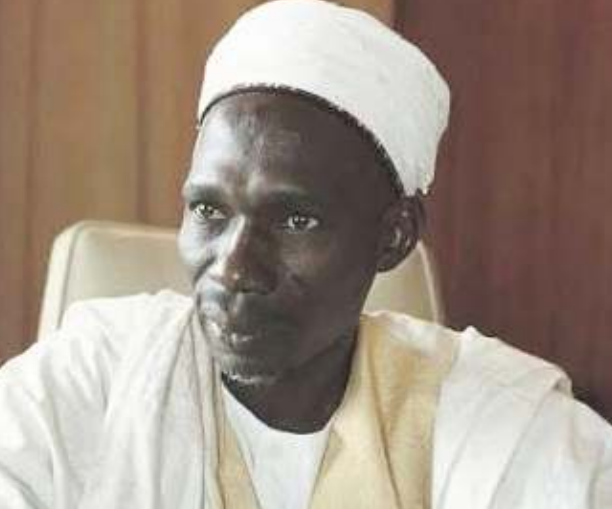

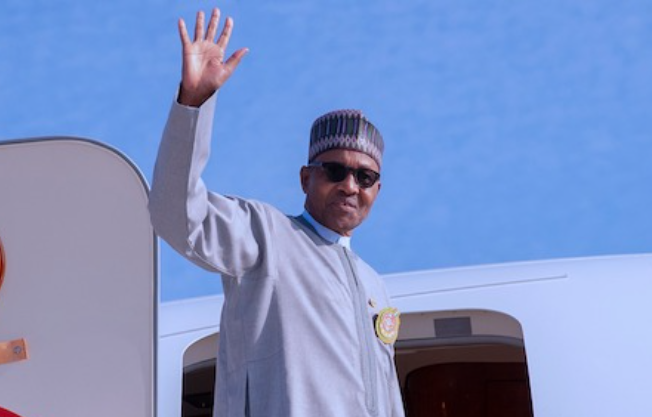

Late President Muhammadu Buhari was undisputedly elected into office in 2015 to stamp out corruption that had made governance a sort of bazaar under his immediate predecessor, President Goodluck Jonathan. He was expected to rewire the ethical configuration of his countrymen and women, and to deal the prevalent insecurity, a monstrous blow. His credentials stem principally from his previous incarnation as military head of state, when many swore that throughout his 20 months’ reign, he never smiled. He was considered a no-nonsense General, who would tame insecurity and corruption in government.
As military head of state, Buhari ensured that the 10 percenters of the Second Republic, presided over by late president, Shehu Shagari, were handed life jails for their gross malfeasance. There was even a failed attempt to put in a crate, Umaru Dikko in UK, arguably the most prominent Minister under President Shagari by hired agents for shipment to Nigeria to answer charges of corrupt enrichment. With his equally unsmiling deputy, Brigadier General Tunde Idiagbon, Nigerians learnt to stand on queues in public places and treat wastes as wastes, not petals of flowers thrown on footpaths.
Buhari’s mystique dates even further back, to when he was the General Officer Commanding, the 3rd Armoured Division, in Jos, Plateau State. He was reputed to have chased back Chadian forces, without first seeking and gaining approval of the Commander-in-Chief, President Shagari, in 1982. His inscrutability and intolerance for corruption, also goes deeper back to his era, as governor of the North-Eastern State (now comprising four states), and Federal Commissioner for Petroleum and Natural Resources, under General Murtala Muhammed and General Olusegun Obasanjo, respectively.
In a more recent era, under the dictatorship of General Sani Abacha, Buhari was considered as a goal-getter while he presided over the affairs of the Petroleum Trust Fund (PTF), which oversaw the rehabilitation of many infrastructural projects, especially in the northern part of the country. So, the marketing of candidate Buhari as a man after God’s heart to solve the burgeoning challenges under the regime of President Jonathan made a lot of sense, and while some didn’t buy into it, the majority did, and he defeated an incumbent president.
Those who did not buy into Buhari as a messiah argued that he was not the force behind the power as military head of state. Such arguments referred to Idiagbon as the muscle behind the throne and one fellow as the person who organized the PTF behemoth. But even as some of the references were debatable, the seeming lack of interest in material possessions by the General, appeared irreproachable, and so he was elected to kill corruption. After all, Buhari, had famously declared that if ‘we don’t kill corruption, corruption will kill us’.
But, some recent developments have rekindled the interest of this column in the legacy of the famous gap-tooted General. Two of the Generals most trusted men, indeed, two of those who may be appropriately described amongst the poster-boys of the era of President Buhari, had their assets forfeited to the federal government because of corruption. Last week, the Economic and Financial Crimes Commission (EFCC) announced that 48 properties linked to the former Attorney-General of the Federation and Minister of Justice, Abubakar Malami, (SAN), has been forfeited to the federal government.
The week before, the Supreme Court upturned the judgement of the Court of Appeal, and affirmed the judgment of Justice Deinde I. Dipeolu, of the Federal High Court, ordering the final forfeiture of seven high-valued assets linked to the former governor of Central Bank (CBN), Godwin Emefiele. Under the presidency of President Buhari, these two personalities were considered untouchables, whose influence, power and reach within the inner-circle of the government, were phenomenal. The two of them served full two-terms under Buhari; and Emefiele, was even touted as Buhari’s choice, as the presidential candidate of their party.
And now, the assets recovered from Abubakar Malami, SAN, are mindboggling. Among the forfeited assets are Rayhaan University in Kebbi State, including its permanent, temporary and third campuses, the vice chancellor’s residence, and Rayhaan Radio. Also forfeited are several luxury buildings and hotels in Abuja, Kano and Kebbi states, including Meethaq Hotels in Jabi and Maitama, Harmonia Hotels in Garki, commercial plazas, residential estates, warehouses, filling stations, and extensive parcels of land.
The Federal High Court also ordered the forfeiture of Rayhaan Agro Allied Factory in Kebbi State, including its buildings, machinery, staff quarters, mosque and plant units. Assets at Azbir Arena, including Azbir Hotel, Printing Press, Gallery, Gardens, Mosque, Azbir Clothing, and Azbir Pharmacy and Supermarket. Other assets forfeited include the Al-Afiya Energy tanker garage, Rayhaan Security House, an unfinished two-storey plaza in Birnin Kebbi, Amasdul Oil and Gas filling station structure, as well as Zeennoor Hotel, Zeennoor Mosque and the old Zeennoor Hotel building in Kano.
According to media reports, Justice Abdulmalik held that the EFCC had sufficiently established that the 48 properties were reasonably suspected to have been acquired with proceeds of unlawful activities and that the respondents failed to prove otherwise. The judge further held that respondents failed to discharge the evidential burden placed on them to establish the legitimate sources of the funds used to acquire the properties. The court concluded that the respondents merely claimed ownership of the assets without presenting evidence to show that the properties were purchased with funds from lawful sources.
On the part of the former CBN governor, Godwin Emefiele, in a judgment read by Justice Mohammed Idris, a five-member panel of the Supreme Court unanimously affirmed the judgment of Justice Deinde Dipeolu, who had on November 1, 2024, ordered the final forfeiture of the assets to the federal government after holding that they were reasonably suspected to be proceeds of unlawful activities. The assets forfeited include two fully detached duplexes at 17B Hakeem Odumosu Street, Lekki Phase 1, Lagos; an undeveloped parcel of land measuring 1,919.592 square metres on Oyinkan Abayomi Drive, Ikoyi; a bungalow at 65A Oyinkan Abayomi Drive, Ikoyi; and a four-bedroom duplex at 12A Probyn Road, Ikoyi.
Also forfeited are an industrial complex under construction on 22 plots of land in Agbor, Delta State; eight units of apartments on Adekunle Lawal Road, Ikoyi; and a duplex on a 2,217.87 square metre plot at 2A Bank Road, Ikoyi. The court further ordered the forfeiture of $2.045 million in cash and share certificates belonging to Queensdorf Global Fund Limited Trust, which was not contested by the defendant.
Clearly, the two gentlemen betrayed the Buhari mystique. If they are used as yardsticks to measure the sincerity of purpose of that era, it can be concluded that the claim of anti-corruption was a smokescreen used to deceive the electorate. But it may be fairer to conclude that they betrayed President Buhari, who signed into law, The Proceeds of Crime (Recovery and Management) Act, 2022 (POCA) in May, 2022 which established the framework for the seizure, confiscation, forfeiture, and management of assets believed to have been obtained through illegal activities; apparently curated under Minister Malami.
NOTE: Views expressed by contributors are strictly personal and not of Theliberationnews