
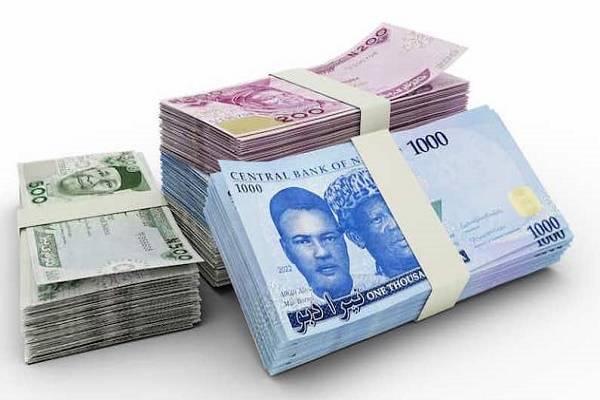

For decades, the central battleground of Nigerian economic policy has been the foreign exchange market. Whenever macroeconomic imbalances widen, a familiar orthodoxy emerges from global financial capitals and local technocrats alike: adjust the price of the currency, eliminate market distortions, and allow the exchange rate to find its equilibrium. The underlying assumption is as elegant as it is deeply flawed—that a properly aligned currency regime is the primary catalyst for international competitiveness.
Yet, this obsessive focus on monetary mechanics obscures a far more stubborn reality. An exchange rate is a mirror, not a magic wand. It reflects the underlying structural productivity of an economy; it cannot create it. For Nigerian firms, altering the exchange-rate regime is merely a paper fix for a deeply concrete crisis.
The limitations of this monetary-first approach are laid bare when examining the real economy, most notably in the critical intersection of the agricultural and manufacturing sectors. In textbook economic models, a depreciated currency acts as an automatic export subsidy, rendering local commodities cheaper and highly competitive on the global stage.
But economic theories do not account for the paralyzing tax of systemic insecurity. Across the Middle Belt and major northern farming axes — the country’s primary food baskets — armed banditry, kidnapping for ransom, and agrarian terrorism have fundamentally severed domestic supply chains.
When farmers cannot access their lands out of fear for their survival, aggregate supply collapses, triggering structural food scarcity. No degree of exchange-rate depreciation can plant crops in abandoned fields, nor can a unified forex window substitute for basic territorial security.
The result is a grim paradox. While general headline inflation managed to ease marginally to 15.39% in August 2026, food inflation remains stubbornly high, trending near 19.57%. Local supply constraints have rendered the price of domestic agricultural output completely inelastic to currency adjustments.
A matching pathology cripples the manufacturing sector. Standard macroeconomic doctrine promises that currency devaluation will trigger import substitution, forcing domestic industries to thrive as foreign alternatives become prohibitively expensive.
In practice, however, Nigerian manufacturers are caught in an aggressive cost-price squeeze. The sector remains profoundly reliant on imported machinery, specialised tooling, and intermediate industrial inputs. When the naira falls, it does not magically spark industrial ingenuity; it instantly inflates the cost of raw materials.
This balance-sheet shock is magnified by severe, cross-cutting infrastructure deficits. Every sector, from tech startups in Yaba to heavy industries in Agbara, absorbs the immense financial friction of operating off an epileptic national grid. The exorbitant cost of running heavy industrial generators on fossil fuels bleeds corporate cash reserves before goods even leave the factory floor.
Once produced, these goods must navigate a broken transport infrastructure, suffering from highly congested port logistics and collapsing freight corridors. When firms approach the banking sector to absorb these shocks, they confront a punitive cost of capital.
The CBN’s aggressive 350-basis-point cut to the Monetary Policy Rate (MPR) — bringing it down to 23% in September 2026 — signals a welcome shift towards supporting growth. However, real-world commercial lending rates still lag far behind. With actual bank loans still locked at extortionate premiums, long-cycle industrial investment remains functionally impossible for most formal enterprises.
Ultimately, intractable insecurity and poor basic infrastructure create a hostile environment where no macroeconomic policy can thrive. Under these conditions, treating the exchange rate as a structural panacea is an exercise in fiscal illusion.
When an entire economy is burdened by systemic logistical friction, supply-chain bottlenecks, widespread insecurity, and an expensive cost of capital, currency adjustments do not stimulate export booms. Instead, they merely accelerate input-cost inflation, compressing profit margins, and driving out formal enterprise.
Nigeria cannot devalue its way to prosperity. Monetary stabilisation is a necessary operational baseline, but it is entirely distinct from a comprehensive, supply-side industrial and security strategy.
To bridge these deep structural gaps, policymakers must pivot towards an aggressive infrastructure-first deployment model, heavily backed by Public-Private Partnerships (PPPs). Traditional public procurement can no longer absorb the capital demands of modernising the state’s foundations. By utilising robust Build-Operate-Transfer (BOT) arrangements, the federal and state governments can unlock private-sector capital and technical efficiency to overhaul critical trade routes, scale regional off-grid solar infrastructure, and clear port congestion.
Private developers can absorb capital-intensive construction and operational risks in exchange for predictable, long-term regulatory frameworks.
If policymakers intend to make Nigerian enterprise globally competitive, their attention must shift from the CBN’s trading screens to the material realities of the physical economy. The state must prioritise these targeted, co-funded structural interventions while securing rural farming corridors and providing concessionary credit avenues for domestic producers.
Until the foundational impediments holding back the economy are cleared away, adjusting the exchange-rate architecture is merely changing the units of measurement on a broken scale. A country cannot trade its currency for a functioning state.