

If opinion polls in the United States are anything to go by, the Republicans are in for what former President Barack Obama famously described as a ‘shellacking’ after his party’s below par outing at the November 2010 midterm elections during his first term in office.
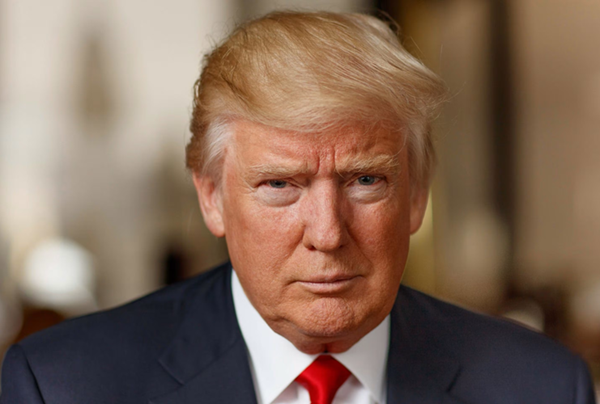
President Donald Trump’s poll ratings are widely reported to be at historically low levels.
Matters have not been helped by what is turning out to be a protracted war against Iran, the negative implications for global oil prices and the refractions into the American economy with millions of citizens affected by biting inflationary spirals.
Many economic experts also believe that Trump’s wide tariffs against multiple countries across the world have also hurt the American economy and compounded surging living costs – the much talked about affordability crisis. There are thus those who argue that the midterm elections will be largely about the economy with various opinion polls indicating considerable discontent with President Trump’s handling of this critical aspect of their lives with devastating existential consequences.
According to one of the latest polls from PBS News, NPR and Marist, “More than half of registered voters – 53% – say they would vote for Democratic candidates if the election were today, while 41% prefer Republicans. Independents, who often decide competitive races, favour Democrats by a margin of 25 points. Driving this sentiment is a President who isn’t on the ballot but has asked voters to pretend he is. About 7 in 10 voters acknowledge the president is a factor, one way or another, in their vote for Congress. Just 30% say Trump isn’t a factor in their vote.”
Even the pro- Republicans Fox News submits that “With six weeks to go until Election Day and early voting already underway in a handful of states, the conventional wisdom is that Republicans may be in for some setbacks in the midterms. As it defends its fragile House and Senate majorities, the GOP is fighting political history, which has traditionally seen the president’s party lose congressional seats during the midterms. It’s also battling high costs at the grocery stores and gas pumps tied to what polls show is an unpopular war with Iran, as well as President Donald Trump’s underwater approval ratings”.
Although this writer is exceedingly ideologically at odds with Trump, one must be circumspect and restrained in being enthusiastic about speculated substantial upending of the Republicans in both the Senate and House of Representatives. Trump himself has told his MAGA base several times that if his party loses control of Congress, the Democrats would not hesitate to impeach him. This blunt truth will no doubt energize his fierce supporters to turn out in sufficient numbers to ensure that the Republicans retain, at the very least, their fragile majorities in both houses.
It is difficult for any self- respecting citizen of the world to be reconciled or be at peace with the resurgence of what can only be described as an unrestrained American imperialism across the world under Trump. What can you say about the abrupt and arbitrary plucking of the Venezuelan President, Nicolas Maduro, from his country and his incarceration in an American cell while awaiting trial? Meanwhile, there has been no effort to return Venezuela to democratic governance if Maduro ‘s failing was his dictatorial rule. To make matters worse, the Americans are fully in control of Venezuela’s oil industry and that all powerful superpower determines how Venezuela’s oil revenues are expended.
Or what do we make of President Trump’s undisguised threats against Cuba and his administration’s active and unrelenting efforts to sabotage that country, undermine her economy and violate her security and stability? The American ‘strong man’ has not hidden his intention to achieve regime change in a Cuba that has, for the better part of her independence, been a force for good fighting valiantly for justice in far flung parts of Africa as well as a shining example of what genuinely humane, people-centred governance can be in a progressive society administered for the greatest good of the greatest number of citizens.
But it would be a gross error to assume that a not insubstantial number of Americans are not proud and gung ho about how Trump is throwing about their country’s weight, flaunting her undoubted contemporary military invincibility in the face of friends and foes alike. To those who reason this way, Trump is doing nothing but actualizing his promise to ‘Make America Great Again’.
For them, the warning over five decades ago of the eminent American Congressman and statesman, Senator William Fulbright, that his country should beware of the ensnaring ‘arrogance of power’ is undue sentimentality. But America’s ongoing experience at the hands of an Iran that remains resilient and recalcitrant, despite undergoing punishing pummelling at the hands of its almost infinitely powerful adversary, must be a lesson to the Americans that wisdom and tact are as needful as ruthless might to retain its pivotal place and be a force for good in the world.
It is all too tempting to think, dream and desire a massive humbling of Trump and the Republicans in the midterm elections at least to help rescue humanity from the current regression to an anarchical world in which might is right and there is no standard measure of right or wrong, good or bad. True, at the best of times, morality has had little place in international politics. After all, I think it was Winston Churchill who once quipped that in international diplomacy, the truth must often be protected by a bodyguard of lies. But it is still at least better for humanity to have a dominantly powerful superpower that plays even fleeting homage to basic and indispensable moral commitments.
But is electoral doom awaiting the Republicans in the midterms? It is not all that certain despite the opinion polls. Let us not forget that Trump won elections in 2016 and 2024 despite approval ratings that emphatically did not favour him. Some have theorized that this reflected either a considerable media bias or that significant numbers of those polled hid their real thoughts and intentions from the pollsters. There are limits to the reliability of opinion polls.
Even then, the Republicans are not lying down complacently to be rolled over and cast aside by the Democrats in the midterms. Thus, they have unusually and unorthodoxly held a midterm national convention to galvanize their base and rouse voter enthusiasm. During that convention, Trump boldly and audaciously announced that he would authorize the payment of $5,000 dollars to all American adults if the Republicans win the midterm elections. Some have queried where the money will come from and pondered the implications for a deficit perceived as spiralling out of control.
Others have queried the morality of the proposition contending that it is an undisguised attempt to bribe voters. This may be another example that all is, in the final analysis, fair in politics. It will be foolhardy to discount the impact of Trump’s financial promise on voting patterns across constituencies. It is believed in some quarters that the severity and unprecedented extent of the Trump administration’s anti-immigration policies will work against the Republicans. Some of the polls indicate that many are unhappy with the tactics and methods of the Immigration and Customs Enforcement (ICE) particularly the death of American citizens in the process of raiding and clamping down on suspected illegal immigrants.
But can a substantial portion of Trump’s essentially white support base be expected to vote against the Republicans on the basis of the administration’s anti-immigration policies? I don’t think so. Indeed, this may galvanize more support for the administration as a not insignificant number of Americans blame immigrants erroneously for what they fail to see is a far more deep-seated crisis of contemporary capitalism. It is instructive that anti-immigration sentiments are running rampant across western capitalist societies. These will become more severe as capitalist crises deepen across the globe and mainstream political parties strive in vain for solutions.
Perhaps the most important development in the US in the run up to the midterm elections is what some have described as the rise of the ‘Democratic Socialists of America’ in the politics of that country. “Following the success in November of New York Mayor Zohran Mamdani, a political newcomer who identifies as a democratic socialist”, one publication wrote, “voters in June backed a slate of democratic socialists or candidates endorsed by the Democratic Socialists of America (DSA) in congressional primaries there… Democratic socialism is a diffuse political ideology that advocates for more public control over the economy and a more expansive role for government in providing social services”.
Many analysts contend that the deepening bifurcation between the establishment or moderate Democrats and the rising ‘democratic socialists’ will mostly divide and weaken the Democrats to the advantage of the Republicans in the midterms.
This is not impossible. But what is critical is that, as the crises of capitalism deepen in the US, an increasing number of people unapologetically identify as socialists. As the midterm elections approach, it is obvious that the Trump administration’s policies are not effectively addressing the capitalist crisis but neither do the Democrats offer any viable alternatives. Victory for either side is unlikely to offer a way out of what Professor of philosophy, John McMurty, describes as ‘The cancer stage of capitalism’.