

Some friendships begin in the ordinary moments of life but endure for decades, becoming cherished parts of our personal histories. Some encounters seem routine when they happen but acquire extraordinary significance with the passage of time. And sometimes, life grants us one final meeting without telling us that it is a farewell.
For me, that was my last dance with Corps Marshal Dauda Biu.
I first met Dauda in 1988, when he was the Zonal Accountant of the Federal Road Safety Corps (FRSC) in Kaduna, while I was in charge of Public Enlightenment and Research in the then Benin Zone. Dotun Onifade was also in Kaduna, overseeing Operations. We were young officers then, full of energy, ambition and enthusiasm for the work of building a young institution. A national programme brought many of us from the Corps’ five zones to Kaduna, and we seized the opportunity to explore the city. With Dauda Biu as our self-appointed Commander-in-Chief, we set out to enjoy the town. Dauda and Dotun proved to be wonderful hosts, and we thoroughly enjoyed those few days. We laughed, bonded and forged a friendship that endured until Dauda answered the call of his Creator last Sunday.
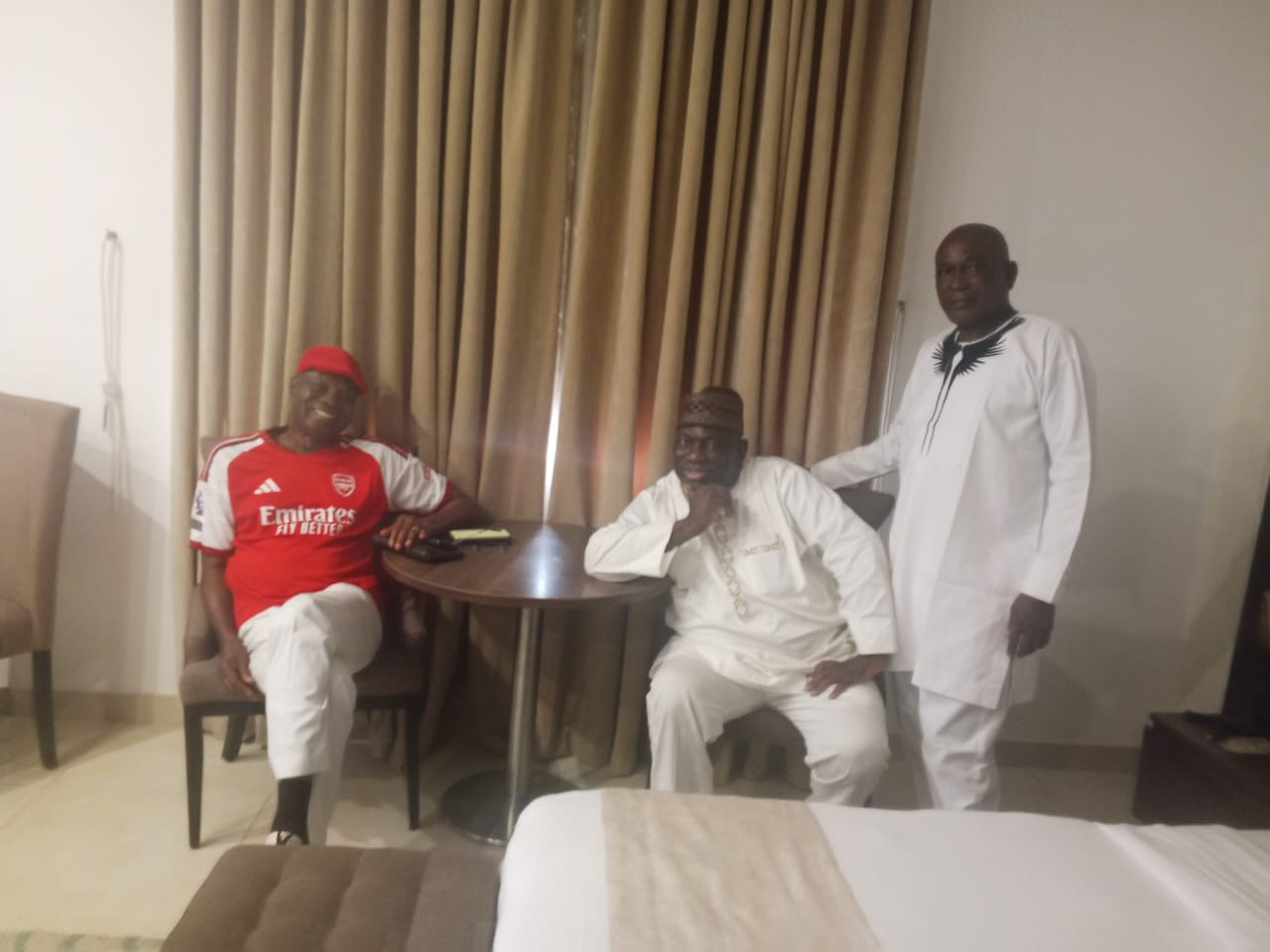
Nearly four decades later, the memories of that Kaduna encounter came rushing back when Dauda visited Osun State in mid-August this year. This time, Yomi Asaniyan had taken the place of Dotun Onifade in our gathering. We met, reminisced and enjoyed one another’s company, just as we had done years earlier in Kaduna. Little did I know that our reunion in Osogbo would become my last dance with Dauda Biu. What was then a joyful meeting has now become a treasured farewell, its significance deepened by the painful realisation that we would not have another opportunity to sit together, exchange memories and share laughter.
Dauda was a straightforward man. With him, no meant no, and yes meant yes. When he told you, “Walahi, it is not possible,” there was little point wasting your time. But when he said, “I will do it,” you could rest assured that he meant business. His word carried weight, and he was rarely one to leave you guessing. For years, he served as the financial nerve centre of the FRSC, earning, in my estimation, the unofficial title of the Corps’ Chancellor of the Exchequer. He understood the importance of funding, timely releases and the financial decisions required to keep projects moving and institutional responsibilities on course.
When Dauda became Corps Marshal, one of his earliest gestures towards me was to clear all my outstanding bills without my having to prompt him. He extended similar consideration to many other officers and marshals of the Corps. His approach to staff welfare, including promotion incentives and other welfare initiatives, earned him considerable goodwill among personnel. He also sought to correct what he regarded as mistakes of the past. Dauda was not without his imperfections, as none of us is, but he believed in taking decisions and getting things done. He was courageous, strong-willed and determined to move the Corps forward. These qualities, alongside his personal generosity, made him a memorable figure to many who worked with him.
I recall vividly the day I was decorated as a Deputy Corps Marshal. As I turned to salute him, he smiled and said, “You know you are our General in whom we are always pleased and proud of, walahi.” We both smiled, and he gave me a firm, vigorous handshake. That moment revealed the warmth beneath his tough exterior and his capacity to recognise and appreciate those who had contributed to the growth of the Corps. It was a brief exchange, but one that has remained with me. Sometimes, it is these seemingly little moments that become the most enduring memories of a person.
My relationship with Dauda did not end with my retirement. On one occasion, he called me and asked, “Figaro, where are you? Can you see me tomorrow?” I told him I was out of town but would return in two days and see him as soon as I arrived in Abuja. I did not need to ask why he wanted to see me. I had always been comfortable with Dauda, there was no apprehension or unnecessary formality between us. As we say in our familiar Nigerian parlance, no shaking. I returned as promised and headed straight to his office.
He told me he had two things to offer me. First, he offered me a business opportunity to help me keep body and soul together after retirement. He extended the same gesture to another retired senior officer. It was a thoughtful act that reflected his concern for the welfare of colleagues, even after they had left active service. But the second offer was, in his estimation, even more important. He wanted me to serve as a consultant to help manage the Corps’ data and revive the National Crash Reporting Information System (NACRIS).
For me, this was more than a professional assignment. It was an invitation to return to an important national initiative with which I had been closely associated. NACRIS was a World Bank-sponsored programme initiated under Corps Marshal Osita Chidoka, which I coordinated while serving as Head of the Policy, Research and Statistics (PRS) Department of the FRSC. Its purpose was to harmonise road-crash data across Nigeria. At the time, relevant data were scattered across separate institutional silos, with the Police, FRSC, hospitals and state agencies maintaining different records and datasets. The country needed a dependable system that could bring these records together, improve the integrity of the information available and provide a stronger basis for road-safety policy and decision-making.
We set out to address that challenge with a firm commitment to producing reliable, harmonised data. With World Bank support, an expert was engaged to work with me in Nigeria for approximately one year. We held a series of engagements with stakeholders, developed data formats and agreed on processes for collection and harmonisation, using technology to support the system. The objective was to move Nigeria towards a credible national repository of road-crash information that could help policymakers and relevant agencies better understand the scale and patterns of road crashes and develop evidence-based interventions to save lives.
You can therefore imagine my excitement when Corps Marshal Biu called on me to help resuscitate the initiative. It was an opportunity to revisit work that had occupied a significant part of my career and contribute once again to a cause of national importance. We agreed to meet again the following day to discuss the proposal further. We parted with the expectation of another conversation, another meeting and an opportunity to move the assignment forward. Neither of us knew that it would be his last day in office.
Following his assumption of office, his successor, Corps Marshal Shehu Mohammed, reached out to me and assured me that my contributions would continue to be needed and that the scope of the proposed engagement could even expand. I appreciate his gesture and acknowledge his work on the assignments. But this tribute is not about succession, institutional continuity or the future of a consultancy. It is about Dauda Biu: the friend I met in Kaduna in 1988, the leader whose word I trusted, and the man who remembered me after retirement and sought to put my experience to further use in the service of the Corps and the country.
Dauda Biu, you played your part.
You gave your best. You cultivated friendships, stood by people and touched lives in ways that will not be forgotten. You were courageous, decisive and strong. You had your imperfections, as we all do, but you also possessed qualities that made you special to those who knew you. You understood the value of friendship, the importance of keeping your word and the responsibility that comes with leadership.
Perhaps it was fitting that we met in Osogbo in August, sharing memories and laughter as we had done in Kaduna so many years before. Perhaps that reunion, in ways neither of us could have anticipated, would become the final scene in a friendship spanning nearly four decades. I wish I had known it was our last dance. I would have held on to every moment a little longer, listened more closely to every word and treasured even more deeply the privilege of that final encounter.
But life does not always announce its farewells. Sometimes, it leaves us with a handshake, a smile, a familiar expression and the promise of another meeting that never comes. Only afterwards do we realise that an ordinary moment has become an extraordinary memory.
So, Dauda, I will hold on to the memories, our youthful adventures in Kaduna, our reunion in Osogbo, your unmistakable “Walahi,” your firm handshake, your generosity and your determination to get things done. These are the enduring imprints of a life that death cannot erase from the hearts of those who knew you.
As you return to your Creator, my prayer is that the Almighty God will forgive your shortcomings, have mercy upon your soul and grant you eternal rest. May He comfort your family, friends, colleagues and all those whose lives you touched. May the good you did continue to speak for you, and may the institutions and people you served preserve the worthy parts of your legacy.
Sleep on, my friend. Sleep on, Dauda Biu.
Walahi, we will miss you.
Adieu, Corps Marshal. Adieu, my friend.
Until the final roll call, may your memory endure, and may our last dance in Osogbo remain forever etched in our hearts.