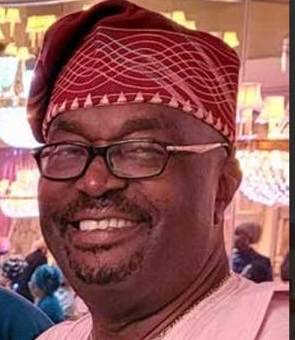

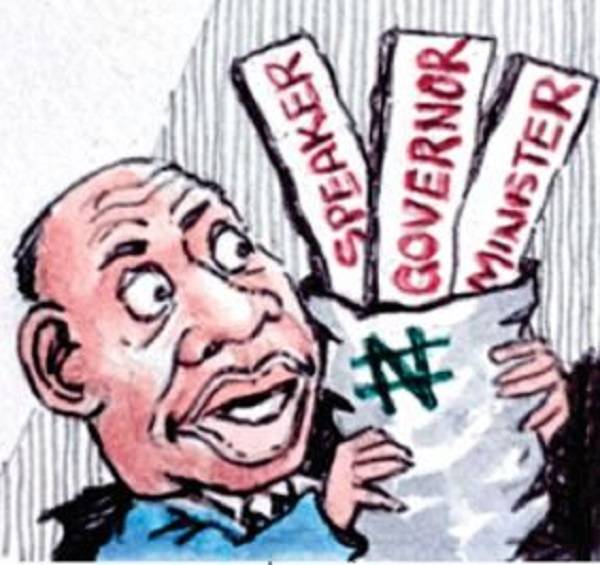

For eight years, Rotimi Amaechi was Speaker of the Rivers State House of Assembly. For another eight years and hot on the heels of his speakership, he was governor. And for yet another eight years, he was Minister of Transportation.
Twenty-four consecutive years of being in the limelight and on public payroll, not to say of having millions of his compatriots grovel before him, have created in him a sense of entitlement and an infernal distaste for being in the background and in the shadows. He has been unable to adjust to the near anonymity of being out of the public glare. Every word he has spoken since he left office has consequently been full of venom, and every year his return to office, any kind of public office, seems increasingly unlikely, he has become a bitter and vengeful politician capable of insane gambits. He needs professional counselling, but he is too proud to ask for one.
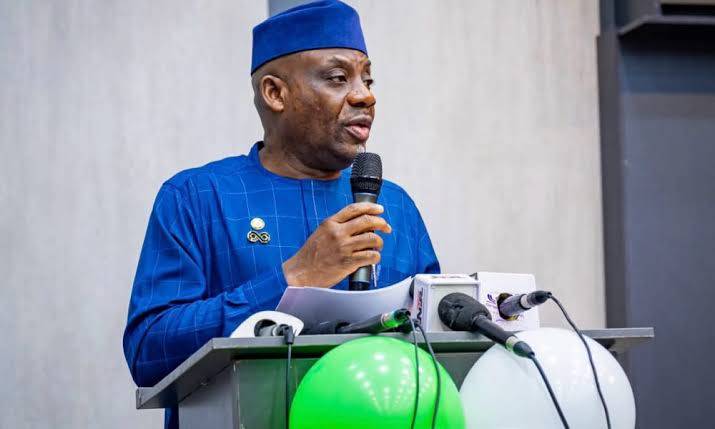
During his party’s town hall meeting in Edo on October 8, he was at his vitriolic worst. Incensed by the general campaign rhetoric and posters proclaiming President Bola Tinubu’s electability, Mr Amaechi stormed into the hall and gave such a verbal eruption that stunned his audience into silence. There were no chuckles or gasps in the audience; they were just transfixed by the impaling they had just suffered by the tongue of the former Rivers governor.
Fortunately, the media were on hand to give a faithful account of his eruption. Said Mr Amaechi: “They are going about saying ‘Vote Tinubu! Vote Tinubu!’ Only thieves can vote for Tinubu. In fact, I read a comment on social media where someone said, ‘It’s in 2027 that we will know how many mad men we have in Nigeria. Because it’s only a mad people that can vote for Tinubu. If Edo people vote for President Tinubu, that means Edo people are mad. If you’re not mad, Tinubu should not win here.” Mr Amaechi has never been able to bridle his tongue. It will destroy him one day. His years in office inoculated him against such rabid effusions; but since he left, and unable to put himself to humble public service of a different kind, he has gallivanted around the country with a monkey on his shoulder, vilifying anyone who crosses his path.
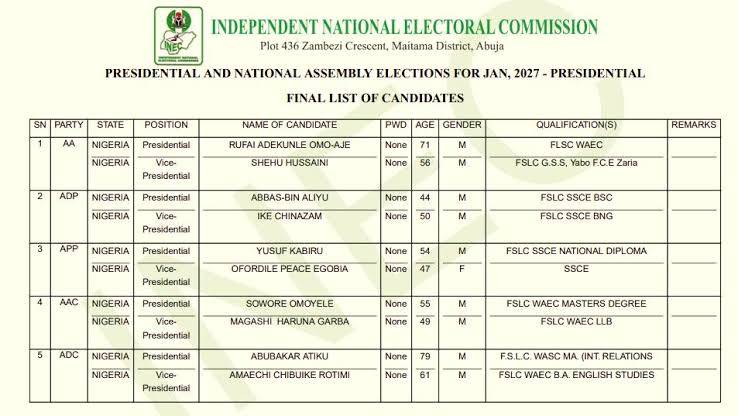
Since Mr Amaechi lost the June 2022 presidential primary by a dizzying 316 votes to the president’s 1,271 votes, he has found it difficult to align himself to both the ruling All Progressives Congress (APC) and President Tinubu whom Senator Ali Ndume accused of abandoning the former governor. Having endured four stifling years in the cold, Mr Amaechi eventually left the APC, and is today running mate to former vice president Atiku Abubakar. He had previously spoken considerably ill of Alhaji Atiku as he has verbally disembowelled President Tinubu. He never weighs his words. In fact, there is no major politician in Nigeria he has not lampooned, including Alhaji Atiku whom he previously described as unelectable, and the late President Muhammadu Buhari whom he derided for his inattentiveness and docility. He has in short become a verbal terrorist. His typification of Edo as a mad state should they vote for President Tinubu in 2027 accords with his character of verbally terrorising his opponents. He sees himself as impeccable, distinguished, imperial, and matchless. His opponents, he believes, can’t hold a candle to him.
More worrisomely, just like Alhaji Atiku sexes up his controversial profile, Mr Amaechi thinks he is also an intellectual who has all the answers to every puzzle. But throughout his 24 years reign as Speaker, governor, and minister, the former Rivers governor said and did nothing extraordinary, at least nothing worth anyone remarking. Generally shallow and pedantic, and despite having months to think through his party’s position on fuel subsidy controversy, he simplified the subject in a manner that is both atrocious and puzzling. Hear him: “Where are those funds saved from the removal of subsidy? The purpose of subsidy removal is to better the lives of citizens. But where is the money? I want to feel it. Everybody wants to feel it. I don’t hate Tinubu. He knows I love him. But I disagree with him.” You have probably set this piffle down as errant thinking. You are right. But he numbed everyone when he also talked about the $7bn Ogun Seaport, a private-public project between Ogun and DP World, but backed by the federal government, and used it to misrepresent the president’s attitude to national development. Again, here is how he sees the port project: “So, Tinubu just hates you. No, I’m not joking. If Tinubu does not hate you, why is he building another seaport in Ogun. What are the goods we are producing? What goods are we producing to have as many as that number of seaports? It is not because he likes Ogun people. It is the money he will make out of the construction.” Facts inconvenience Mr Amaechi. That the seaport project is entirely that of Ogun and its partners does not incommode him in anyway. Why he thinks he cannot play politics and even defenestrate the president in 2027 without having to lie or ignore facts is hard to explain.
But it is his understanding of the subsidy matter that really takes the biscuit. Mr Amaechi’s party, the African Democratic Congress (ADC), has a very poor understanding of the fuel subsidy issue. Fortunately, the former Rivers governor sets out the subject in a manner that any nitwit can understand his appalling drift. So, why does he still draw the wrong conclusion? Firstly, his ‘subsidy made simple’ explanation: “When we bring back subsidy, it’s not that one that will produce rich men. That subsidy where rich men will go to Ghana and come back to say, ‘We have bought fuel for you’. We are bringing back a subsidy called Production subsidy. If you don’t have a refinery in Nigeria, you will not get subsidy. We don’t have to pay for it. Government will not pay for the subsidy. All the government needs to do is to make a policy. The price at which I sell crude on the international market and price with which I sell crude in the Nigerian market will be different. I will do domestic pricing. If I sell crude at N15,000 on the international market, in Nigeria, I will sell to Dangote at N10,000. And here we have four modular refineries. The difference will be N5,000. I will then sit with Dangote and the modular refiners and tell them to give me a subsidy of N5,000. Once that happens, the price of fuel will come down. When the price of fuel comes down, the price of everything will go down.” Arrant nonsense, occluded thinking.
Mr Amaechi’s ignorance on economic matters is sickeningly routine in the ADC, and it is illiteracy writ large. What has come over him? Does he know what is happening in the oil industry at all, especially as a former Rivers State governor and minister of the federal republic? Does he know how the Nigerian refineries source their crude and at what price? Can he not remember when and why Nigerian fuel products were smuggled out of the country, creating a new industry all by itself? Well, for a moment, ignore Mr Amaechi’s shocking lack of understanding of elementary economics. Hereunder is a more reflective explanation from the Finance minister, Taiwo Oyedele, about the dynamics of the Nigerian oil industry, subsidy issue, and fuel prices, which incidentally was given at a press conference on the same day the former Rivers governor spewed out his gibberish. The minister directly addresses the ADC position, and, by inference, Mr Amaechi’s shallow analysis.
Forget the misaligned positions of Messrs Peter Obi and Rabiu Musa Kwankwaso of the Nigeria Democratic Congress (NDC), both of whom show kindergarten understanding of the subsidy subject unworthy of any attention.
Here is the Finance minister’s explanation, reproduced at length. “To be clear, what is being proposed is not a production subsidy. A true production subsidy supports a producer who cannot compete at market prices. This is different, it is a discount on crude, passed through to the pump. That is a consumption subsidy by another route, with the same bill attached. Second, a subsidy hides volatility; it does not remove it. If the pump price is fixed while crude, freight and the exchange rate all move, the risk does not disappear. It moves onto the public balance sheet. With crude above 100 dollars, that commitment would be large and open-ended. Consider the arithmetic. Nigeria consumes roughly 50 million litres of petrol a day. To return petrol to its pre-reform price would cost more than 20 trillion naira a year, before any allowance for inflated consumption and smuggling. Even the 500 naira a litre that some have promised would cost over 16 trillion naira a year. Amounts of that size are nearly everything the Federation Account shared among all three tiers of government in 2025. The consequences for salaries, pensions, schools, hospitals and security are not hard to imagine.”
He continues: “Our petrol is already far cheaper than in most neighbouring countries. Widen that gap, and Nigerian taxpayers would be subsidising motorists across our borders, as we did for years. Cheaper fuel would also raise consumption at home, at a time when global supply is tight. Excess consumption anywhere means higher prices everywhere, and that comes back to us as imported inflation. Subsidy removal released 15.8 trillion naira to the Federation Account between June 2023 and December 2025. Of that, 10.4 trillion went to states and local governments. In May 2023, 27 states could not reliably pay salaries. Today, none is in that position. At the federal level, about two-thirds of the savings combined with additional independent revenue and borrowing were utilised on spending that went directly to average Nigerians, through higher wages, infrastructure, electricity subsidy and social transfers. The balance went to stabilising the economy, mainly by way of higher cost of servicing debt as interest rates went up to tame rising inflation.”
Then the clincher: “Return subsidy and the sequence is familiar. Weaker revenue invites a sovereign credit downgrade, as the rating agencies have already signalled. That would put at risk the upgrades we have recently earned, including our first from S&P in fourteen years.
Borrowing becomes costlier. Capital leaves. Reserves fall. The naira weakens. The progress on inflation, which has allowed the Central Bank to begin lowering interest rates, would be put at risk. Our estimate is that the exchange rate could approach 3,000 naira to the dollar within months, and so-called subsidised petrol would cost at least 2,000 naira a litre. That is well above what Nigerians pay today. It only changes how it is paid, and when. Nigerians have paid that bill before, in scarcity, in inflation and in a collapsing currency. However it is described, a subsidy must be financed: through salaries and pensions not paid on time, through higher taxes, or through the printing of money. Each of these has done great harm before. Short-term relief bought with long-term fragility is the most expensive money a government can spend.”
Which part of the Finance minister’s explanation is difficult to access for Mr Amaechi, his boss Alhaji Atiku, and the ADC? So that the debate can commence in earnest, the ADC may wish to go beyond punning statistics as the poor man’s constipation to explain how production subsidy would be funded. Indeed, for both the ADC and NDC, restoring subsidy offers vote herding prospects. And the opposition candidates will do their best to herd the votes of the ignorant as much as they can. If the ADC or NDC wins, an unlikely scenario, it is certain that neither will contemplate the restoration of subsidy in any form, whether via production or any other route. They know what they are doing. This is why Mr Amaechi, having repeatedly lost the argument, including when he portrayed himself and his mum as the victims of fuel subsidy removal, heartily resorts to abuse, rage, and terroristic verbal assaults. This is who Mr Amaechi is: an ignorant and entitled politician who rates himself above everyone else and flaunts his anomalous behaviour on chariots of fire and abuse.
NOTE: Views expressed by contributors are strictly personal and not of Theliberationnews