

From his teens, he looked too kingly to be ignored. Although he is not the Eleko, the title of the exalted Lagos monarch that has been his lifelong ambition, no oba enthroned at the ancient Iga Idunganran from the 1930s has ever denied him the acknowledgement of nobility.
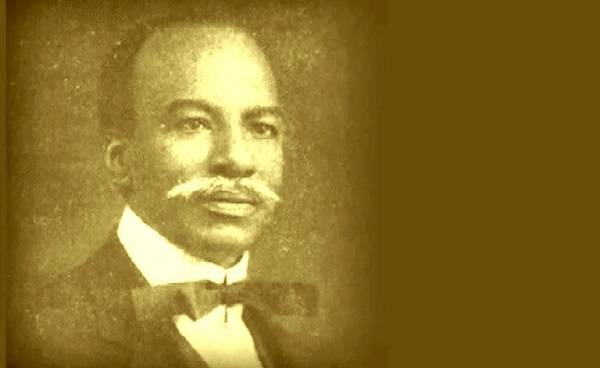
Divinely endowed from birth, he became the apple of his father’s eye. The old man’s predecessor and successor – Oba Esugbayi; Oba Falolu Dosunmu, Oba Mosendiku Adeniji-Adele; and most importantly, Oba Adeyinka Oyekan – for genuine reasons, knew that a lad from the court of Alayeluwa Sanusi Matiku Olusi was certainly on a journey to prominence.
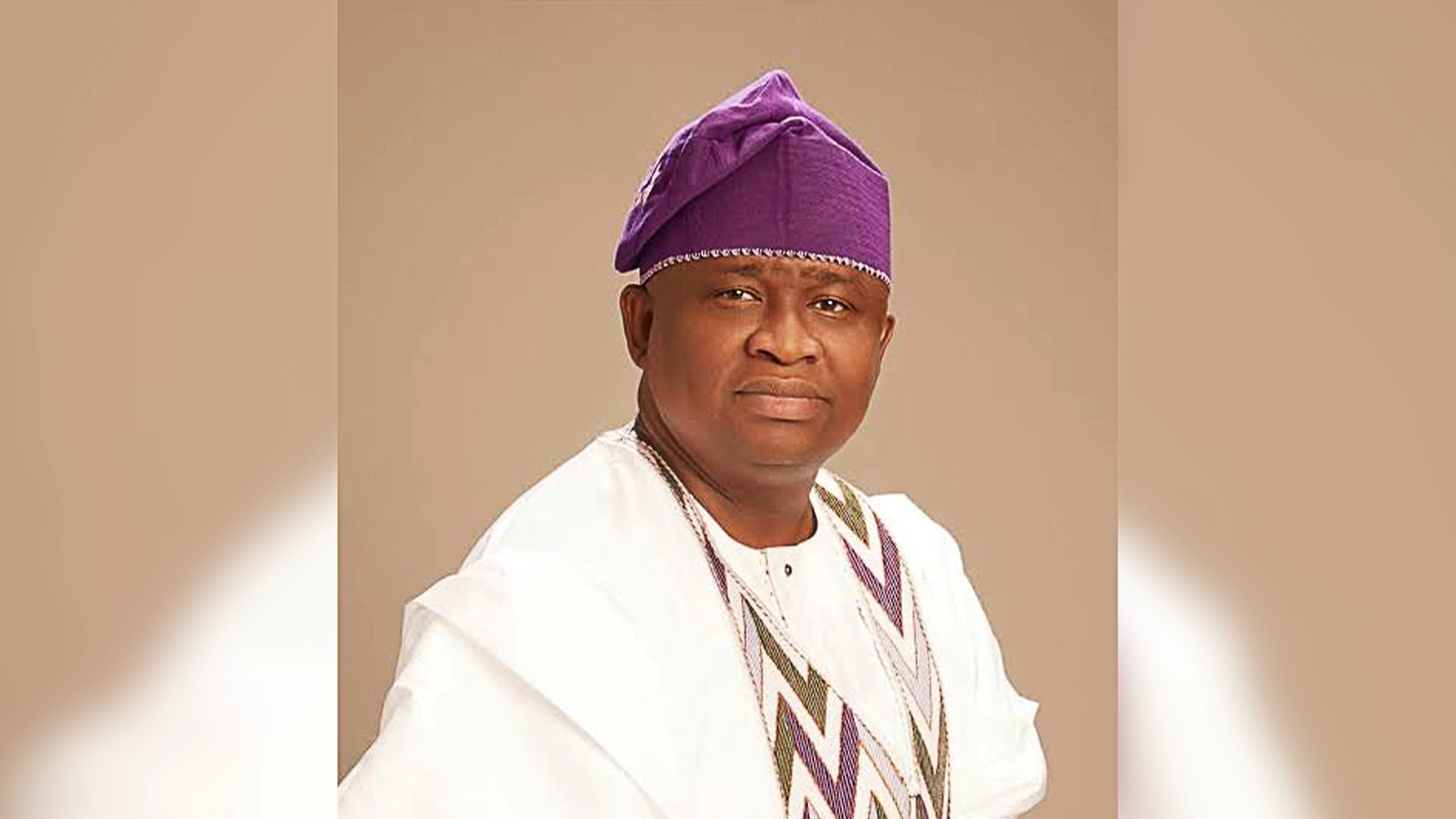
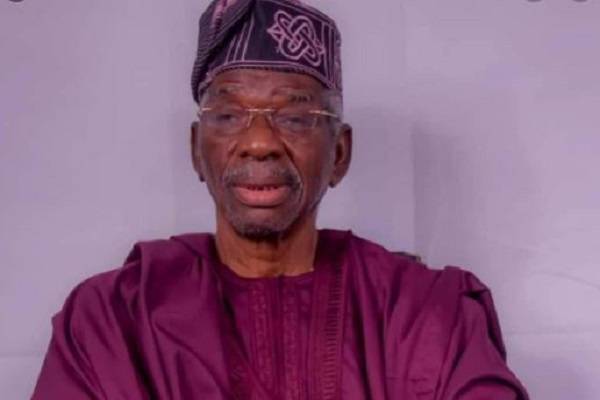
Tall, dignified, personable, and charming, Tajudeen Oluyole Olusi, a first-class prince of Lagos, is a favourite among cosmopolitan city dwellers. As a patriot, community leader and servant of Allah, he is held in high esteem by all and sundry.
Highly knowledgeable and discerning, he is usually the cynosure of all eyes in the assembly of aristocrats’ descendants, who, in contemporary times, see him as the custodian of detailed history and the key to Lagos’s secrets.
But Olusi is more than a blue blood. The elder statesman is a reputable politician of long standing; his illustrious career is aptly characterised by consistent public service, a track record of legislative and executive achievements at the local government and state level, and involvement in party organisation, mobilisation and management at the national level.
At 90, he has nothing to fear again. Long life is a rare divine gift in a country where life expectancy is approximately 55. Hale and hearty, this eminent prince should savour the glory of his eventful life and reflect satisfactorily, while hoping for the best the future is keeping to its chest. This is why his Granite Jubilee is a celebration of breakthroughs.
Many lessons can be learnt from his devotion, strong will, and commitment to principles, ethical standards, institutional norms and the ideals of party supremacy and discipline, which are gradually fading in party politics. Whenever the history of progressive politics is written from the Lago de Kuramo axis, no author or historian will omit his name and contributions.
Loyal, honest, and dependable, Olusi is very consistent. Politically, he is never a defector or deserter. The prince has led a life of integrity. Despite his long sojourn in politics, it is to his credit that his career has never been tainted with scandals.
October 13, 1936, was a remarkable day in the life of his illustrious father, Oba Olusi. That was when the monarch’s wife, Princess Kabitu Asake Olusi, delivered the bouncing baby boy at Dr. Akinola Maja’s Dispensary in Ita Akanni, Lagos. Maja was a foremost medical practitioner and nationalist.
As a progressive and religious ruler, Oba Olusi understood the value of education. Therefore, he enrolled his son, Tajudeen, at the Baptist Primary School, Araromi, Lagos. Later, the young prince proceeded to Ansar-Ud-Deen Primary School, Alakoro.
But the royal pleasure was short-lived. A tragic incident occurred. Before he could complete his primary education in 1947, his father had died two years earlier.He was 80. Immediately, a life of struggles began, both in Ghana and Nigeria. Olusi went to United Middle School, Tamale, Ghana, between 1952 and 1954, emerging as one of the best students. Later, he returned home for further education on scholarship at the famous Ansar-Ud-Deen Collge, Isolo, between 1955 and 1958. Although he left secondary school before time, his peers were not better than him. He chose the career path of a politician as a student during a mock parliament when he played the role of the Leader of Opposition, while his mate, Adeyiga Ajayi, played that of the Speaker. In 1979, both became members of the Federal Parliament.
Between 1959 and 1960, Olusi was at the Lagos Centre for Higher Studies. He completed his education at the Yaba College of Technology, Lagos, and began his working career as a clerk at the defunct Lagos Town Council. That was between 1959 and 1962.
As a council staff member, he was perceived as a big boy. At that stage, Olusi started shouldering enormous family and community responsibilities. Later, he worked at ESSO, which has now merged with Oando, as an Assistant Employee Relations Officer between 1964 and 1968.
Olusi was fascinated by the Action Group (AG), led by the late Chief Obafemi Awolowo. On the platform, he won a councillorship seat at the Lagos Town Council in October 1962. He was 26.
Having distinguished himself as a true representative of his ward, he was re-elected. It was around then that he assisted his cousin, Prince Rilwan Aremu Akiolu, who is now the Eleko of Lagos, to be recruited into the Nigerian Police. Olusi’s contemporaries at the council were the late Chief Ganiyu Dawodu and the late Chief Adeyemi Lawson, who later stepped down as chairman. The prince was a councillor until the coup of 1966, which drew the curtains on the First Republic.
Olusi drew applause as a loyal progressive to the creed of Awoism and the cause of Lagos. When the National Council of Nigerian Citizens/Nigeria National Democratic Party (NCNC/NNDP) leaders forbade AG members from meeting publicly on Lagos Island, he converted his father’s compound to an AG meeting venue.
News about that boldness and dedication got to Awolowo in prison, and the party leader applauded his courage.
Unlike contemporary politicians, Olusi had a second address. Following the sack of the councillors by the military, he went back to his business, which he has been running successfully. In recognition of his popularity and personal worth, the military governor, Brig-Gen. Mobolaji Johnson, appointed him as a member of the council’s caretaker committee. He served until 1975.
In 1976, Olusi, a member of the Committee of Friends loyal to Awolowo, contested the councillorship and won on a non-party basis. The Obasanjo regime had introduced the Parliamentary system into the council administration, following the report of Etsu Nupe Ndayako on Council Reforms. Although he won the in-house contest for the council chairmanship by 17 votes to 13, the election was annulled by the military. He was denied the opportunity to serve as chairman because he was a fanatical supporter of Awolowo. He endured the deprivation. People of the council were enraged, but they dared not challenge a regime that brooked no opposition.
Three years later, when the ban on politics was lifted, Olusi became a founding member of the defunct Unity Party of Nigeria (UPN). He was the first Lagos Division Secretary of the party. In 1979, he won an election as a member of the House of Representatives from Lagos South Constituency at the age of 43. He was a member of the Rules and Business, Social Welfare and Veterans’ Affairs Committee. The former legislator led committees of the House on various missions both in Nigeria and abroad. In 1982, he led the House delegation to the Commonwealth Games in Brisbane, Australia. Although he was re-elected in 1983, his tenure came to an abrupt end, following the military coup that occurred on December 31 of that year.
The truncation of democracy did not herald political retirement for Olusi. In 1990, he became a key figure in the progressive fold that midwifed the Social Democratic Party (SDP) in Lagos State.
He was elected as the vice chairman, and later chairman, until 1993 when the military terminated the Third Republic. Olusi was a prominent member of Primose, led by Chief Dapo Sarunmi.
Other members included Asiwaju Bola Ahmed Tinubu, Olatunji Hamzat, Busura Alebiosu, Mumuni Adio Badmus, Prince Ademola Adeniji-Adele, Omotilewa Aro-Lambo, Olorunfunmi Basorun, and Olufemi Lanlehin. The group was at loggerheads with the SDP camp (Ase), led by former Lagos State Governor Lateef Jakande, to a standstill during the struggle for the governorship ticket between Sarunmi and the late Professor Femi Agbalajobi. When both aspirants were disqualified by the military, the two camps threw up Abiodun Ogunleye and Yomi Edu. Although Edu won the ticket, he lost the general election to the National Republican Convention (NRC) candidate, the late Sir Michael Otedola.
Olusi succeeded Alhaji Muniru Baruwa as chairman of the defunct Social Democratic Party (SDP) in Lagos.
Later, there was a split in Primose, following the decision of Sarunmi to serve as the Secretary (Minister) for Communication under the Interim Head of State, Chief Ernest Shonekan. The group to which Olusi belonged was agitating for the revalidation of the June 12, 1993 presidential election results and the restoration of the annulled mandate of Bashorun Moshood Kashimawo Olawale (MKO) Abiola. The split led to the birth of the Justice Forum.
Olusi served as commissioner under the military rule during a very challenging time. He could not resign from the military government of Oyinlola, despite pressure from Afenifere/NADECO leaders. Fears were rife that any commissioner who attempted to resign could be killed by the military. Oyinlola’s successor, Buba Marwa, later sent him and others packing from the State Executive Council (Exco).
Olusi was a founding member of the defunct Alliance for Democracy (AD). It was the party to beat. He was among the leaders who worked for the election victory of Tinubu as governor in 1999. Unfortunately, a crisis hit the party shortly after the election. The party chairman, Dawodu, never saw eye to eye with Governor Tinubu. During the post-election party congress, the Justice Forum rallied support for Ogunleye, who succeeded Dawodu as the chairman, following the demise of the initial candidate, Adeyiga Ajayi.
Tension arose between Afenifere and AD ahead of the 2003 polls. The 60:40 proposal by Sir Olaniwun Ajayi collapsed. Despite Afenifere’s support for the five Southwest AD governors, they were swept off their seats by the post-electoral tsunami. Only Tinubu, who did not enjoy Afenifere’s support, survived. Reconciliation became difficult.
During the pre-reconciliation meeting in the Ikenne home of the late sage, Awolowo, the matriarch, Yeyeoba Hannah Awolowo, on sighting Olusi, described him as a loyal, gentle, quiet, easygoing political son of the former Western Region’s Premier. The Awo matriarch acknowledged Olusi’s traits of a diplomat. At the meeting were Tinubu, the late Alhaji Lam Adesina, Chief Bisi Akande, Chief Segun Osoba, Chief Michael Koleoso, Dele Alake, Rauf Aregbesola, and the late Rev. Tunji Adebiyi. Nothing worthy of a political brotherhood came out of the meeting.
In 2007, the AD was under the federal threat. Lagos AD leaders anticipated the danger. Thus, they were the first to embrace the formation of the Action Congress (AC). Olusi later became its National Vice Chairman (Southwest). When the political earthquake shook the region in 2003, only Lagos survived the onslaught. But the zone later regained the lost states of Ogun, Oyo, Osun, and Ekiti. Currently, Olusi is the apex leader of the All Progressives Congress (APC) in the Lagos Central District.
He also has a track record of community service as a grassroots mobiliser, organiser, and father figure. He is a life member of the Boys Scout. He was the first National Vice President of the Zumratu Islamiyyah Society of Nigeria. Currently, he is the National President of the society and the Baba Adinni of Yoruba land.
The community leader was a member of the Lagos State Council of Arts and Culture for about five years.
He was a member of the Governing Board of the defunct Muslim Teachers’ College, Surulere, as a government nominee between 1962 and 1965. He was the first General Secretary of the Lagos Council of the Muslim Students Society of Nigeria (MSSN) at its inception. He was a member of the Education and Service Committee, School of Nursing, Lagos (1972-1979); member, Special Committee on the History of Lagos; Chairman, Lagos Island Adult Education Committee; Chairman, Cabinet Committee and Amirul Hajj, Lagos State (1994); Amirul Hajj for Lagos State(1995); Director, Eko Hotels Ltd; and Chairman, Asake Nigeria Limited.
Olusi is the Mogaji (Head) of Oba Sanusi Olusi family and the Head of Yeru branch of the Akinsemonyin Ruling House, Lagos. He is the Baba Adinni of Oke-Arin Mosque and the Baba-Oba of Apa Kingdom, Badagry Division, and Atobatele of Ado-Ekiti.
NOTE: Views expressed by contributors are strictly personal and not of Theliberationnews