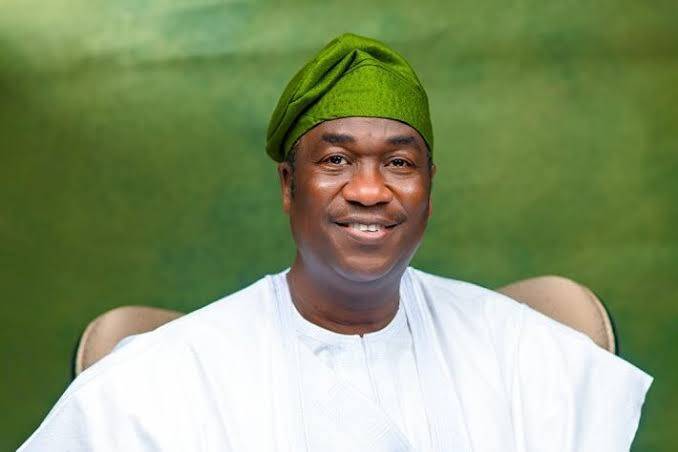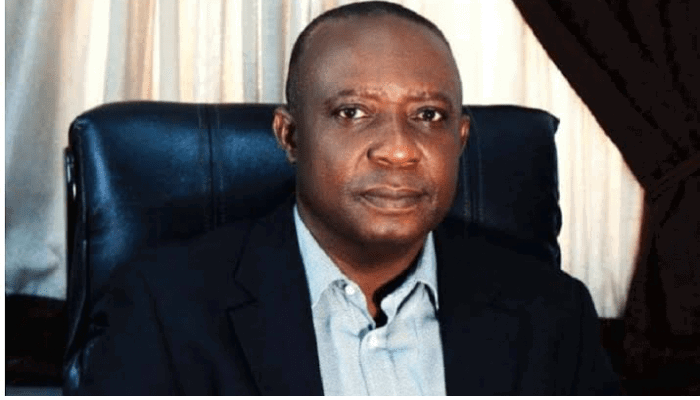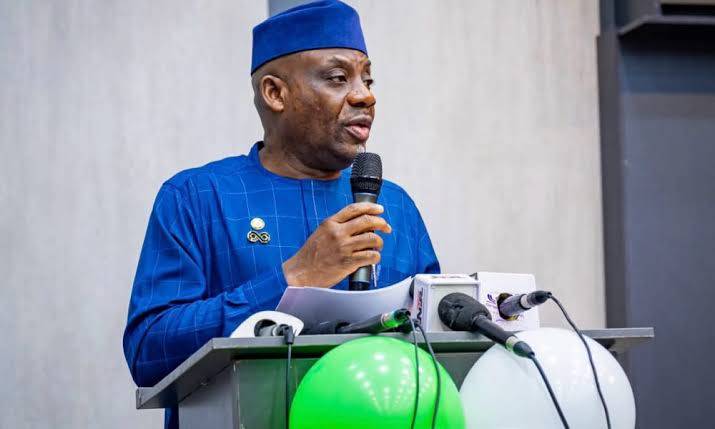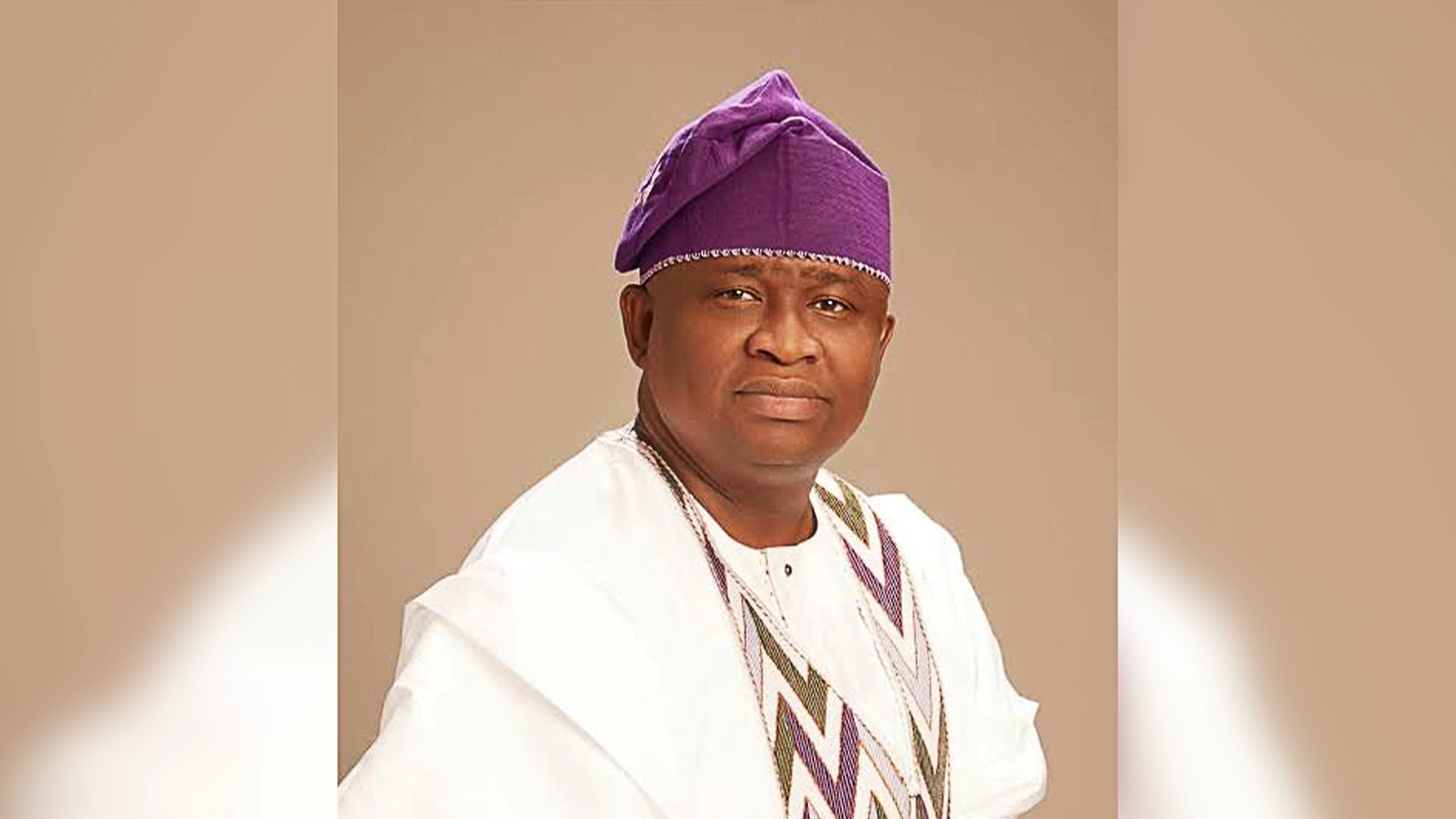



There is something deeply troubling about the latest public outburst by Asari Dokubo. It has little to do with the legitimate demand that public contracts face scrutiny. Men like Tompolo are not beyond criticism, nor should they be. The real concern lies in the peculiar logic with which Dokubo has chosen to defend one figure while attacking others.
In a video now circulating widely, Dokubo alleges that the Olu of Warri and Dr Osahon Okunbo collect ₦2.7 trillion annually for pipeline surveillance. He then introduces ethnicity into the argument, suggesting that the two escape scrutiny because they are “Benin” and “Itsekiri”, while Tompolo is being singled out.
Olu of Warri, Ogiame Atuwatse III
The question that follows is simple: where is the evidence?
Dokubo has produced no contract, no payment record and no documentary proof of any kind to substantiate this extraordinary claim. The Olu of Warri’s representative has publicly challenged him to produce the evidence.
A figure of ₦2.7 trillion is not a sum one casually introduces into national discourse and expects responsible citizens to accept on the strength of a speaker’s word alone.
If Dokubo has the documents, let him publish them. If he has the contract, let him display it. If he has evidence of payment, let him present it.
That is how serious allegations are made. In the absence of such proof, what remains is an allegation dressed up as fact.
There is a more troubling dimension to the argument.
Dokubo appears to suggest that because pipeline surveillance occurs in the Niger Delta, contracts associated with it are somehow the proprietary entitlement of Niger Delta actors. That proposition should concern every Nigerian.
The Niger Delta belongs to Nigeria. Its oil belongs to Nigeria. The pipelines are national infrastructure. Contracts for protecting them are matters of public procurement, public accountability and national security.
They are not tribal dividends.
If a company from Rivers State is competent, let it compete. If a company from Delta State is competent, let it compete. If a firm from Edo, Abia, Lagos, Kano or Kaduna possesses the expertise, resources and capacity and wins a properly awarded contract, that should be welcomed as evidence that Nigeria remains a country rather than a collection of ethnic fiefdoms.
The idea that a contract is somehow “Niger Delta money” until someone from elsewhere secures it, at which point it becomes private enrichment, is a dangerous distortion of federalism.
It is precisely the kind of thinking that has kept Nigeria trapped in the politics of ethnic entitlement.
Perhaps the most unfortunate aspect of the intervention is the attempt to drag the Olu of Warri into a commercial argument in which the monarch has not been shown to be the contractor alleged.
The Olu of Warri, Ogiame Atuwatse III, is married to Olori Atuwatse III, daughter of the late Captain Hosa Okunbo. Osahon Okunbo is Captain Hosa’s son. The family connection is a matter of public record. But marriage does not turn a traditional ruler into a commercial contractor.
Being someone’s son does not make a businessman guilty of whatever detractors choose to allege against him. That distinction is elementary.
Osahon Okunbo currently serves as Executive Director of Pipeline Infrastructure Nigeria Limited. Publicly available information indicates that PINL has been involved in pipeline infrastructure and surveillance activities, including the deployment of camps, vessels, drones and other assets along pipeline corridors.
That work should be scrutinised, as should every naira of public money and the performance of every contractor. But scrutiny is not the same as slander. An allegation is not evidence.
There is another question Dokubo should answer: If the real concern is the cost and effectiveness of pipeline surveillance, why does the argument repeatedly return to the ethnic identity of those involved?
Why does “Benin” matter?
Why does “Itsekiri” matter?
Why does “Ijaw” matter?
The only questions that should matter to the Nigerian taxpayer are straightforward: who received the contract, under what terms, for what amount, to perform what work, and what did the country receive in return?
That is the conversation worth having.
If a contract is inflated, expose it.
If a contractor has failed, expose the failure.
If public funds have been misused, let the appropriate agencies investigate and prosecute.
If procurement rules have been breached, pursue the evidence. But if all that exists is a video, an allegation and a theory about ethnicity, then one has not established corruption. One has established noise.
There is also something deeply distasteful about dragging a dead man into this quarrel.
Captain Hosa Okunbo died in August 2021. He cannot answer for himself, produce a document or challenge an allegation. That places an additional responsibility on those who invoke his name.
The late Captain Hosa Okunbo
Captain Hosa was a businessman whose interests spanned maritime, transportation, logistics, agriculture, hospitality and security. At his death, tributes from across Nigeria recognised both his commercial achievements and his philanthropy.
His son has chosen to continue in business. His daughter is married to the Olu of Warri.
Neither fact constitutes evidence of wrongdoing. Neither fact grants anyone the right to convert family relationships into an ethnic conspiracy.
There is, finally, a curious irony in Dokubo’s intervention.
A man presenting himself as an advocate of the Niger Delta should be particularly careful about reducing the region’s legitimate grievances to a crude contest over who gets what contract.
The Niger Delta’s historical grievances are real. Environmental degradation is real. The failures of successive governments are real. The region’s demand for justice, development and a greater stake in the management of its resources is legitimate.
But those grievances are diminished, not strengthened, when they are converted into a doctrine that says public opportunity belongs first to one ethnic constituency and everyone else is an interloper.
That is not justice.
It is simply another form of entitlement.
Dokubo is entitled to question government contracts. He is entitled to criticise Tompolo’s critics. He is entitled to demand greater participation by Niger Delta businesses. He is even entitled to argue that pipeline surveillance should be organised differently.
What he is not entitled to do is manufacture certainty where there is no evidence and then dress the allegation in ethnic colours.
That is not agitation.
That is recklessness.
Nigeria has suffered enough from those who mistake volume for evidence, anger for courage and ethnic mobilisation for patriotism.
If Asari Dokubo possesses evidence that the Olu of Warri or Osahon Okunbo received ₦2.7 trillion annually for pipeline surveillance, he should produce it.
Let the documents speak.
Let the contracts speak.
Let the auditors speak.
Let the law speak.
But if he cannot produce the evidence, the responsible course is to withdraw the allegation.
In a country already strained by suspicion, insecurity and ethnic distrust, there are some accusations a responsible man should not make without proof.
This is one of them.
■ Sufuyan Ojeifo, is a journalist and publisher.