

It is perhaps a measure of the debilitating colonial mentality arising from a deep-seated inferiority complex and attendant perception of all things foreign as superior that the Nigerian media accord exaggerated importance to analyses, comments and views of foreign media, particularly on politics in the country. This was obviously why the article on next year’s presidential election in Nigeria published in the latest edition of The Economist attracted much attention and occupied considerable media space despite the frankly poor reporting in the piece in question.
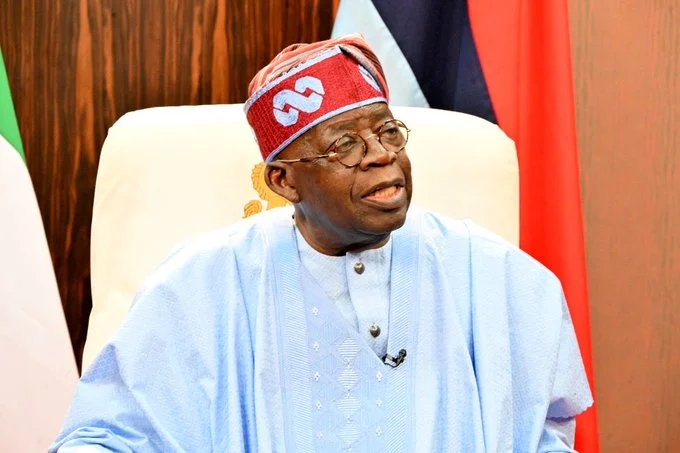
Unsurprisingly, the article projects a victory for incumbent President Bola Tinubu in the election despite what it describes rather unscientifically and arbitrarily as the President’s unpopularity among Nigerians without indicating the scope of public opinion surveys, extent and diversity of interviews or the geographical spread from which it picked respondents in a country as multi-dimensionally complex as Nigeria. While understandably agreeing that Tinubu is ‘universally’ disliked as one opposition party put it, elements of the opposition vehemently disagreed with the magazine’s conclusion that the President will still most likely triumph at the polls.
But The Economist arrives at its position based on such factors as the fractiousness of the opposition, its inability to forge a united anti-Tinubu coalition, the power of incumbency, the associated humongous funds available to the ruling party and what it describes as the peculiarities and complexities of Nigerian politics. Thus, The Economist subjectively and cavalierly dismisses the President as ‘disliked’ but still projects him as likely to win. Mercifully, the magazine does not base its prediction in this regard on likely criminal manipulation or stealing of the vote.
Were the magazine to be writing on the politics of an advanced Western country, it would likely be more nuanced and restrained in arbitrarily and blanketly conferring assumed popularity or unpopularity on contestants in elections. It would certainly take context more seriously in making general statements. Let us take the fast approaching mid-term elections in the United States as an example. Most opinion polls rate President Donald Trump as plummeting to historic lows in his popularity rankings. But would it be accurate to describe him as ‘universally’ unpopular or disliked?
Trump continues to be hugely popular among his MAGA base and the white supremacists, as well as fervent evangelical purists that constitute his catchment zone magnet. That is the fate of most charismatic politicians. They attract as much fervent adoration as they do repellant dislike. Nigeria is no exception. It would be interesting to ask The Economist, ‘which opposition candidate to Tinubu enjoys ‘universal’ popularity? The suggestion that the President is still likely to win despite being ‘disliked’ by Nigerians is reckless.
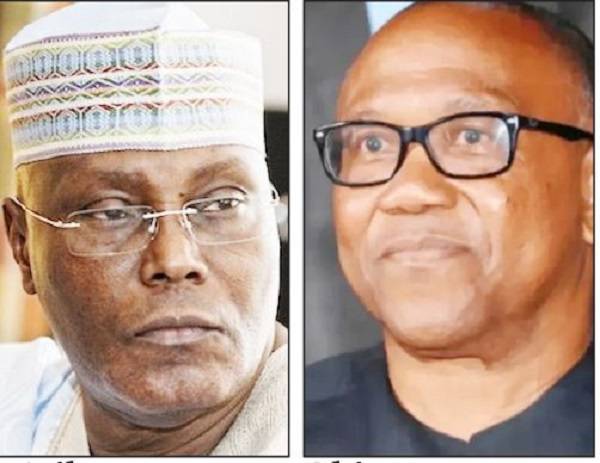
In the 2023 elections, Mr Peter Obi of the Labour Party (LP) won over 95% of the votes in his Igbo Southeast redoubt. He also won substantial votes in the Christian South-South and Christian-dominated areas of the North-Central, thanks to his divisive religious campaign and hostilities generated by the APC’s Muslim-Muslim ticket. But apart from winning marginally in cosmopolitan Lagos in the Southwest and the Federal Capital Territory (FCT), Abuja, he had negligible electoral presence in the wide swathes of the far North or most of the Southwest. The Obidients are fanatically committed to Obi. But those opposed to him dislike the former Anambra State governor no less intensely.
Deliberately projecting himself as the Northern candidate in the 2023 elections, Alhaji Atiku Abubakar ‘s campaign was predicated on reaping humongous votes from the North and benefitting from Tinubu and Obi splitting the Southern vote. The PDP candidate won emphatically in the Northeast, but Tinubu triumphed in the Northwest, North-Central and Southwest. In places where Tinubu did not win, he came a close second in most instances. The Economist’s analysis does not tell us how things have changed or remained the same in the various geopolitical zones since three years ago.
Will the Muslim-Muslim ticket be as electorally explosive as it was in 2023, for instance? It is unlikely. The APC’s first term has proven that fears of Muslim domination and Christian persecution that influenced electoral behaviour in the last election were absolutely unfounded. How will fundamental changes in the electoral dynamics of the South-South affect voting patterns in the region this time around? Is a Peter Obi likely to enjoy the kind of hegemonic dominance he had in the Southeast come 2027? Does the success of the APC in the majority of the by-elections conducted since 2023, such as in the FCT, not suggest that the party has been considerably strengthened across geopolitical zones?
The Economist attributes what it describes as Tinubu’s ‘unpopularity’ to considerable hardships attendant on his administration’s far-reaching reforms, including the removal of the fuel subsidy and merger of parallel foreign exchange markets to eliminate arbitrage, although it does not deny the macroeconomic gains of the reforms.
But those who reason this way do not consider that, a hard-nosed political realist, the President could easily have chosen to follow in the footsteps of his predecessors by postponing the difficult and painful decisions critical to long-term economic resuscitation, stabilization and recovery and prioritizing his re-election prospects over the national interest.
President Tinubu chose the path of statesmanship rather than crass partisan cynicism for electoral gain. The Economist should see merit in that. In any case, the administration has never denied the existential difficulties caused by its reforms.
In his independence anniversary speech, the President assured that the inevitable birth pangs accompanying the reforms were necessary to birth the desired new era of desired posterity. He illustrated that emergent positive macroeconomic indices, including a falling inflation rate, stable and predictable exchange rates, sustained quarterly trade surpluses, substantially improved foreign reserves, and growing trade diversification with impressive non-oil sector performances, offer foretastes of approaching microeconomic gains.
Current economic hardships cannot be underestimated or excused. But the administration has not, by any stretch of the imagination, done so. But the no less critical questions to ask are what would have been the degree of economic collapse and existential hardships if fuel subsidy had remained a source of humongous financial haemorrhage to the economy; if the foreign exchange market had continued to provide avenues for criminal exploitation of arbitrage; if 95% of revenues had continued to be expended on debt servicing; if the CBN had continued to recklessly print money to sustain the federal government or if radical reforms had not compelled the NNPCL and its affiliates to remit humongous previously withheld revenues to the Federation Account?
Apart from the fragmented and fractured character of the opposition, The Economist has not told us what credible policy alternatives different from those of the ruling APC they have articulated for the consideration of the electorate. Just like the opposition politicians, The Economist’s specious analysis takes no account of the impact of the ameliorating policy responses of the federal and most sub-national units of government to current economic hardships.
Can it be that the sustained conditional cash transfers to the most vulnerable, the widely acclaimed student loan fund, the enhanced access to consumer credit for large numbers of people, the stabilization of the public universities calendar largely through better welfare for academics, the evident developmental activism by state governments due to the tripling of their federally collected revenues among other policies will have no impact on the public perception of the President and the outcome of the 2027 elections?
The Economist article dwells at length on persistent insecurity and the impact on the President’s popularity, and this is not out of place. In fact, the interviews and few examples it cites in this regard are solely from Borno State in the Northeast. But it also states that the insurgency and insecurity in the State date back over the last two decades. The implication is that rational voters are unlikely to put the blame for the situation solely on an administration that is three and a half years in office.
Even then, the ferocity of Boko Haram has considerably waned, and Borno is no longer the epicentre of terrorism in the North. And the valiant efforts of the governor Babagana Zulum administration to restore and expand infrastructure across sectors, radically modernise school structures and facilities and provide succour for the displaced and vulnerable cannot be overemphasised.
Has the Tinubu administration been indifferent to or inactive on containing insecurity? Such a claim cannot be credibly sustained. It has expanded the size and scope of the Nigerian armed forces through the creation of new divisions and recruitment of additional troops. It has improved the wages and welfare benefits of troops. It has scaled up external security collaboration and intensified procurement of sophisticated weapons and advanced technology. It has created the Office of Homeland Security. It has fast-tracked efforts to decentralise the country’s security architecture through the establishment of State Police. Surely, these facts will feature prominently in ongoing campaigns towards the 2027 general elections.
NOTE: Views expressed by contributors are strictly personal and not of Theliberationnews