
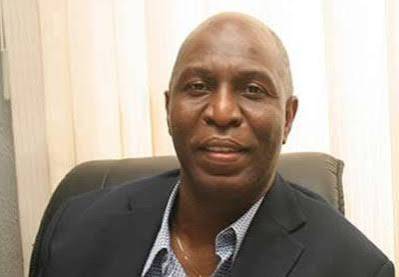
The tragic drama of Moshood Kashimawo Abiola will never evade our soul as a nation. He was the sort that Tom Wolfe describes in his novel, A man in full. He was at once earthy and grave, earthbound and ethereal, generous and calculating, naïve and subtle, stuttering and eloquent, gallant and something of a mouse. All of these traits overlapped and interwove, investing him with a complex charm as a man of the world. For instance, he could be gallant in his subtlety like the way he outwitted Abacha’s security, scaled his home fence and headed for the Epetedo Declaration.
He was the most dramatic Nigerian of the twentieth century after Nnamdi Azikiwe. Then he gave us perhaps the drama of the century with June 12, after of course, the Civil War. The Civil War haunts us as a federation. June 12 haunts us as a conscience. This occupies the mind of Ose Oyamendan in his new documentary, MKO. It premiered October 1, at the Wole Soyinka Centre for Culture and Creative Arts. BuyMaps
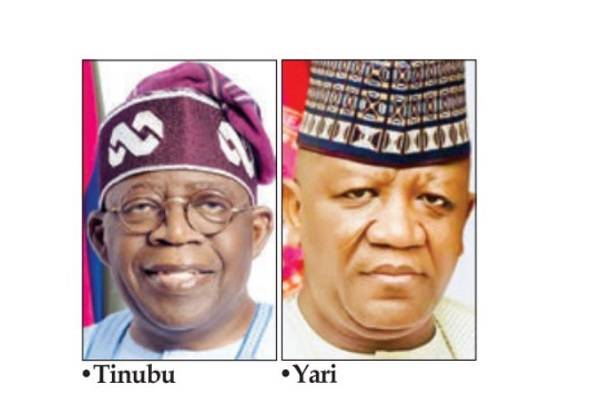
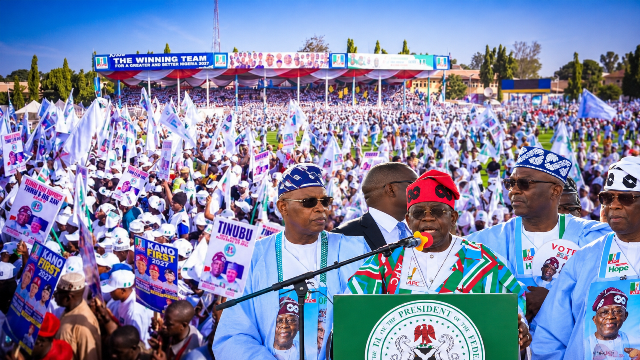
It attracted the presence of the President, Asiwaju Bola Ahmed Tinubu, First Lady Senator Remi Tinubu, Senate President Godswill Akpabio, Governor Babajide Sanwo-Olu, Chief of Staff Femi Gbajabiamila. Also present were some of the June 12 warriors, including media virtuosos like Bayo Onanuga, Dapo Olorunyomi and Kunle Ajibade.
The documentary was full of plotlines and pathos, and no one would watch it without pondering the life of a battered nation. An emcee asked after it all, “did you enjoy it?” it was the wrong question. It was not the movie for excitement. There was action, but not for acclaim like a Bruce Willis act. There was humour but not to amuse like Baba Suwe. There were deaths, and near deaths. Death and laughter intermingled in a mournful hue. There was lots of history and biography.
For those who witnessed and even suffered in that time, it chilled to see the setting where one practised as a journalist. I recall the morning of the annulment. I was the managing editor of the Concord Press, Abiola’s newspaper. Our State House correspondent Mohammed Adamu walked into the office and handed me a sheet of paper. It bore marks of a photocopying machine. He said, without emotion, it was the press release from the Villa. It was not signed. It bore no letterhead. The only evidence it came from the Villa was the authority of the reporter. It announced the annulment without using a direct language.
That late morning was the beginning of a crisis that has overshadowed this country for close to four decades. The film told the story of MKO, his warm and boisterous personality, his philanthropy, his common touch. It featured many witnesses and sufferers of the theatre. We see when the election was banned, when Abiola defied the army, when protests erupted on the streets. The film tells the collapse of the IBB government, and the refusal of Abacha to go with him. That is a new revelation. That is, a quarrel between IBB and Abacha. It was the hint that he was planning to fulfil his nickname as the Khalifa. He threw Shonekan off the supreme chair.
Senator Bola Tinubu, as he then was, warned Abiola not to pay Abacha a visit, but he did in the now familiar picture of Abiola beside Abacha and Tinubu behind them. “They deceived us,” Tinubu says in the film. The visit was one of Abiola’s naïve episodes. He sort of legitimated the goggled despot.
That was a drama of appeasement. Abacha conned the June 12 politicians to join his government. It was a bait, and the politicians took it. Enter Babatope, Onagoruwa, Jakande, et al. When they were asked to vacate their offices, they said no. History may well revisit that chapter and muse whether Jakande and co betrayed or were helpless.
What concentrates this writer is who killed the icon. All agreed, including Wole Soyinka, that he was killed. Thomas Pickering, the diplomat who was there with Susan Rice, says the Americans did not kill him. Pickering did not take tea. Susan served Abiola. Theodore Zadok, the jail guard, said there was a standing instruction that he had to pre-taste anything Abiola ingested. This did not happen. He had a theory, though. That a substance was on the cup that eliminated the man. If that is the story, then why did it not kill Rice? It must therefore be the tea.
But what this essayist thinks is that the new regime under Abdulsalami Abubakar was careless about Abiola’s safety. From my investigations, Abubakar did not change the guard when he became head of state. Most of Abacha’s goons, men and women were still in the system. They did not change his chef, his security personnel, the men in charge of his laundry, etc. Abiola remained a target, a prisoner pursued by Abacha after his death. Even in his office as head of state, Gen. Abubakar barely changed anyone, including his secretary and errand persons. He was naïve or misadvised. He said in his memoirs that he was negotiating the release of MKO. In the film, Zadok reports that General Abubakar wanted Abiola to renounce his mandate. And he told him no. Zadok said MKO said so in the vehicle on their way back to his cell. Gen. Abubakar should have changed the guards, the cooks, the laundry men.
Abacha’s sewer still stank around him, including unrelieved partisans of Abacha’s devilry. They wanted what Shakespeare described as measure for measure, a travesty of equal justice. Whether or not they were in on it with the Americans, no one can say. Rice refused to be interviewed for the MKO film. She had said Nigerians believe she killed him. To accuse her is simplistic. Murder is not always that straightforward.
Those who killed Abiola wanted to take revenge for Abacha’s death. What some think, though, is that the Americans wanted the two men, Abacha and Abiola, out of the way for a new beginning. That saga remains a mystery that the MKO film restores to the front burner.
The personality of General Abubakar may hold the key for this fatal lapse. He was not a man of cunning, and Abacha did not hold him as an insider.
In fact, as reported in this newspaper recently, General Abubakar and a whole cadre of generals were lined for execution the day Abacha died. They included the chief of defence staff, chief of army staff, chief air staff, and most of the members of the military council billed for a meeting that day. They were expected to sign off at the gate house in the Villa, according to an insider, and once they stepped out, they would be executed. They would accuse them of a coup and allege that they were resisting arrest.
Abacha had lined up another, much lower brigadier to take over as chief of army staff. Many of the other generals who did not attend his PRC would be thrown into the bunker in Apapa awaiting order under Omenka’s care.
So, Abubakar could not have been an Abiola hater. But hate is not the only element that destroys. Carelessness does as well. Innocence is not always without guilt, like a child that sets a house on fire.
The documentary had its dark humours. Olusegun Obasanjo repeated that Abiola was not a messiah. He said it like one who was caught napping. He could not deny, but he tried to generalise the term by saying no human being can ever be a messiah. He failed to de-individuate the word so we do not think he was saying so about Abiola alone. He must have sweated on his lips when he said so. Spite lit his spirit.
The film had some weaknesses. One, the toils and witnesses of the NADECO folks was little told. The Radio Kudirat saga, NADECO route, the killings of the men, their stealth and escapes, the men and women who turned migrants in peril in their own city, the roll calls from Frank Kokori to Uba Sani to Ayo Opadokun would have laced the story. Also the toils of the journalists. The travails of the foreign reporters like Howard French were more graphic than ours. How many suffered like Kunle Ajibade in jail? Or Chris Anyanwu? What Ubani, the “governor of Lagos?” The TELL reporters and editors, like Nosa Igiebor, Dare Babarinsa, Onome Osifo -Whiskey, etc. also were under the hammer.
It was cheering to see footages like Danladi Bako interviewing Abiola on Morning Ride, Abiola on the hustings, the shadow of Epetedo Declaration hall, Abiola stepping out of the military vehicle, a quote about him speaking to the BBC as he was picked up in his residence, his tone at once defiant and comical, drawing parallels with Mandela. We also cannot miss the voices of Gen. Alani Akinrinade. A moment of pathos struck one when his confidant Olu Akerele recounts how he had to procure a mattress for MKO in a police cell. A billionaire without a place to lay his head.
The film, though long, was riveting. If you did not leave the theatre with a laugh, it is because it had the trait of what German playwright Bertolt Brecht designated as the estrangement effect or detachment effect. It is not like the Aristotelian catharsis at the end of the encounter. Rather, your feeling is checked by reflection on the subject matter.
Filmmaker Oyamendan tells this essayist that he has over 100 hours of interviews and he plans “to release a longer version that includes journalists, NADECO and other angles, subject to financing.” I think for the sake of memory, the state ought to invest in this project. It is not an Abiola matter. It is a democracy affair.
The plotlines and some of the pictures were benumbing. The fall of Shonekan is graphically told with the crash of a picture frame, the cover glass scattered. Later, Shonekan’s image folds into oblivion.
The point of a film like this is that it never disappears. It is a picture like Shonekan’s that can inspire a novel or play or film or painting. Just as a picture lit the spark for Oscar Wilde’s novel, A Picture of Dorian Gray. Here is what Wilde wrote: “What a tragic thing it is. This portrait will never grow older and I shall. If it was only the other way.”
So will this film, MKO. Decades from now, it will remain a great introduction and enlightenment to those who never lived or knew the great democracy hero and the travails of those days.