
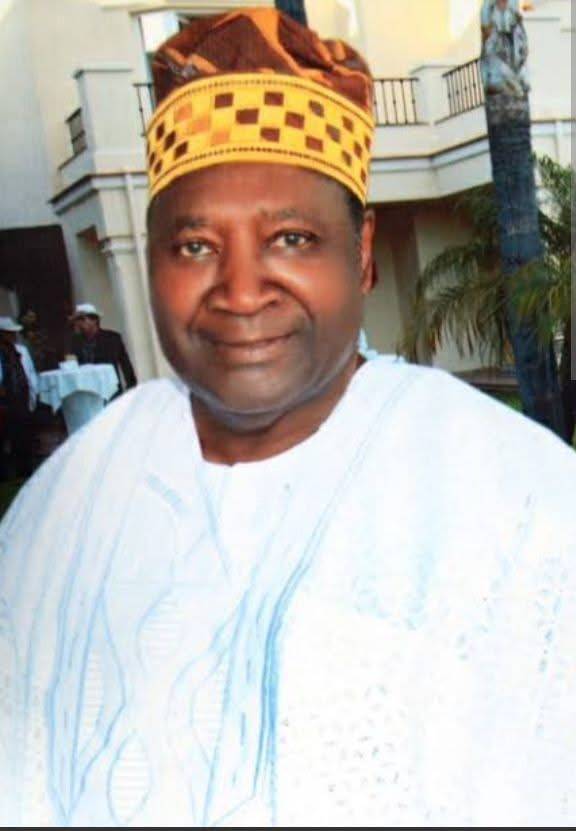

Chief Molade Alexander Okoya-Thomas (June 8, 1935 – February 2, 2015) was a man who accumulated immense wealth but never allowed it to define him through ostentation. He was a billionaire in an era when Nigerian billionaires were fewer and quieter, and he conducted his affairs with a discretion that has become increasingly rare. In a country where wealth often attracts controversy as surely as it attracts attention, Okoya-Thomas lived and died without a single major scandal attached to his name .
The Quiet Accumulation of Wealth
His wealth was built on substance, not spectacle. The son of Hussam Okoya-Thomas—the first indigenous employee of the French conglomerate CFAO, who served the company for 52 years—Molade was practically born into commerce . But he did not inherit his fortune. He earned it.
He studied accountancy at Balham and Tooting College of Commerce in London and later at Columbia University in New York . When he returned to Nigeria in 1959, he was immediately employed as an accountant by CFAO—the same company his father had served for half a century. From there, he rose methodically: Director in 1975, Deputy Managing Director in 1981, and Chairman of the Group in 1987 .
His boardroom reach extended far beyond CFAO. He served as Chairman of CICA (Nigeria) Ltd., Transcap Nigeria Ltd., Oktom Investment Ltd., Itochu Nigeria Ltd., Chiyoda Nigeria Ltd., and Anchoria Investment & Securities Ltd. He was also a Director of NFI Insurance Company Plc and Gateway Bank Plc . These were not vanity positions. They were the architecture of a corporate empire built over decades of careful stewardship.
A Philanthropist Who Gave Without Fanfare
What made Okoya-Thomas remarkable was not merely the scale of his wealth, but the manner in which he deployed it. His philanthropy was not a public relations exercise. It was a quiet, sustained commitment to causes he believed in.
His most enduring legacy is the Asoju Oba Table Tennis Championship, which he single-handedly sponsored for over four decades . First staged in 1968, the tournament became the longest-running table tennis competition in Nigeria and Africa . It was not a one-off gesture. It was an annual commitment that outlasted governments and economic downturns, producing stars like Atanda Musa, Segun Toriola, Bose Kaffo, Olufunke Oshonaike, and Aruna Quadri . In 2025, a decade after his death, the tournament expanded to become a national event for the first time, drawing 355 players from 21 states .
He built and donated a modern sports hall to Lagos State University in 2009 . He served on the fund-raising committee for the construction of Teslim Balogun Stadium . He was Vice-Chairman of the Lagos State Sports Council and President of the Lagos Lawn Tennis Club . When the Lagos State Government decided to honor him in 2010, they named the Indoor Sports Hall of Teslim Balogun Stadium after him .
Governor Babatunde Fashola, mourning his death, captured the essence of the man: “History will remember Chief Molade Okoya-Thomas as a great philanthropist. His legacy will live on because he made his mark in the private and public sectors and in the lives of numerous individuals” .
The Man Without Scandal
In Nigerian public life, scandal is often the price of prominence. Politicians are accused of corruption. Businessmen are accused of sharp practices. Socialites are accused of fraud. Okoya-Thomas attracted none of this.
The tributes that poured in after his death on February 2, 2015, at the age of 79, were remarkably uniform in their emphasis on his character . He was described as “an epitome of humaneness and dedication to service” . The officiating minister at his funeral, Archbishop Alfred Adewale Martins, noted that Okoya-Thomas “never discriminated against anyone, selflessly accommodating and working for the good of others” and that he “did not alienate himself from his Moslem roots even as he was a devout Catholic” .
Folorunsho Alakija, one of Nigeria’s wealthiest women, said simply: “He was very humble. He was always willing to help, even if he could not, he would lead you to others who can help” .
This was a man who held the traditional titles of Asoju Oba of Lagos, Babasuwa of Ijebu-Remo, and Odofin of Ife—titles that placed him at the heart of Lagos and Yoruba establishment . He was a recipient of the Chevalier de la Legion d’Honneur, France’s highest national honour to a foreigner, as well as the MFR and OFR . He was Chancellor of Lagos State University . And yet, in all the records of his life, there is no hint of the scandals that have brought down men of lesser achievement.
The Silent Billionaire
What does it mean to be a silent multi-billionaire without scandal? It means understanding that true wealth is not measured by what you display, but by what you build. It means recognizing that philanthropy is not about having your name on buildings, but about changing lives. It means conducting yourself with a dignity that does not require constant validation.
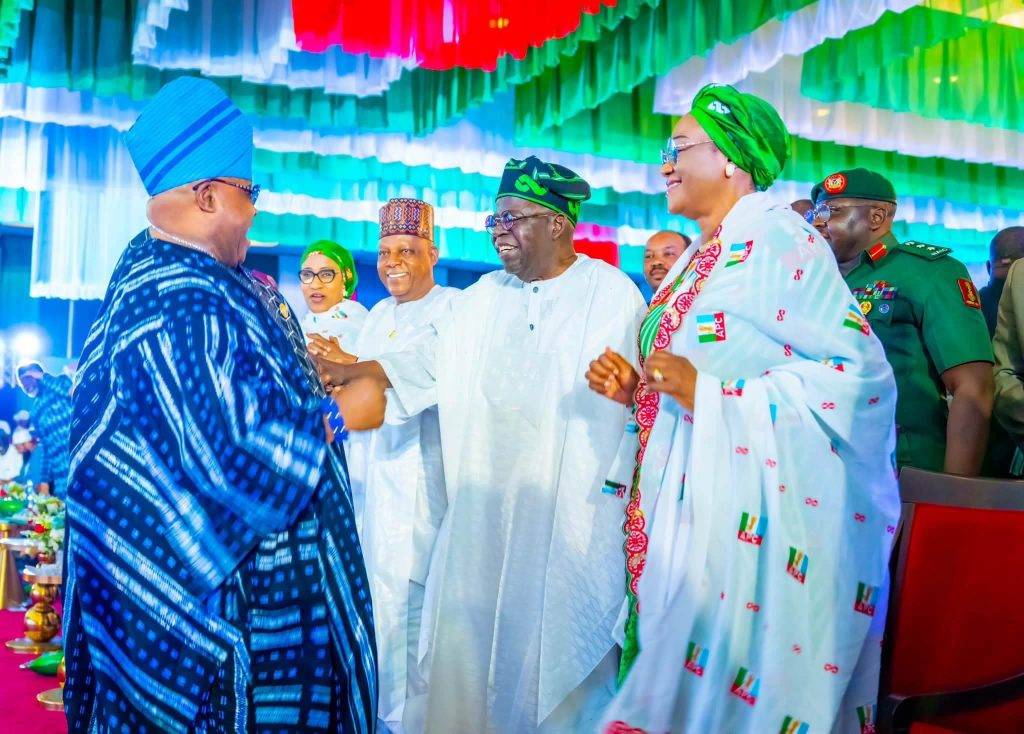
Okoya-Thomas’s funeral in March 2015 was a grand affair, attended by President Goodluck Jonathan’s representative, Senate President David Mark, Bola Ahmed Tinubu, Governors Fashola, Amosun, and Amaechi, Aliko Dangote, and Folorunsho Alakija, among many others . But the grandeur of his send-off was not the point. The point was the life that preceded it—a life of quiet accumulation, generous giving, and unwavering integrity.
His son, Deji, took over the organization of the Asoju Oba tournament in 2013, and in 2025, the competition went national . The legacy continues. The name endures. And the scandal-free record remains intact.
In a nation hungry for role models, Chief Molade Alexander Okoya-Thomas stands as proof that one can be immensely wealthy, deeply influential, and universally respected—without ever making headlines for the wrong reasons. He was a billionaire who understood that the greatest fortune is a good name. And he guarded his with the same care he brought to every enterprise he touched.
Credit: Nigerian Parliament