
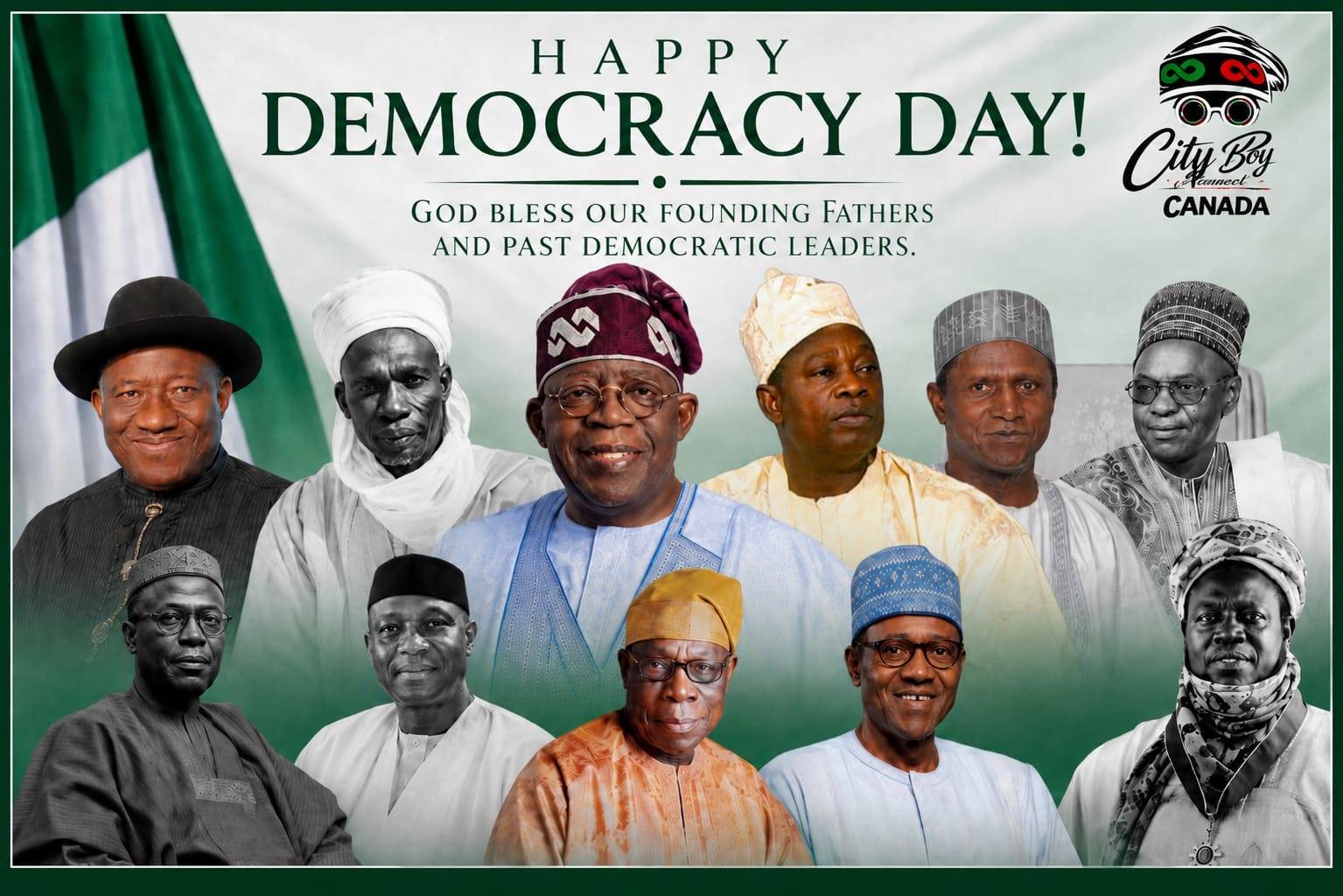

As Nigeria marks another Democracy Day on June 12, my mind travels back to some of the most defining moments in our nation’s history. For many young Nigerians today, June 12 may simply be a date in our national calendar. For some of us who lived through the era of military dictatorship, however, June 12 is a painful reminder of sacrifice, courage, resilience, and the unwavering determination of ordinary Nigerians who refused to surrender their democratic rights.
I was among millions of Nigerians who witnessed the turbulence that followed the annulment of the June 12, 1993 presidential election, widely regarded as the freest and fairest election ever conducted in our country. The victory of Chief Moshood Kashimawo Olawale Abiola represented the hopes and aspirations of Nigerians across ethnic, religious, and political divides. When that mandate was unjustly annulled by the military, it felt as though the dreams of an entire nation had been stolen.
Those were difficult years. Fear became a daily companion. Many pro-democracy activists were hunted, detained, tortured, forced into exile, or killed. Newspapers were shut down. Civil liberties were trampled upon. Citizens could not freely express their views without fear of persecution. Families were separated, careers destroyed, and lives permanently altered in the struggle to restore democratic governance.
Among the courageous individuals who stood firmly on the side of democracy during those dark years was Senator Bola Ahmed Tinubu, now President and Commander-in-Chief of the Federal Republic of Nigeria. As a senator in the aborted Third Republic, he became one of the prominent voices that resisted military authoritarianism after the annulment of June 12.
When many chose silence out of fear, Bola Ahmed Tinubu stood with the democratic movement. He became an active member of the National Democratic Coalition (NADECO), one of the most formidable pro-democracy organizations that challenged military rule and demanded the restoration of Chief MKO Abiola’s mandate. His activism exposed him to immense personal risks. His assets were threatened, his freedom endangered, and eventually he was forced into exile alongside other democracy advocates.
Those of us who witnessed those years understand that the struggle for democracy was not fought on social media platforms or from comfortable positions of hindsight. It was fought in the streets, in underground meetings, in courtrooms, in exile, and sometimes at the cost of personal safety and family stability. The heroes of that era paid a heavy price so that future generations of Nigerians could enjoy the freedoms we often take for granted today.
The eventual return to democratic rule in 1999 was therefore not a gift from the military. It was earned through sacrifice. It was secured by the blood, sweat, tears, and resilience of countless Nigerians who believed that our nation deserved better.
Today, as President Bola Ahmed Tinubu leads Nigeria, many of the values that defined his democratic struggle continue to shape his vision for governance. His administration has embarked on some of the most ambitious economic and structural reforms witnessed in recent decades. These reforms have undoubtedly brought temporary hardships and adjustments for many Nigerians, but history teaches us that difficult decisions are often necessary to secure a more prosperous future.
The removal of fuel subsidies, though painful, has begun to address a longstanding fiscal burden that drained national resources for decades while disproportionately benefiting a privileged few. The unification of foreign exchange windows seeks to improve transparency, restore investor confidence, and eliminate distortions that hindered economic growth. Efforts to expand revenue generation, improve tax administration, strengthen local production, and attract foreign direct investment are laying the groundwork for a more sustainable economy.
The administration’s focus on infrastructure development, student loans, agricultural expansion, local manufacturing, digital innovation, and social investment programmes demonstrates a commitment to building long-term economic resilience. Significant efforts are also being made to improve national security, increase oil production, strengthen subnational economies, and enhance Nigeria’s competitiveness in the global marketplace.
As with many transformative reforms across the world, the benefits may not be immediately visible. The initial pains are real, and the concerns of Nigerians are legitimate. However, nation-building requires leadership that is willing to make difficult decisions today in order to secure a better tomorrow. The true measure of these reforms will be their ability to create sustainable jobs, reduce poverty, stabilize the economy, and improve the quality of life for ordinary citizens.
As someone who experienced military rule and witnessed the struggle for democracy firsthand, I remain grateful that Nigerians can freely criticize their leaders, participate in elections, organize politically, and contribute to national discourse without the fear that characterized the years between 1993 and 1999. Our democracy may still be imperfect, but it remains infinitely preferable to authoritarian rule.
On this Democracy Day, let us honour the memory of Chief MKO Abiola, Kudirat Abiola, Pa Alfred Rewane, Chief Abraham Adesanya, Chief Gani Fawehinmi, Commodore Dan Suleiman, Bola Ahmed Tinubu, and countless other heroes and heroines who stood on the side of democracy when it was dangerous to do so.
Let us also recommit ourselves to the ideals for which they fought: justice, accountability, inclusion, national unity, and good governance.
Nigeria’s democratic journey has not been easy, but it remains one of resilience and hope. The road ahead may be challenging, but our collective determination as a people remains stronger than any obstacle before us.
As we celebrate Democracy Day 2026, may we never forget the sacrifices that brought us here, and may we continue working together to build a Nigeria that fulfills the promise of June 12—a nation where freedom, opportunity, and prosperity are available to all.
Happy Democracy Day, Nigeria.
Adebayo Adedosu is the Country Director of City Boy Movement Canada