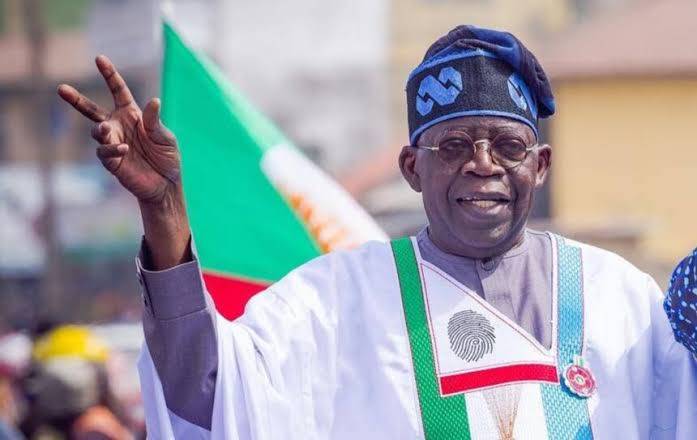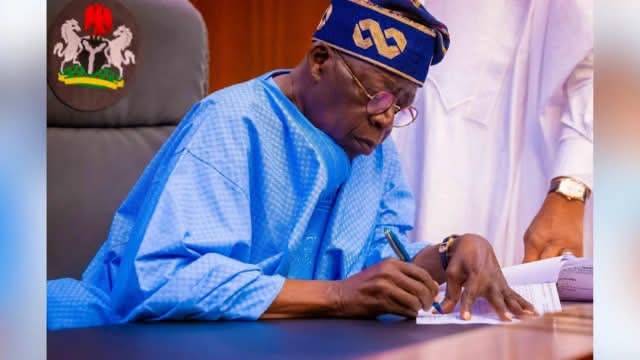


The Tuesday, July 28 visit of Catholic bishops to President Bola Tinubu at the Aso Rock Villa was ostensibly intended to provide an opportunity for dialogue on pressing national issues that have become matters of concern to the Church and the wider society. However, rather than being a routine engagement, the meeting turned into a rather tense exchange, with the bishops openly upbraiding the President over what they considered to be failures of governance and the adverse consequences of some of his policies.
The posture and language adopted by the bishops were, in some quarters, considered rather harsh and undiplomatic. The no-holds-barred approach of the senior clergymen was perceived as having provoked an equally forceful response from President Tinubu, who sought to defend his mandate and administration, including by rejecting the allegation that INEC had been biased.
The fallout from the encounter reminds me of a once-popular Nigerian political expression from the Second Republic: “If Tarka me, I Daboh you.”
The phrase became popular in political circles because of the bitter rivalry between two prominent politicians of Middle Belt extraction, Joseph Tarka and Godwin Daboh, who were frequently at each other’s jugular. In the course of their numerous public exchanges, Daboh was reportedly said to have remarked to Tarka: “If you Tarka me, I Daboh you.”
The ingenious use of the two surnames—Tarka and Daboh—to capture the reciprocal hostility between two political adversaries, was so memorable that it became part of Nigeria’s political folklore Their verbal battles eventually acquired a legendary status and became an intrinsic part of the country’s political lexicon.
A contemporary equivalent of that expression in today’s political dispensation could well be: “If you Fubara me, I Wike you.”
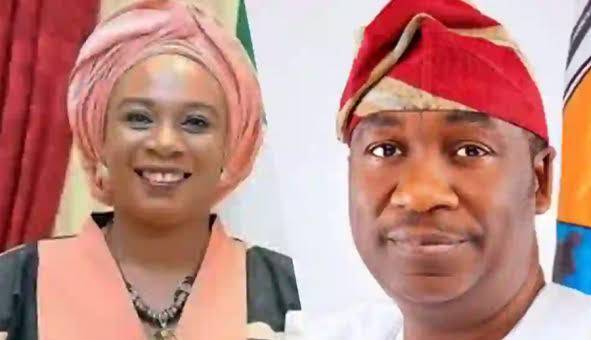
I coined this expression from the extraordinary godfather-godson feud between the current Governor of Rivers State, Siminalayi Fubara, and his predecessor and political godfather, Nyesom Wike, who is now the Minister of the Federal Capital Territory (FCT).
Fubara summoned the courage to challenge the authority of his political godfather and assert his independence after inheriting the governorship from him. The ensuing confrontation produced one of the most bitter political struggles in recent Nigerian history.
The consequence of that defiance, as it has played out politically, is that Wike—the godfather—has relentlessly fought back against his former political protégé, humiliating and politically weakening him for daring to free himself from the control of the man who had handed him the governorship of Rivers State on a proverbial platter of gold.
Remarkably, in my reckoning, only President Tinubu—first as Governor of Lagos State from 1999 to 2007 and subsequently as President—has demonstrated a comparable ability to maintain influence over political successors he helped install in office. In this respect, Wike’s struggle to retain control over Fubara bears some resemblance to the broader phenomenon of political godfathers seeking to retain influence over their anointed successors.
Dear readers, need I remind us that Nigeria has already entered another political season, with campaigns for the 2027 general elections scheduled to officially commence on August 17?
As we all know, political seasons are frequently accompanied by heightened emotions, political suspicion, and what sociologists describe as anomie—a breakdown of established norms and social expectations. It is against this backdrop that I have chosen to examine the recent confrontation between the presidency and the Catholic bishops.
My argument is that the bishops’ controversial and unusually heated exchange with President Tinubu at the Aso Rock Villa over what they perceive as failures of leadership may have been interpreted by the Presidency through a political lens.
The accusations may have sounded particularly suspicious to President Tinubu and his advisers, especially against the backdrop of the widely perceived sympathy of sections of the Catholic Church for Peter Obi, a prominent Catholic and the 2027 presidential candidate of the National Democratic Party (NDC).
That political context may partly explain the forceful pushback from the President’s aide, who, in responding to the bishops’ criticisms, was accused of gaslighting the senior clergymen.
There is a wisecrack in my native Ika dialect in Delta State which, when loosely translated, conveys a powerful message: when a king picks up his royal staff to strike someone who has offended him, his courtiers may interpret that act as permission to commit murder.
The symbolism is profound. The king’s act of striking the offender with his staff or walking stick may itself be relatively limited, but once the courtiers perceive it as an expression of the king’s displeasure, they can escalate the punishment far beyond what the king actually intended.
That, in many ways, captures the dynamic that appears to have unfolded after the bishops’ encounter with President Tinubu.
The President may have felt compelled to defend himself and his administration after being publicly challenged by the bishops. But once the President’s “courtiers”—in this case, his media and communications aides—joined the battle, the disagreement risked escalating from a legitimate exchange of views into something much more confrontational.
And therein lies the danger of political seasons: a disagreement that could ordinarily have remained a robust exchange between the Church and government can quickly become a full-blown political confrontation, with both sides deploying their respective communication machinery to defend their positions.
The question, therefore, is not simply who was right or wrong. It is whether both sides could have exercised greater restraint in the national interest.
For while bishops have a moral responsibility to speak truth to power and draw attention to the suffering of the people, those in political authority also have a responsibility to listen, respond constructively and resist the temptation to interpret every criticism as a political attack.
After all, two wrongs can not make a right.
The episode described above provides a useful illustration of what unfolded after the Catholic bishops’ visit to the Aso Rock Villa, where President Bola Tinubu was openly upbraided over what the clerics considered shortcomings in his administration. As a seasoned politician, the President understandably rejected the negative characterisation of his government and sought to defend his record.
But, as often happens in politics, the confrontation did not end with the principal actors. The President’s reputation managers and media aides soon entered the fray, taking the battle to the clergy, particularly after Archbishop Onaiyekan granted a television interview in which he reiterated the concerns and allegations the bishops had raised during their contentious meeting with the President.
Two pertinent questions, therefore, arise from this episode.
First, could the bishops have been more diplomatic in presenting their concerns to President Tinubu, bearing in mind the biblical injunction to be “gentle as a dove and wise as a serpent”?
My simple answer is yes.
Conversely, could President Tinubu have responded with greater restraint by acknowledging the bishops’ concerns while reminding them that some of the positive outcomes of his administration’s policies had been omitted from their assessment?
Again, my answer would be yes.
But, as the familiar saying goes, two wrongs can not make a right.
While there is no intention here to trivialise the tension that has emerged between the Aso Rock Villa and the Body of Christ, represented in this instance by the Catholic Bishops’ Conference, the exchange of incendiary words between the bishops and the Presidency’s image-makers deserves to be placed in a broader historical context.
By drawing parallels with previous political confrontations involving occupants of the Presidential Villa, my objective is not to aggravate the present disagreement but rather to put it in perspective and, hopefully, reduce the temperature surrounding it.
The reality is that the emotions generated by this latest confrontation are by no means unprecedented in Nigeria’s political history.
Political seasons have repeatedly produced similar confrontations between those in authority and influential voices outside government. With time, however, such episodes have usually faded into history. There is little reason to believe that the present controversy will ultimately be different.
Historically, Archbishop John Onaiyekan has not been a stranger to speaking truth to power. During the administration of President Goodluck Jonathan, he reportedly challenged the President during a similar visit to the Aso Rock Villa, where he openly highlighted what could, in simple terms, be described as the administration’s “sins.”
As a devout Christian, Jonathan may well have received the bishops’ admonition with some degree of humility. After all, Catholics regard their bishops as spiritual shepherds and representatives of the Church’s moral authority. He might even have asked them to pray for him before they departed and perhaps resolved, in the language of Christian repentance, to “sin no more.”
Indeed, had Jonathan reacted angrily to such an admonition, one could almost imagine the dramatic consequences in the context of Catholic theology—perhaps even the possibility of being denied Holy Communion!
Before then, the same Archbishop Onaiyekan had demonstrated a similar willingness to confront political authority during the military era.
He had reportedly looked straight into the eyes of Nigeria’s then military Head of State, General Sani Abacha, the famously intimidating, dark-goggle-wearing military ruler, and told him plainly that hardship was stalking the masses.
That was no small act of courage.
Abacha was not an elected leader, and, being a Muslim, he did not share the same religious tradition as the Catholic bishops confronting him. Yet the man who became famous for the declaration, “This nation can not condone indiscipline,” apparently restrained whatever anger such a challenge might have provoked.
After all, here were “bloody civilians”—to borrow the military-era expression—standing before a general and military Head of State who brooked no nonsense and telling him, without compunction, that the people were suffering.
The lesson from these historical encounters is that the relationship between political authority and the Catholic hierarchy has never been entirely devoid of friction. Bishops have historically regarded speaking truth to power as part of their moral responsibility, while those in power have often interpreted such interventions through the prism of politics.
The present confrontation between the Catholic bishops and the Tinubu Presidency should, therefore, be viewed against this long historical backdrop rather than treated as an entirely new phenomenon.
Abacha may have recognised that the bishops confronting him over perceived hardship were not merely “bloody civilians” but, in their own understanding and that of the Church, moral representatives speaking for the suffering masses This may explain his relatively restrained response compared to his regime’s usual intemperance.
More broadly, Catholic bishops’ willingness to challenge political authority is not unique to Nigeria but a recurring feature of the Catholic episcopacy globally. It reflects a perceived duty to defend the vulnerable and highlight injustice whenever living conditions deteriorate.
This moral posture is often linked to religious tradition. In Christianity, Jesus is depicted as confronting money changers who turn the temple into a marketplace, symbolising resistance to exploitation. In Islam, the Prophet Muhammad is similarly revered for opposing injustice and defending the oppressed.
Against this background, the recent dispute between Catholic bishops and the Tinubu Presidency—including claims that Bishop Onaiyekan was “gaslighted” by presidential image-makers—fits into a longer Nigerian pattern rather than standing as an isolated incident. Historical records show repeated clashes between Catholic bishops and both military and civilian leaders over governance, human rights, corruption, insecurity, and public welfare.
These encounters span two broad phases: the military era and the fourth republic.
Military Era (1966–1998)
During the Civil War (1967–1970), bishops and Christian leaders, including Cardinal Francis Arinze, raised concerns about humanitarian crises and starvation in Biafra, calling for relief access.
Under General Ibrahim Babangida (1985–1993), Archbishop Anthony Okogie criticised the Structural Adjustment Programme, corruption, and worsening economic conditions. He condemned the annulment of the June 12, 1993 election as a “rape of democracy.” The Catholic Bishops’ Conference of Nigeria (CBCN) also denounced human rights abuses, detention without trial, and electoral malpractice, amid reported surveillance and intimidation of clergy.
Under General Sani Abacha (1993–1998), the CBCN condemned the execution of Ken Saro-Wiwa and the Ogoni Nine as “state murder.” Figures such as Matthew Kukah criticised military authoritarianism, while some clergy faced detention and harassment.
Fourth Republic (1999–present)
Under President Olusegun Obasanjo (1999–2007), bishops challenged corruption, electoral fraud, and the Third Term agenda, with the 2003 elections widely criticised as flawed.
Under Presidents Umaru Musa Yar’Adua and Goodluck Jonathan (2007–2015), they addressed insecurity, Niger Delta violence, Boko Haram, and governance failures.
Under President Muhammadu Buhari (2015–2023), the CBCN raised concerns about insecurity, terrorism, herder-related violence, and weak political response. Bishop Hassan Kukah’s 2020 Christmas message described Nigeria as a “massive crime scene” and accused the government of nepotism, drawing official backlash. Bishop Wilfred Anagbe later testified before the U.S. Congress in 2024 on killings in Benue State.
Under President Bola Tinubu (2023–present), bishops have criticised the removal of fuel subsidies, rising living costs, insecurity, and economic hardship. In 2024, the CBCN called for greater government compassion.
Taken together, these episodes show a consistent pattern of episcopal engagement with political authority across regimes. In Nigeria’s democratic era, such criticism is constitutionally protected and typically expressed through public debate rather than coercion, explaining why contemporary disputes remain verbal rather than repressive.
Further research suggests that the interventions of Catholic bishops in Nigeria have generally revolved around a number of recurring themes.
First is the issue of elections. The annulment of the June 12, 1993 presidential election, allegations of vote-rigging, electoral malpractice, and voter suppression have all featured prominently in the bishops’ interventions
Second is insecurity. The threats posed by Boko Haram and ISWAP, banditry, and the persistent farmers-herders conflict have repeatedly attracted the attention of the Catholic hierarchy.
Third is corruption and poverty. Economic policies and developments that have aggravated hardship—including the Structural Adjustment Program (SAP), fuel-subsidy removal, and alleged corruption and looting of public resources—have also triggered strong reactions from the bishops.
Fourth is human rights. Issues such as detention without trial, extrajudicial killings, restrictions on freedom of expression, and attacks on journalists and opposition figures have been matters of concern.
Fifth is ethno-religious violence, particularly in the Middle Belt, where recurring conflicts between pastoralists and farming communities have generated considerable insecurity and humanitarian concerns.
The moral authority associated with the Catholic Church gives the bishops a unique platform from which to speak. They are not electoral candidates seeking votes or political office, making it more difficult for their interventions to be dismissed outright as political. More importantly, the Church has an extensive grassroots network. Virtually every diocese has parishes, schools, hospitals, and other institutions that place the clergy in direct contact with ordinary Nigerians.
Yet, despite this moral standing, it would be unrealistic to assume that every intervention by the bishops is completely insulated from politics.
This is particularly relevant during periods of intense political activity. The recent visit of the Catholic Bishops’ Conference of Nigeria (CBCN) to President Bola Tinubu at the Aso Rock Villa took place against the backdrop of preparations for2027 general elections. Given the widely perceived sympathy of sections of the Catholic community towards Peter Obi, who is expected to be a major presidential contender in 2027, the bishops’ criticism of Tinubu could hardly be interpreted by everyone as entirely detached from the political environment.
Consequently, the timing of the visit, coupled with the utterances attributed to Archbishop Onaiyekan, may have contributed to the heightened tension surrounding the encounter and its subsequent fallout.
As history shows, Catholic bishops have frequently encountered resistance whenever their criticism of political leaders has been perceived as particularly provocative.
During the Babangida era, for instance, historical accounts refer to surveillance, security “visits,” attempts at media blackmail and accusations that outspoken clergy were becoming “political.” Similar accusations of partisanship have surfaced under successive administrations whenever bishops criticised government policies.
That was essentially the line taken by President Tinubu’s media and communications aides after Archbishop Onaiyekan’s criticism of the administration. Rather than focusing solely on the substance of the bishops’ concerns, the response appeared to challenge the political neutrality of their intervention.
Thankfully, however, there is a significant difference between the present situation and what occurred during Nigeria’s military era.
Under a democratic government, the responsibility for defending the President’s image falls primarily on his spokesmen and communications team. Thus, instead of the security agencies allegedly intimidating outspoken clergy, it was the President’s reputation managers who entered the arena and engaged Archbishop Onaiyekan in the battle of words.
During the military era, however, the methods reportedly went considerably further.
Under General Ibrahim Babangida, from 1985 to 1993, and General Sani Abacha, from 1993 to 1998, security agencies were accused of employing surveillance, telephone tapping, threats against Church institutions and other intimidating tactics against critics of military rule.
There were also allegations of more sophisticated methods of intimidation, including the use of so-called “honey traps” against members of the clergy.
Accounts of these experiences have featured in discussions surrounding the Oputa Panel and in writings associated with Bishop Hassan Kukah. Bishop Anthony Okogie and other church leaders also spoke of attempts to intimidate them and of rumours deliberately circulated to undermine their credibility.
Bishop Okogie was quoted in interviews and in his book, My Life, My Faith, as saying: “We knew our phones were tapped. We had visitors telling us to ‘tone down.’”
Bishop Kukah captured the psychological impact of such an environment in Witness to Justice, where he wrote: “We heard stories. Whether they were true or planted, the effect was the same: fear.”
The larger point, therefore, is that the willingness of Catholic bishops to challenge constituted authority whenever they believe that ordinary people are being oppressed, impoverished or denied justice appears to be deeply embedded in the Church’s tradition.
This phenomenon is not confined to Nigeria.
Pope Leo XIV, an American-born pontiff who previously served as a bishop in Peru, also developed a reputation for engaging political and social authorities on issues affecting vulnerable populations. That tradition of speaking out did not disappear when he ascended to the papacy in 2025.
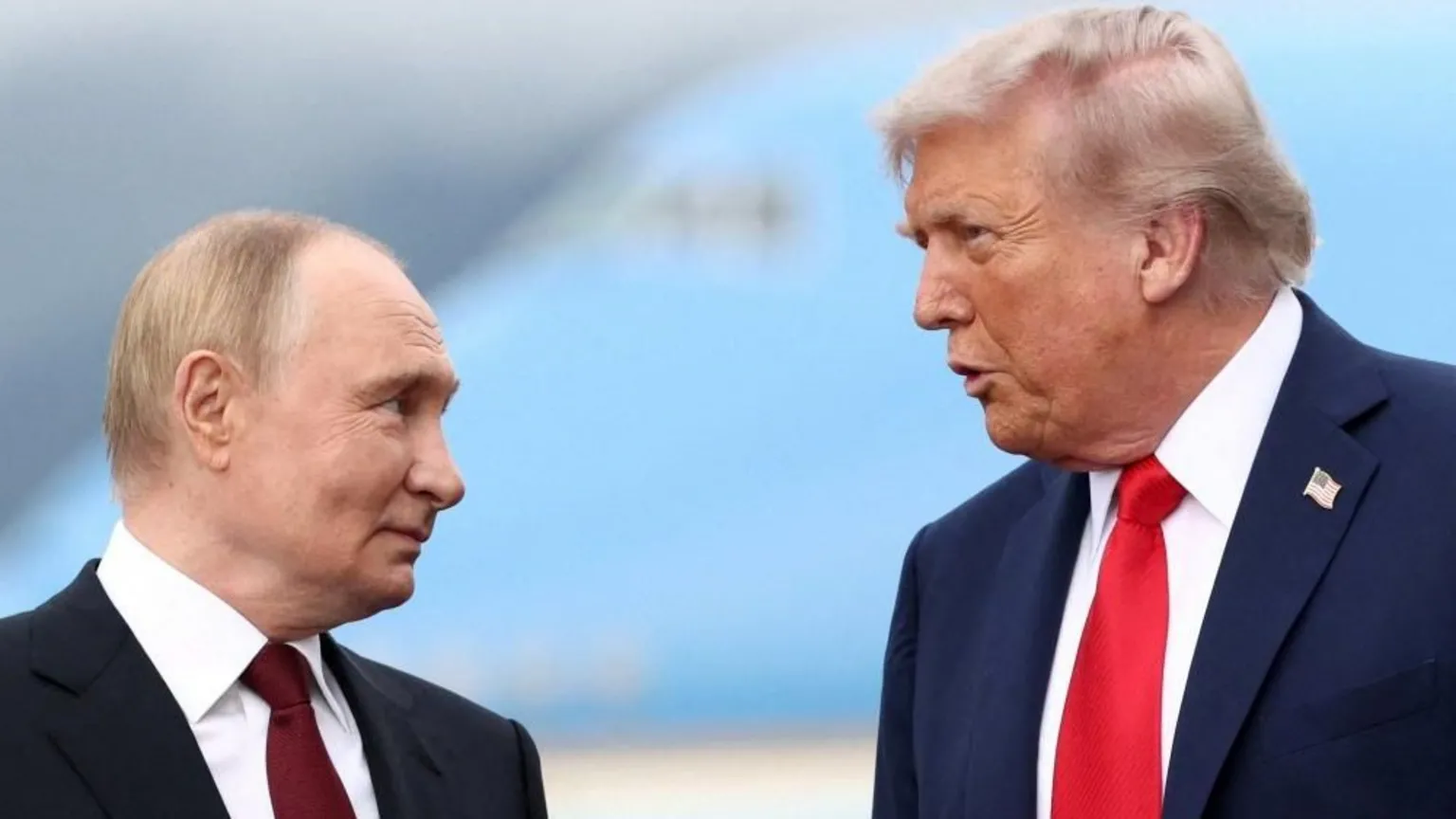
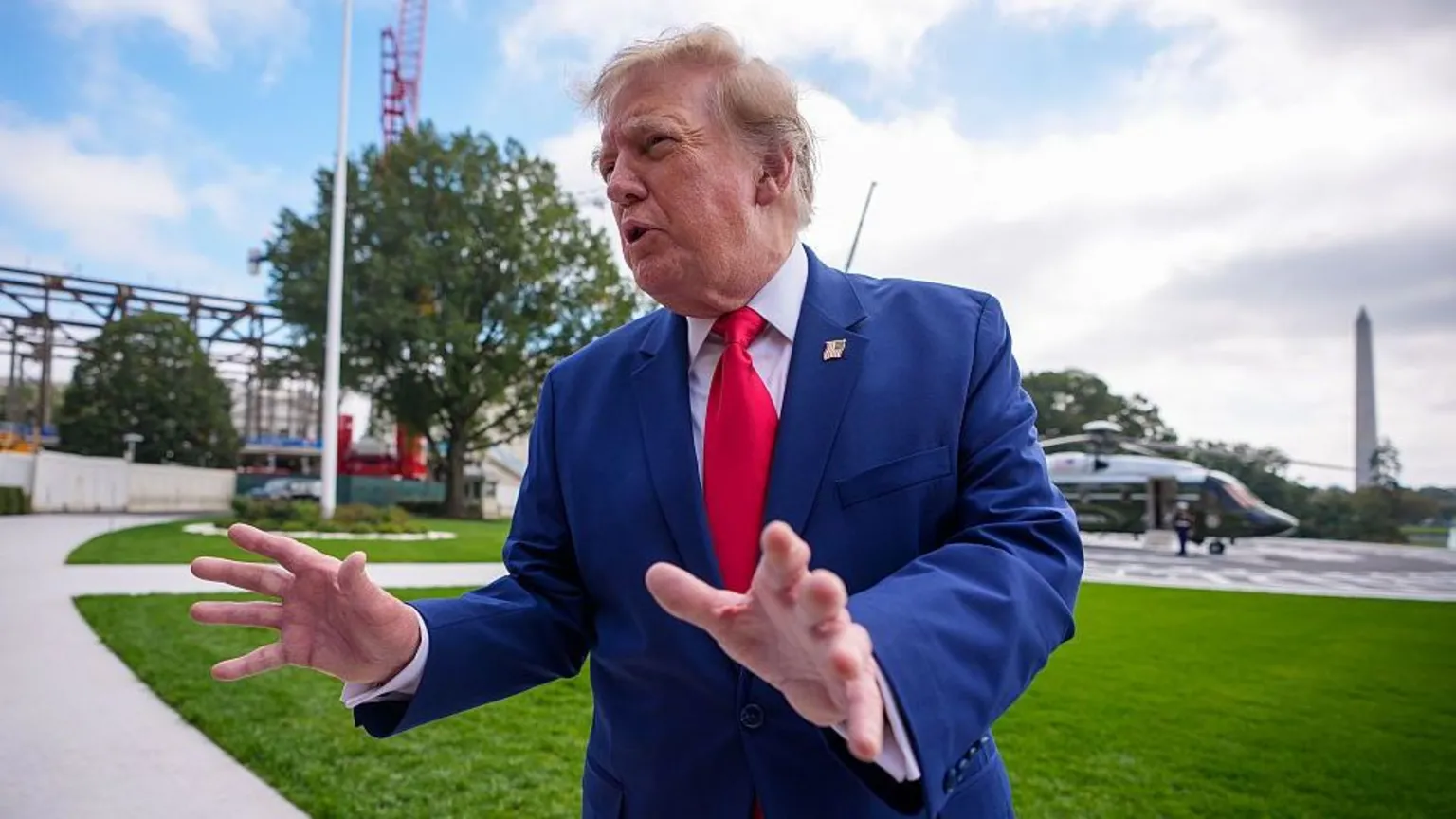
His interventions on immigration and the treatment of undocumented migrants in the United States have, for instance, brought him into disagreement with President Donald Trump and elements of his administration.
The reaction to Pope Leo’s interventions has also demonstrated how quickly a moral disagreement can acquire a political dimension. Critics have accused the Pope of straying into politics, while his defenders have argued that concern for the treatment of vulnerable people is fundamentally a moral and humanitarian responsibility.
That debate bears an uncanny resemblance to the criticism now directed at Archbishop Onaiyekan—that by confronting the Tinubu administration over matters of governance, he has supposedly crossed the line from spiritual leadership into partisan politics.
There is, however, an important distinction between speaking on political issues and participating in partisan politics. A bishop does not necessarily become a politician merely because he criticises government policy. Likewise, a president does not become anti-religious merely because he rejects criticism from a religious leader.
The real challenge is how both sides manage disagreement without allowing it to degenerate into personal attacks or political warfare.
Thankfully, the Presidency appears to have subsequently taken steps to de-escalate the confrontation, including what has been interpreted in some quarters as a veiled apology from the Secretary to the Government of the Federation, Senator George Akume.
Interestingly, this mirrors the way tensions between the Vatican and the United States presidency have at times been managed through diplomatic backchannels and conciliatory gestures after public disagreements.
The larger lesson from the confrontation between President Tinubu and the Catholic bishops is, therefore, that there is nothing new under the sun.
What has happened between the Aso Rock Villa and the CBCN is part of a much broader historical pattern in which religious authority occasionally collides with political power.
Whether in Nigeria, where bishops challenge presidents, or in the United States, where the Pope confronts policies he considers unjust, the underlying principle remains essentially the same: religious leaders will continue to speak to power whenever they believe that the welfare, dignity and rights of the people are at stake.
The real test of democratic maturity is not the absence of disagreement between Church and State, but the ability of both sides to disagree without turning legitimate criticism into political warfare.
■ Magnus Onyibe, an entrepreneur, public policy analyst, author, democracy advocate, development strategist, an alumnus of the Fletcher School of Law and Diplomacy, Tufts University, Massachusetts, USA, a Commonwealth Institute scholar, and a former commissioner in the Delta State government, sent this piece from Lagos.
NOTE: Views expressed by contributors are strictly personal and not of Theliberationnews