

No Yoruba man would pray for the return of the sordid and dark past when life became nasty, brutish and short.
It was in the days of hot regional politics characterised by intolerance, hate, and malice; the rigging of elections and abuse of power.
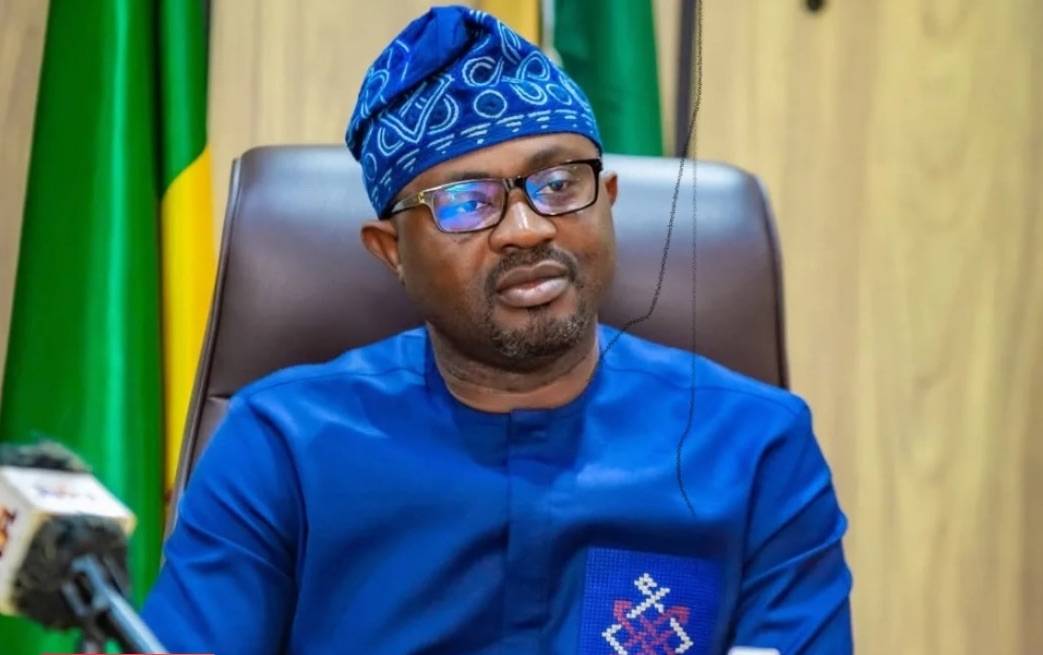
Oyo State Governor Seyi Makinde may have either read about the carnage in history books or had the experience narrated to him by some elders. But the situation that heralded the upheavals, including electoral malpractices, intolerance and repression of the opposition and human rights violations, is currently absent in the region.
The Southwest was in turmoil, following clashes between supporters of the jailed Action Group (AG) Leader, Chief Obafemi Awolowo, and his estranged deputy, Premier Ladoke Akintola of the Nigeria National Democratic Party (NNDP).
Houses went up in flames. Cars were burnt. Blood flowed on the street. From Badagry to Owo, Ikale/Ilaje to Oyo/Oke-Ogun, and from Akoko to Epe/Ijebu areas, there was a complete breakdown of law and order.
Violent protests simultaneously erupted in Mushin, the base of the merchant of thuggery, Omo Pupa; the epic centre, Ibadan, as well as Abeokuta, Iseyin, Akure, Ado-Ekiti, Ile-Ife, Ilesa, and Efon-Alaaye kept the vigil for any eventuality. Scores fled into the bushes. Many went into hiding. Several traditional rulers escaped the mob action by whiskers. They fled their palaces. Many party members disappeared and were never found again.
Yet, the lessons of the 1965 polls appear not to have been learnt. Eighteen years later, Oyo and Ondo states slipped into a political disaster after the 1983 elections when supporters of the Unity Party of Nigeria (UPN) were on the prowl, killing, maiming and destroying the properties of National Party of Nigeria (NPN) members and sympathisers.
Tension had engulfed the Western Region since 1962, when the Awo/Akintola feud led to the split in the AG at the Jos convention. Party stalwarts went to the meeting divided and returned more divided, bitter, and vengeful. Venerable Emmanuel Alayande saw it coming. He was close to both Awo and SLA. He urged them to embrace truce. He advised Awo, in a letter, to maintain an attitude of extreme self-sacrifice and self-abnegation, adding: “You will need to be less inflexible and more condescending.” The party Chaplain also advised SLA to calm down and give peace a chance. The duo did not heed the advice. They maintain their hardline postures.
The genesis was the predecessor/successor crisis in the region. Other factors were the enforcement and resistance to party supremacy, neglect of party doctrine, antics of external collaborators, intra-party rebellion, the repressive tactics of the Akintola government and rigging of elections meant to perpetuate an unpopular government.
Conflicts ensued between the party and the regional government. While Awo controlled the party and the people, Akintola controlled the government, the region’s resources, the police and a section of the judiciary.
Despite these, the premier could not avert a vote of no confidence in the regional parliament. But he succeeded in creating chaos as the motion was about to be moved. A lawmaker from Ogbomoso, Hon. Oke, jumped from his seat, shouting: ‘Fire on the mountain.’ He seized the maze and broke it on the head of the lawmaker from the Midwest Province, Hon. Kessington Momoh. Blood oozed out of his head. There was pandemonium in the House of Assembly as the police threw tear gas canisters at the legislators.
Prime Minister Abubakar Tafawa Balewa imposed a state of emergency on the Western Region and made his Minister of Health, Dr. Moses Majekodunmi, the administrator. In the Federal Parliament, an Action Group legislator, Anthony Enahoro, protested, warning that the prime minister was taking an action which would be the beginning of a chain of events the end of which nobody could foresee. Politicians from both sides were detained, but with bias towards Akintola’s camp.
To remove Awo from circulation, a probe was instituted into his defunct government. Amid the investigation, the Federal Government of Prime Minister Balewa announced that it had uncovered an arms plot. Awo was kept behind bars, and inside the prison, news about the death of his lawyer-son, Segun, in an auto-crash got to him. He was later jailed by Justice George Sowemimo, who claimed that his hands were tied in deciding the matter, having to rely on the evidence of the prosecution witness, Dr. Sanya Onabamiro. In incarceration, the first premier of the Western Region became more popular and greatly revered by the masses than when he enjoyed freedom. The masses loathed Akintola’s government for scrapping free education, dividing the region and pandering to external forces. But historians have argued that the charismatic Akintola was grossly misunderstood.
While the Privy Council in London affirmed Alhaji Dauda Adegbenro as premier, the Federal Government orchestrated a constitutional change that made the Supreme Court the final arbiter and imposed Akintola on the region.
The premier moved swiftly to consolidate his hold on the region, formed a new party, the NNDP, along with Ayo Rosiji, Remi Fani-Kayode, and Richard Akinjide. Then, Akintola started harassing the AG members across the region, using local courts as willing tools in his bid to cow the region for personal purposes. The police, under officers like Lasekan and Olawaiye, acquired the sobriquet, ‘kill and go’. They became terrors to critics of the government.
Traditional rulers were not spared. The salary of the Odemo of Isara, Oba Samuel Akinsanya, who was SLA’s colleague in the Nigerian Youth Movement (NYM), was reduced to one penny per annum. As an Oke Ogun traditional ruler who was suspended was being whisked away by the police, there was wailing by concerned townspeople. Summoning courage in the face of his adversity, the monarch told his subjects to turn out en masse on election day to vote out the evil administration.
A head teacher and federal lawmaker from Ekiti, B. A. Ajayi, was detained and denied bail after someone complained to the authorities that he had broken his cooking pot. Newspapers were banned and editors were hounded into prison.
The tension pervaded the region during the 1964 federal elections, which the ‘Demo’ party won due to a combination of rigging and boycott by the United Progressives Grand Alliance (UPGA) candidates.
The youths rejected Akintola. When he visited a school in Atakumosa in Ijesaland to inaugurate a science laboratory, they chanted ‘ese ole (leg of a thief), a corruption of SLA. Akintola investigated and got to know that the pupils were instigated by two teachers -Adebayo Adefarati and Mojisoluwa Akinfenwa. The duo, who were pursued by security men and thugs, ran away for days.
Returning to Ibadan from his Ekiti campaign tours, students of Ilesa Grammar School threw stones at his convoy. Akintola rejected entreties from the principal, Canon J.A. Akinyemi, and closed the school.
The 1965 regional elections prepared the ground for a total showdown. The electoral commission was in the pocket of SLA. Its officials, led by H. A. Ojerinola, began avoiding aspirants on the UPGA platform. Electoral officers were financially induced and instructed to return NNDP candidates unopposed.
After printing its own ballot papers, the confidence of the unpopular government grew. Akintola thundered: “A ti ti oje bo omo loosa lowo, o ku baba eni ti o bo,” meaning: ‘The bronze ring is already secure on the pagan high priest’s finger, let’s see whose father will dare remove it.’
In a broadcast that followed Akintola’s boast, UPGA leader Chief Dauda Adegbenro retorted: “If the expropriated ring cannot be removed gently, the fingers get chopped off!”
The high priest of rigging in those days was the brilliant lawyer and shrewd politician, Deputy Premier Remi Fani-Kayode, who, in a broadcast, said: “Whether you vote for us or you don’t, we are returning to office; we will make sure that invisible bodies vote for us, if you refuse to. So, you can do whatever you like with your votes. The NNDP has won these elections.”
On poll day, there was uproar. The ruling NNDP claimed that 16 candidates had been returned unopposed. Stalwarts of the ruling party were loaded with ballot papers, which they fed into the NNDP boxes, to the consternation of UPGA members. The electoral regulations were amended to provide that no results would be announced at the centre. It meant the results could only be announced at the Government Secretariat.
In his book, People, Politics and Politicians of Nigeria (1940 – 1979), Bola Ige, the AG National Publicity Secretary (later governor of Oyo State and Attorney-General and Minister of Justice), recalled how R. A. Olusa, a candidate from Akoko, was robbed. He won his election, but the victory was allotted to his NNDP opponent. Someone then contacted Akintola to assure him that Olusa would defect to NNDP after the poll. Thus, his victory was restored. But Olusa, being a loyal AG man, frowned at being asked to defect, saying that he would not betray Awo. The following morning, the radio announced that Olusa had lost the election.
Although UPGA won the poll, the victory was given to the loser. When Adegbenro, demanded that Governor Odeleye Fadahunsi should invite him to form the government, and he announced his ministers, Ige said: “Mr. Odofin Bello, Mr. Olawaiye and Mr. Kofo Lasekan of the Nigerian Police quickly rounded up Alhaji Adegbenro and those he would appoint ministers.”
Law and order consequently broke down. Ige stated: “Repression increased and worsened; thousands of people were jailed, and many died of diarrhoea in prison; religious leaders were openly abused and made fun off; social amenities were deprived of communities by the government; and Akintola went about hectoring.”
Intellectuals, including Prof. V. A. Oyenuga, Dr. Samuel Aluko, Dr. Olu Odumosu, and Prof. Hezekiah Oluwasanmi, were harassed and prosecuted. Aluko fled from the University of Ife to Nsukka.
The people revolted. Customary courts were attacked, and some of their presidents were roasted alive. Riggers were chased out of town. NNDP members’ houses were burnt. Policemen were drafted to quell the riots. Some of them did not return from the operations.
“Some obas had to flee their domain, and one of them, the Zaki of Arigidi, was reconciled with his people only in 1986, twenty-five years after he left his throne. Sir Olateru Olagbegi II, the then Olowo of Owo, who had allowed himself to be used by Akintola and the NNDP, was told by his people to pack and leave. The Onigbeti of Aigbeti had to run away,” Ige added.
The Premier of the West was advised to resign. But Akintola “taku”, meaning he was defiant. Federal authorities were aloof. Curiously, Prime Minister Balewa, who lived in Lagos and who had previously foisted a state of emergency on the region, said he was not aware of the violence. When the attention of the Premier of Northern Region, Ahmadu Bello, was directed to the report on the bloodshed, his excuse was that he did not read newspapers.
The victims counted their losses. Not all the burnt houses were rebuilt. The malice and acrimony were inherited. In the 1990s, a student and a native of Owo refused to attend the town’s students’ association meeting at the Ondo State University, Ado-Ekiti. When queried about his action, he was furious. In his reply, he recalled that during the political crisis, the grandfather of the person presiding over the meeting said thugs should behead his (the student’s) grandfather.
The region became politically divided for many years. The chain of events served as an impetus for the coup that later swept away the civilian government.
But does the situation that led to the killings, maiming and destruction of properties exist today in the Southwest? The answer is no. Rigging is becoming a herculean task and riskier. The nation’s election umpire has been devising means to checkmate poll riggers. This is why Makinde’s allusion to that infamous issue elicited condemnation by many observers. There is no Yoruba Omoluabi who would crave a repeat of that ugly episode. Those who instigated the chaos did not envisage its domino effect on innocent residents of the region. In one way or another, the Southwest is interlinked by kinship, religion, marriage, friendship, politics, and commerce. These bonds not only promote livelihoods, but they also nurture the roots of the trees that bear the sweet fruits the region has been harvesting since the Awo days of politics of development. Even when the locust NPN ravaged the fields of governance at the centre, Awo’s party, the UPN of the Second Republic, stood out, implementing people’s programmes that have remained the standard till today. The success of that administration swept through other parts of the country, like the old Bendel State, where Professor Ambrose Ali became the governor, and in Kwara State, where Chief Cornelius Adebayo raised the progressives flag aloft through good governance.
For a governor in a Southwest state to recall the carnage that engulfed the region then with relish shows either the ignorance of history or political bitterness stretched beyond elasticity. The Yoruba axiom that whoever has witnessed the strike of the thunderbolt would never abuse the god of the thunder remains instructive. The main reason the Southwest is the most thriving region in Nigeria today is not accidental. The people are not only traditionally wise; they are also intellectually savvy and politically circumspect. The Yoruba do not throw the baby away with the bathwater. Those who allowed the external political forces to cause chaos back then later regretted their actions. The Second Republic did not survive it, and neither did most of those who lied against Awo because of power.
Let politicians and their supporters learn to play the game with decorum and mutual respect. The Southwest will never play the politics of Russian roulette on the premise of opposition. There shall be no more Operation Wet E in the land of Omoluabi. Not now; not ever.