
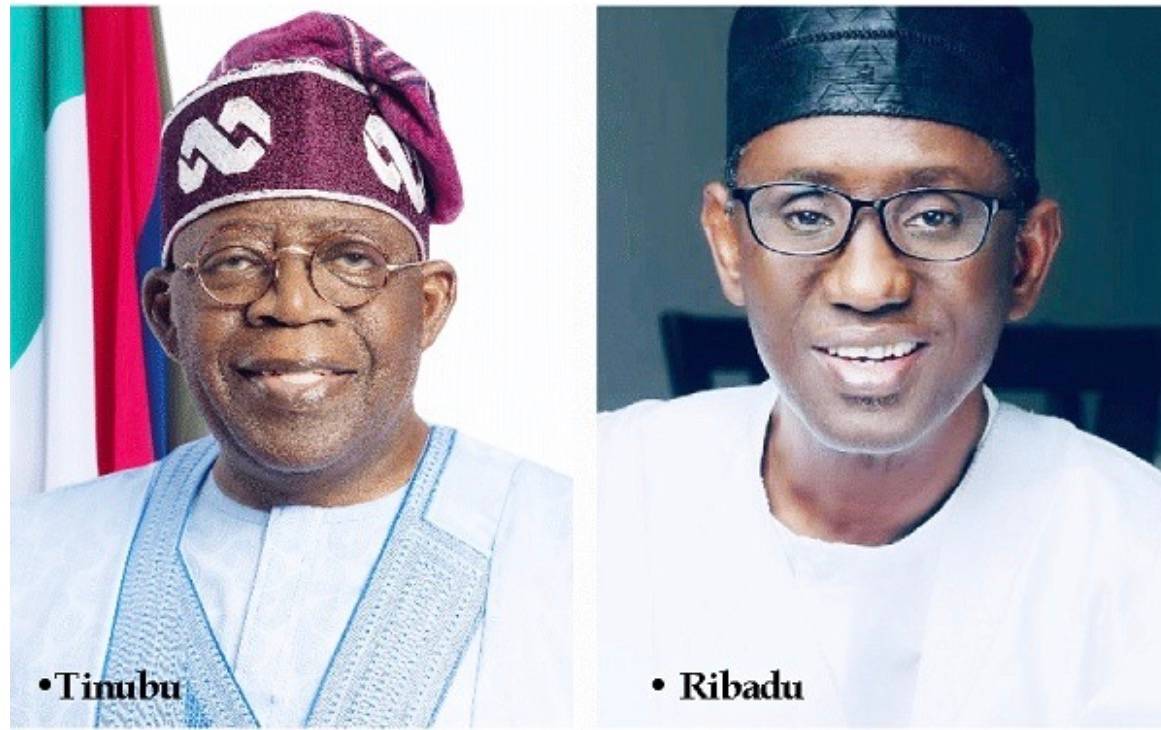

We must begin, first, by addressing the question of whether or not there is a “fall” of Nuhu Ribadu from office in a political sense, before we even talk about learning any lessons from it. My answer is yes. The National Security Adviser, Malam Nuhu Ribadu has fallen from power. We must acknowledge and say this as a political fact, without sugar-coating it, but also without sounding like we are trampling on a man because he is politically down.
In a presidential system, the entirety of the executive branch is effectively one person. For anyone other than the president, then, their power depends on their real and perceived proximity to the boss. If an appointee is close to the president, and is seen to be close to the president, then they have and can wield power. Conversely, the moment an appointee no longer enjoys that access to the president, and is perceived not to enjoy the access, their power ends right there. It doesn’t matter if they retain their fancied titles.
Therefore, when presidents make parallel appointments like President Bola Tinubu did in Nigeria’s security sector last week, the only thing to consider is politics. What we witnessed last week is the political fall of one official, and the rise of another. Nigeria still effectively has only one national security adviser to Tinubu, not two, but their name has changed from Malam Nuhu Ribadu to retired Major General Adeyinka A. Famadewa. Ribadu himself must know that this is just another form of a forced study leave to NIPPS, Kuru, Jos, regardless of the changed circumstances, and that he would need to decide whether to go or quit. That’s all.
It is also an outlandish claim that, from his own detention cell, Malam Nasir El-Rufai somehow masterminded Ribadu’s fall from power. No doubt, Ribadu and El-Rufai have turned from best friends to bitter political enemies, of late. And no doubt, El-Rufai would relish the opportunity to have his pound of flesh, and see Ribadu fall. But even El-Rufai himself cannot personally claim credit for what has happened to Ribadu since last week. Ribadu’s downfall could well have been precipitated more by his “they are our brothers” statement in reference to bandits in the North West than El-Rufai’s letter demanding information regarding the supply of some toxic gasses or his statement on television that he had wiretapped Nuhu Ribadu’s phone.
More directly, Ribadu fell from power because he misunderstood the true nature and character of federal politics under the Tinubu administration. And that misunderstanding, or rather political naivety, shared widely among the northern flank of the government and ruling APC, is the real problem about which I am writing today, for whatever we might learn from it.
For at least two of the past three years, Nuhu Ribadu has been quite possibly the second most powerful person in the Tinubu administration, after only Tinubu himself. But along with Ribadu’s power were also his many Achilles heels. The most nuanced of them is that Ribadu did not learn enough from the precipitous historical record of the office and his predecessors. As national security gradually became centre stage in Nigerian governance, the role of the national security adviser also grew more powerful and central to any administration.
Scarcely any more than an obscure post before military President Babangida elevated it, the office has since grown into one of the three biggest jobs in Nigerian government. On paper and in practice, it involves intelligence access, presidential proximity, political visibility, and enormous discretionary influence on both money and life and death decisions. And on a daily basis. That would be a coveted position in any presidential system, but especially so in Nigeria’s where a zero-sum game of all or nothing is the norm.
Accordingly, as the office grew in influence and prestige, competition for it also became more politically visceral, particularly among retired generals who see it as a birth right. In short, the NSA role has become one of the most powerful but also one of the most politically dangerous and precipitous positions in Nigeria whose occupants rarely end nicely. Tinubu’s recent appointment of Famadewa was not meant to change any of this. Rather, it is the political equivalent of giving you something with one hand, and taking it back with another hand in broad day light. But a critical look at the historical record of the office should have taught Ribadu to go-slow from the start, and perhaps, I can now only hope, he could have avoided quite a few other fatal errors that, combined, nailed his political coffin, however we look at it.
The most consequential of Ribadu’s Achilles heels is that he misread, misunderstood, and misapplied the fundamentals of federal politics in Nigeria under a southern president. Ribadu is not alone. You see, the ghosts of the past have not yet died down in Nigerian federal politics. Three times now since 1999, we have seen a southern president who assumes office still bearing some perceived historical grievances of “Northern Domination”. Grievances that are expressed or manifested in their politics and policies, in above all in their political rhetoric and appointments.
Southern Nigeria is still caught up in the tendentious pre-independence and immediate post-independence politics in which the North is regarded as the ultimate political enemy to be fought to a standstill. To date, southern political psyche has not shifted from this basic binary, be they a voter, politicians or president. The political culture of southern Nigeria is still almost entirely anti-North, and perhaps will continue to manifest in Tinubu-like governments for the foreseeable future, unless we all find a way to break the cycle. Tinubu is only the latest actor in this dynamic of southern federal politics. But he is not the first because Presidents Obasanjo and Jonathan were there before him. Nor would he be the last because some people are grooming Peter Obi to take over from Tinubu merely out of disaffection with the latter.
The more important issue, however, is to ask: how has the northern political establishment responded politically to this basic and persisting southern political tendency post-1999?
The response has been a mix of reactionary impulses, internecine political in-fighting, and well, some collective fatalism and resignation. What was much needed in the North in 1999 was a clear understanding that sustained democracy in Nigeria would mean rotational presidency over the long term, and that the first few southern presidencies would necessarily take a southern political bent, even when they came to power with the help and votes of the North, as in the cases of Obasanjo in 1999, Jonathan (2011) and clearly, Tinubu (2023). That sort of understanding could have helped the northern establishment transition better into eight years of an Obasanjo presidency and helped build a new northern strategy for federal politics.
Instead, the political tendency in the North was to feel outraged that Obasanjo was not holding power on their behalf as they had expected for supporting him to office. This reactionary impulse resulted in daily rhetoric of outrage in the press against Obasanjo’s government, and eventually the establishment of the Arewa Consultative Forum, as a way of counter-balancing Obasanjo. It worked until Obasanjo decided to create his own Northern Elders Forum.
Northern politics has never been the same again, whether under a southern or northern presidency, but particularly so under a southern president. But to understand why Ribadu failed to grasp the dynamics of federal politics under Tinubu, we must first look at what happens to northern politicians and voters under a southern president beyond Obasanjo.
Part II
In the first instalment of this series last week, I made three points. First, I argued, against the grain, that President Bola Ahmed Tinubu’s recent creation of a parallel Special Adviser on “Homeland Security” is not an administrative or operational adjustment. It is, I said, a purely political move that signals the fall of Nuhu Ribadu, and the elevation of General Famadewa.
Secondly, I argued that Ribadu had not studied or understood enough the precipitous nature of the office he still nominally occupies, but practically and politically no longer does. Over time, the position of National Security Adviser has evolved to become one of the most powerful but also most unpredictable offices in Nigerian politics and governance. Had Ribadu fully taken the import of this chequered history of the office into consideration, I said, his approach to the job might have been different, and he probably would have avoided plenty of the unforced errors that eventually combined to strip him of his power.
Finally, I argued that Ribadu’s fall from power reflects a broader and recurring pattern of northern elite political behaviour under southern presidencies since 1999. Southern political psychology, I said, has remained trapped in the bubble of some perceived historical grievances of “northern domination”. And since 1999, Southern presidents have tended to arrive office with at least some sense of the need to correct some of these perceived historical injustices. Tinubu is only the latest—and purest—example of this dynamic of southern federal politics, but he is neither the first nor would he be the last, until the underlying political psyche shifts.
Unfortunately, I concluded, northern political elites have tended to misunderstand this deeply entrenched sense of grievance in southern federal politics. And as a result, northern politicians have tended to approach southern presidencies, from Obasanjo, Jonathan, and now Tinubu, through a mix of reactionary tactics, mutually destructive political in-fighting, orcollective silence and resignation. This tendency, I said, only weakens the region politically, and makes it easier for any southern president to pick off his northern political adversaries one after the other, until there is no one left standing.
This is exactly what has happened under Tinubu with the fall of Ribadu. It is also precisely why the lessons must be learned, not just by Ribadu, but by all northern politicians and political elites. And that, in short, is the heart of this two-part series, to which I now return.
Within the foregoing context, Ribadu made three further fatal mistakes. First, Ribadu actively sought to position himself as the “head of the northern delegation” within the Tinubu administration, and as the sole interface between the Tinubu government and northern Nigeria. This brought Ribadu into direct but unnecessary conflict with Vice President Kashim Shettima, the natural head of the “northern delegation”. Now, because politics has its own inherent hierarchies, and the Vice President is second only to the President, if not in power, at least in symbolic order, Ribadu’s ambition could only be realized by functionally, politically, and symbolically undermining Shettima at every turn.
That, for me, is the single most destructive and disruptive thing in northern politics of the past three years or so.
By seeking a position already occupied as a matter of course by Shettima, Ribadu did not weaken Shettima alone, but the entire northern flank of the party and government. His political antics destabilized everyone else and prevented the northern wing of the government from creating and nurturing any sense of a collective within the administration. Yet, this sense of a collective, of the northern bloc as a full partner in the APC coalition, even if only symbolically, is important for Tinubu to respect and give northern Nigeria its due for their support in his election. Unity, even of a merely symbolic kind, is one of the most important things in politics.
Worse than that, Ribadu’s crude in-fighting to be the head of the northern bloc of the government and the only link between Tinubu and the north only made it easier for Tinubu to pick off any northern politician or leader he no longer likes or trusts, whether within the government or outside of it. From the removal of Senator Abdullahi Adamu as national chairman of the APC, the political intimidation of the Sultan of Sokoto, the side-lining of Vice President Shettima, the emirate crises in Kano, the all-out political war against El-Rufai, etc, to Ribadu’s own fall last week, it was downhill and easy sail for Tinubu to take down all northern hurdles in his path to complete Yoruba/Lagos control of the party and country.
Northern Nigeria, which contributed 65% of the votes for Tinubu’s victory, does not enjoy the status even of a junior partner, let alone an equal one, in this government. it is also often treated worse than a subordinate under any circumstances. But it is all because the northern bloc of the party has lacked political coherence and sense of a collective under Tinubu. And that itself resulted mainly from Ribadu’s contest of northern leadership with Shettima, and his insistence that he alone is the bridge between Tinubu and the region on every issue. By doing so, he weakened not just Shettima but the entire northern wing of the government and party, and ultimately, himself. That is an important lesson for all to remember.
Secondly, Ribadu misread the political instinct with which Tinubu and his circle arrived Abuja in May 2023. As I wrote in a piece in these pages titled “Emilokan: Act One, Scene One”, Tinubu and his people have not arrived in Abuja to play second-fiddle or share power with their northern partners in the party. The Tinubu bloc sees itself, first and foremost, as the true heirs of Chief Obafemi Awolowo in Yoruba politics, and Tinubu himself as effectively the first Yoruba president of Nigeria.
The implication is that people around Tinubu always viewed Ribadu’s job as a role not meant for an “outsider”, that is, to a non-Yoruba appointee, however close they may be to Tinubu. That Ribadu is not a retired soldier only intensified the competition by insiders around Tinubu to retake his position from Day One. This was the real fight for survival Ribadu had on his hands right from the day Tinubu appointed him. But rather than focus attention where the real threats to his job lay, he went fishing in the wrong waters. Until he was undone.
It is interesting how Ribadu failed to see that both operationally and politically, he was always a lone Fulani in a forest of Yoruba heads around the president’s kitchen table. Any northern Yoruba Nigeria who has lived or worked in a Yoruba dominated environment, a northern youth corps member serving in the southwest for example, would quickly recognisesuch a political demographic as dangerous and untenable in the long term. Ribadu did not.
Perhaps he had so much trust in Tinubu. But then again, there is a huge difference between a Nigerian Yoruba man and a Yoruba Nigerian. Obasanjo is an example of the former, Tinubu is much of the latter. The way a President Obasanjo would trust a Nuhu Ribadu is not the same thing as the way a President Tinubu would trust a Nuhu Ribadu. A President Obasanjo will give you cover and protection till the end, so long as you don’t go against him personally. And to his credit, he gave Ribadu all the protection and over he needed. For a paranoid Tinubu, however, certain kinds of whispers, by certain kinds of persons, and at certain moments are enough, and you are toast. It doesn’t matter whether the whispers are true or not.
Suleiman writes from Abuja (suleimansuleiman@dailytrust.com; 07066451983 SMS)