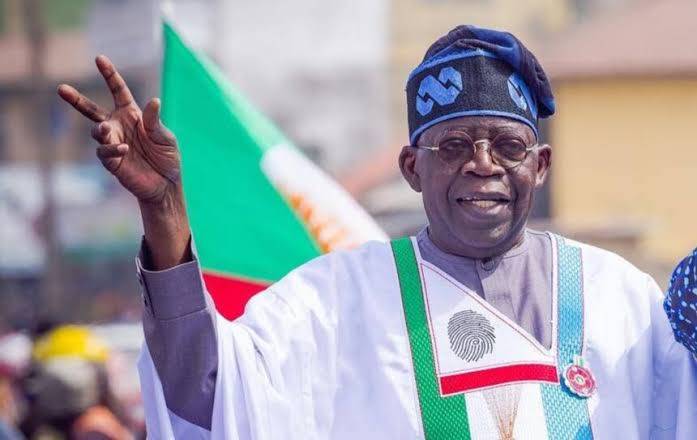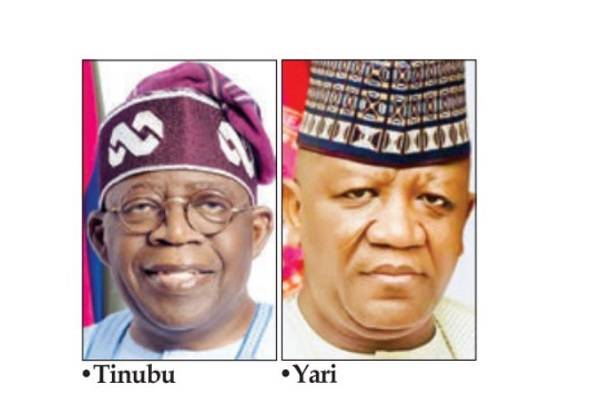


If major segments of the political opposition in Nigeria are to be believed, President Bola Tinubu is the garand architect behind the travails, some terminal, that have plagued parties like the PDP, Labour Party (LP), African Democratic Congress (ADC), and possibly now the National Democratic Congress (NDC) in the run-up to the 2027 general elections. Even the New Nigeria People’s Party (NNPP) and the People’s Redemption Party (PRP), the latter still being resuscitated, are angling earnestly to be named among those being factionalised and oppressed by the President and the ruling All Progressives Congress (APC).
President Tinubu is projected as being averse to having a competitive presidential election next year. Thus, he is allegedly doing everything possible to destabilise major opposition parties and deny key candidates viable platforms to contest the presidential election. Indeed, they go ahead to accuse the Independent National Electoral Commission (INEC) and the judiciary of colluding with the President and his party to actualise such an anti-democratic project.
Unfortunately, these allegations are made in the form of loose, crude and wild generalisations with no concrete proof or credible validation. Desperate attempts to unfairly taint the INEC National Chairman, Professor Joash Amupitan (SAN), as partisan and biased have gained no traction, even though it is most likely that vile attacks on his person and the electoral umpire as an institution will increase in intensity the more frantic the opposition becomes.
Instructively, the INEC had come under the ferocious verbal onslaughts of opposition elements in the ADC for delisting from its portal members of the David Mark-led National Working Committee (NWC) of the party in obedience to a ruling of the Court of Appeal in Abuja.
Yet, the same INEC immediately restored the names of the factional ADC executive members to its website in accordance with the recent ruling of the apex court setting aside the Court of Appeal ruling on maintaining the status quo ante bellum. In spite of this, the ADC continues to insist on the removal of Amupitan, not for any proven wrongdoing and with no respect whatsoever for laid-down procedures for removing an occupant of the office.
In the case of the judiciary, some opposition politicians had incessantly sought to impugn the integrity, character and credibility of judicial and security authorities along with the INEC. This newspaper’s columnist, Sanya Oni, described this as a proactive and preemptive attempt to discredit and taint the credibility of the 2027 elections ever before the polls. But the ADC was full of praise for the Supreme Court’s decision on the party’s leadership crisis that paved the way for the renewal of its recognition by INEC. But the ADC must still go back for the decision of the Federal High Court, Abuja, on the issue.
The latest example of the resort by opposition elements to threats, intimidation and outright incitement of the public to violence was the incendiary remarks by Alhaji Buba Galadima, a former chieftain of the NNPP, who has followed his leader, Engr. Rabiu Kwankwaso, in defecting from the ADC. Addressing an audience in Kano, Galadima was reported in the media as warning “that the government is so desperate to maintain power in 2027 that it might ‘start to kill or assassinate some opposition leaders,’ adding that if anything happens to opposition figures, the government should be held directly responsible.”
Accusing the ruling APC of desperation leading to the attempted destruction of all opposition to avoid a fair contest, he alleged that “they are orchestrating crises within other parties to ensure a single-party scenario in 2027.” Growing even more incendiary, reckless and berserk, Galadima then reportedly “called on people to defend their votes with kerosene, suggesting a ‘do or die’ scenario for Nigerian democracy,” as one medium reported the event.
It is inexplicable that Galadima has not been invited by the security agencies to validate his claims of plans to assassinate opposition leaders, as well as explain his incitement to arson if his political party loses in the forthcoming elections. He has not denied making the statements credited to him as far as I know. It may be that the security authorities simply dismissed Galadima as a political non-entity of microscopic political or electoral value and thus decided to just ignore him as an irritant at best.
The danger is that others may follow his example if they believe there will be no consequences, no matter how wild and frivolous their public utterances. In any case, it is unlikely that, at his age, Galadima will be at the forefront of any post-election violence. It is therefore the youths that he is inciting to violence, with the strong possibility that none of his children’s lives will be put at risk.
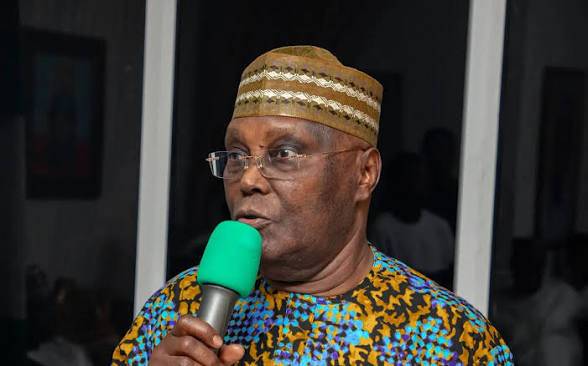
If President Tinubu is indeed the brains behind the crises that have plagued opposition parties like PDP, ADC, LP, and now threatening the NDC, his accusers confer, perhaps unwittingly, some kind of superhuman aura or status on him. Let us take the PDP crisis, for instance. Tinubu must have, telepathically, influenced Alhaji Abubakar Atiku to contest the 2023 primaries of the party despite the subsisting zoning formula in the party. The President must have invoked witchcraft powers to ensure that the victorious Atiku camp so brazenly mismanaged the outcome of the PDP primaries, leading to the alienation of five PDP governors who eventually worked for a Tinubu victory in their states. The party never overcame the crises arising from the Waziri’s conduct.
In the case of the LP, the ruling APC was accused by other factions of the party, including its institutional support base, the NLC and TUC, of propping up the Abure-led faction to the detriment and disadvantage of the interim NWC led by Mrs Nenadi Usman through endless litigations. Incidentally, the Usman faction supported Obi before his peremptory defection from the LP to the ADC. Now, the Supreme Court has derobed the Abure faction of the LP and accorded legality and legitimacy to the Nenadi Usman tendency. Curiously, Mr Obi claims that normalcy returned to the LP because the APC leaders were relieved that he had left the party!!
And in once more deserting the ADC for the NDC, Obi said he doesn’t stay in a house where there is strife and trouble, but would prefer a more tranquil destination like the NDC. But what confidence does he have that who allegedly chased him from the LP and the ADC will not also sow dissent and factional contentions in his new party, given that he, demonstrably, lacks the skills to negotiate settlements in conflicts or the stomach to stand strong and fight for his rights and those of members of any party he belongs to?.
It is difficult to fault the submission of his erstwhile colleagues in the ADC that Obi is only scouting for a platform that will offer him its presidential ticket on a platter without competition. At its recent summit of opposition leaders convened by Governor Seyi Makinde in Ibadan, the participants in their communiqué had expressed the intent of opposition parties to present one candidate against President Tinubu in the 2027 elections. Barely days after the declaration, it was completely torn to pieces as each candidate continued their separate aspirations to the presidency, sometimes employing mutually destructive and obstructive tactics.
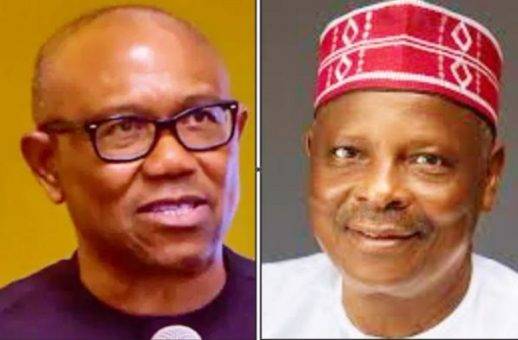
Thus, at a time when the opposition needs to band together closely and find a new cohesion, Obi and Kwankwaso, along with a sprinkle of legislators, have left the ADC for the NDC. This further splits the opposition and makes it even more vulnerable to an electoral shellacking in 2027 than was the case in 2023. In any case, the ruling party has enough challenges managing its internal party processes at all levels before 2027 to have the time or energy to dissipate in destabilising the opposition. Untamed rival individual aspirations are the greatest problem of the anti-Tinubu coalition, not the supposedly superhuman strategic genius of President Tinubu.