
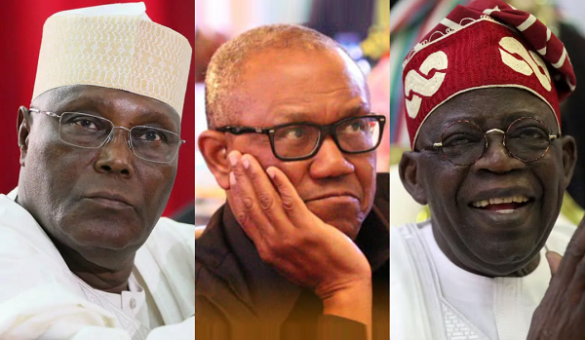

A constant refrain from dominant elements of Nigeria’s variegated opposition in recent months is that democracy in Nigeria, allegedly due to the deliberate machinations of the President Bola Tinubu administration, is in the very throes of death. The administration has been routinely accused without the slightest scintilla of evidence of instigating the intra-party crises that have rocked the major opposition parties. These allegations have been reinforced by the large scale defections from opposition parties to the ruling All Progressives Congress (APC) of elected and appointed functionaries of states and local governments as well as legislators in the National Assembly.
The defections have been often cavalierly attributed to either inducement or intimidation and threats by the APC with a view to imposing a one-party state on Nigeria. Again, no effort is made to credibly substantiate such allegations. It hardly seems to matter to those who peddle such views that political vagrancy has been a constant feature of Nigerian politics right from the First Republic ever before President Tinubu ‘s ascension to power at the centre.
The political terrain in Nigeria in the last one week has most certainly not been one in which democracy can be described as dying or dead. There have been intense activities across political parties as they conduct intra-party contests to pick candidates to run for various offices in next year’s elections at all levels in a bid to meet up with time-frames set by guidelines of the Independent National Electoral Commission (INEC).
Neither protracted factional legal feuds in which some opposition parties are embroiled nor the nullification of some aspects of the INEC guidelines by a Federal High Court in Abuja has stopped parties from seeking to meet specified timelines in picking and submitting candidates’ names to the electoral umpire. True, the ruling APC has been dominant both as regards the territorial scope of its intra-party electoral presence and it’s organizational efficiency and dexterity. These are some of the benefits of incumbency which the PDP once enjoyed before it.
While the consensus mode of primaries worked for the APC in many states, it also had no choice but to resort to the conduct of direct primaries in a significant number of instances when no agreement could be reached on consensus. The turn out of party members for the direct primaries across states as shown on national television was unprecedented in the history of intra-party contests in Nigeria. This indicated considerable grassroots interest and participation.
Other parties have been equally active. Even though still unrecognized by law, the Tanimu Turaki led faction of the PDP has nominated ex-President Goodluck Jonathan as its presidential candidate for the 2027 polls. Although it understandably has shown negligible interest in the presidential election, the Barrister Nyesom Wike-led, legally recognized leadership of the party is fielding candidates for executive and legislative office and will offer a keen contest in many states.
As it awaits the outcome of its ongoing intra-party legal battles, the ADC held impressive presidential primaries in which former Vice President Atiku Abubakar triumphed as expected although his opponents, Mr Rotimi Amaechi and Dr Hayatudeen, have protested the results alleging widespread infractions. The NDC has picked Mr Peter Obi as its consensus presidential candidate and the former governor of Kano State and erstwhile leader of the NNPP, Mallam Rabiu Kwankwaso, will be his running mate.
The LP, Youth Progressives Party, Allied Peoples Movement (APM) among others have been keenly working towards picking their candidates for state and national elections. This scenario does not align with the narrative of a looming one-party state. Even in the APC, there is no intra-party hegemonic control. Apart from the near-unanimous support for President Tinubu ‘s re-election, governorship as well as state and national legislative seats have been hotly contested in several states.
leadership of the APC has prioritized reconciliation of aggrieved parties in the aftermath of the primaries. As its National Chairman, Professor Nentawe Yilwatda, explained on national television, the party has set in motion its conflict resolution mechanisms to bring about healing and reconciliation before the general elections. That the ruling party is not taking things for granted and expects healthy contests in many states is an indication of a vigorous and vibrant democracy.
Another grave danger to democracy in Nigeria, according to key opposition voices, is that the judiciary as an institution has been suborned by the ruling party and denuded of its expected impartiality and independence. This unceasing attempt to impugn the credibility and integrity of the judiciary is not a new feature of Nigeria’s politics. In our highly litigious society, Judicial decisions particularly on political matters have always been perceived and interpreted through partisan prisms and this dates back to the First Republic.
Interestingly, some of those who frequently assaulted the integrity of the judiciary and by implication the character of Judicial officers at local and international fora were quick to laud the decision of the Supreme Court which set aside the Court of Appeal ruling that the status quo ante bellum be maintained in the intra-party party legal dispute within the ADC. That ruling resulted in the INEC immediately restoring its recognition of the Senator David Mark -led leadership of the ADC pending the final outcome of the case which has been referred back to the Federal High Court, Abuja.
In a similar vein, the decision last Wednesday by Justice Mohammed Umar of the Federal High Court, Abuja, voiding part of the election guidelines released by INEC for the conduct of the 2027 general elections, has been widely hailed by those same sections of the opposition that have incessantly tarnished the image and reputation of the judiciary. Also ruling in another suit filed by the Social Democratic Party (SDP), Justice James Omotosho also of the Federal High Court, Abuja, voided two of the timelines set by INEC for submission of candidates on the ground that they violated some statutory provisions of the 2026 Electoral Act.
On Tuesday, the Federal High Court in Abuja dismissed the suit seeking to disqualify former President Goodluck Jonathan from contesting the 2027 elections while earlier the Supreme Court voided aspects of the law empowering the Federal Government to control land adjoining a state’s inland waterways thus deepening federal practice in Nigeria. The Nigerian judiciary is thus as active and autonomous as it should be in a liberal democracy like ours.
As the experience of the United States, after which we have patterned our presidential system shows, however, Judicial decisions in a complex federal polity tend to be influenced and interpreted by ideological and partisan considerations and this is moreso in our own case given the premium placed by the political class on contestation for and control of state power. Again, it is difficult to uphold the credibility of the claim of an emergent one-party dictatorship in Nigeria against the background of the continued vigour, dynamism and vibrancy of the country’s media.
This is moreso given the obvious, unhidden anti-Tinubu administration bias of major segments of the traditional media in particular. Most newspaper editorials and columnists as well as television and radio talk shows are heavily skewed against the administration partly for ethnic, regional, religious or sheer partisan considerations. But the terrain is more evenly contested by pro and anti government elements on social media. But the ultimate verdict is that the alleged impending death of competitive democracy under the Tinubu administration is grossly exaggerated.