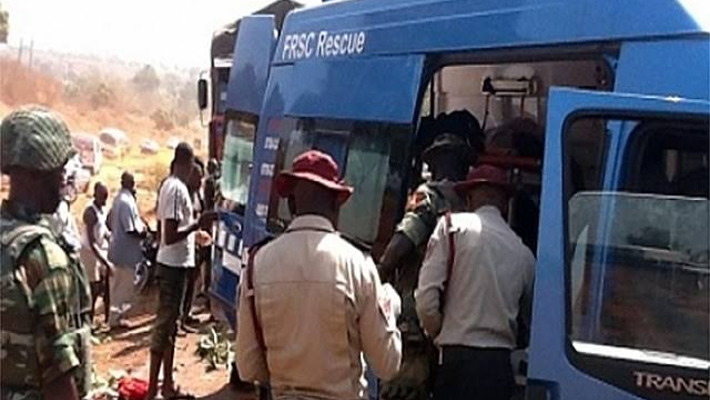


When bandits stormed some Southwest communities close to Ogbomosho town in Oyo State on May 15 and abducted about 46 teachers and schoolchildren, some of them infants, it was not the first time militants would attack Yorubaland.
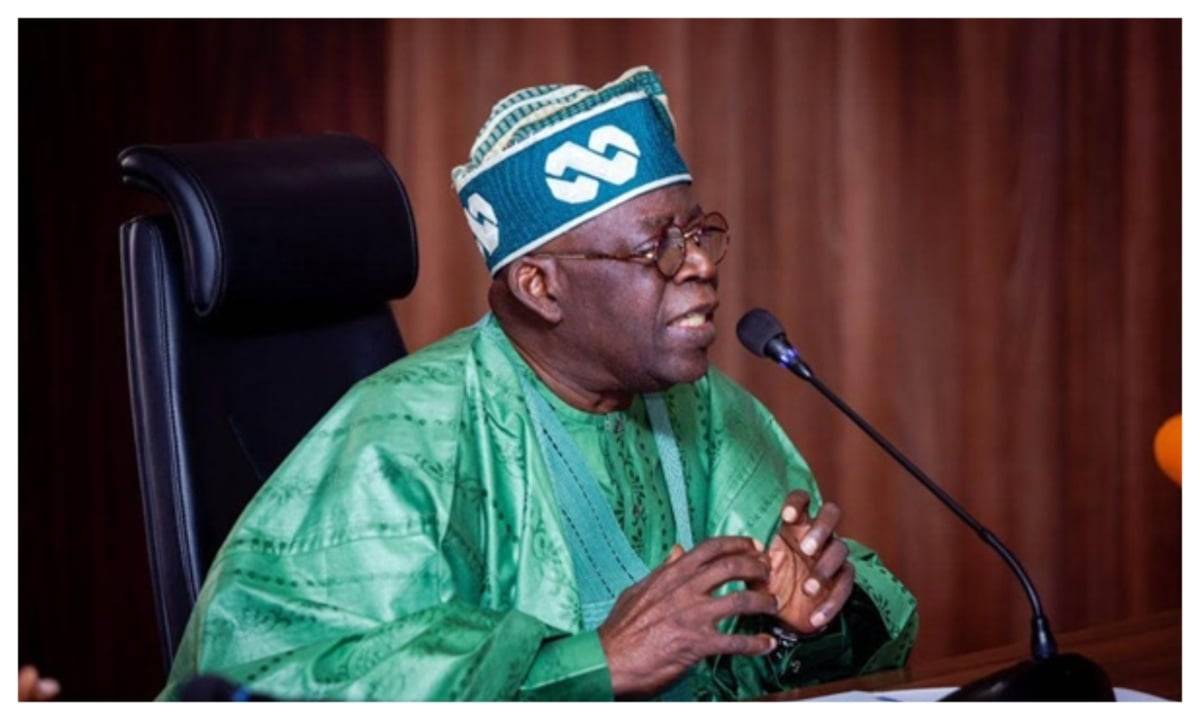
Given the dynamics of politics and insecurity in Nigeria, it is unlikely to be the last. The media, however, went into reportorial frenzy, with the Southwest media being the most vociferous. For a moment, Oyo State’s responsibility towards its abducted indigenes was almost subsumed under the din of reporting; instead, Abuja, the seat of the federal government, became the cynosure of all attention and bearer of the chief blame. In his effort to douse the flames of anger billowing around the Southwest in particular, President Bola Tinubu dispatched a high-powered delegation led by his Chief of Staff, in company with the National Security Adviser, Defence minister, and a host of top military chiefs, to reassure survivors and families of the victims that their loved ones would be rescued. But fair words, they say, butter no parsnips.
On the same day the terrorists struck in Oyo, a faction of Boko Haram also abducted some 42 primary and junior secondary school pupils and students in Mussa community, Askira Uba Local Council of Borno State. It has not yet been determined whether apart from the dates of the abductions, the exact hour of both Oyo and Borno abductions also tallied. But the numbers and the mix (primary and secondary schools) nearly tallied, prompting analysts to suggest that something very sinister was afoot. That seeming coincidence will probably not escape the penetrating analysis of the security agencies. But traumatised teachers in Borno are angry that the federal government had seemed to pay more attention and assigned bigger weight to the Oyo attacks. If the federal government has seemed to buckle under terrorist attacks that are now spreading and becoming fashionable, it is because the tactics deployed to deal with the cancer have not been as effective as are needed to curb the malady and rescue thousands of victims still pining away in various forests. Given the scale of the Oyo and Borno attacks and the number of victims involved, including the median age of some 50 percent of the children taken, the federal government cannot absolve itself of blame.
If Southwest newspapers became frenetic over the Oyo and Kwara attacks and abductions, not to say the sporadic and sometimes isolated kidnappings in many parts of Yorubaland, it is probably because the region is their catchment area and media professionals generally demonstrate genuine concern for the victims who are mostly their kith and kin. It may also be because the attacks are creeping too close for comfort and exploding their complacencies and years of indifference to national tragedies. But it may in fact also be because the attacks feed into their political narratives and justify their inveterate opposition to the Tinubu administration. However, given the size of the country, its large forests, the comparatively small size of the nation’s security forces, and the reluctance to recognise that the nation is at war, let alone order general mobilisation or partial conscription, the abductions targeting soft targets and executed with unimaginable cruelty will continue at least in the near term.
Yet, many observers, including the government itself, appear convinced that the frequency and intensity of recent attacks and abductions are orchestrated for largely political reasons. To them, they have become huge commercial enterprises; and as another election cycle looms, they expect the abductions to increase in number and ferocity, catering also to the greed of many local collaborators and informants. The menace appears poised to spread even further, with heavily armed bandits and insurgents convinced that the federal government and somnolent state governments will be unable to muster the resources and personnel to respond adequately.
The attacks will multiply because the government’s desultory response, shaped by decades of inattention to and under-investment in security infrastructure, is unable to secure the whole country. Bandit and insurgent leaders may be targeted and neutralised, but new leadership will simply rise to fill the vacancies, especially as Nigerian borders remain porous and external non-state actors begin their feeding frenzy upon the country. The times call for unity in the face of existential threats, but the idea of Nigeria as a nation is alien to a sizable part of the population.
A few factors explain why the dynamics of banditry and abductions are misunderstood and why views of the crisis have remained amorphous. Three of the factors involve the government, media, and politics. Firstly, given how insurgency and banditry have lasted more than a decade, it suggests that the government has not quite got its military tactics and political strategy right in fighting the menace. The crisis began as a northern phenomenon propelled by religious extremism and socio-economic revolt. While on the one hand the region inexpertly addressed the issues fuelling the socio-economic revolt, on the other hand it tragically worsened the crisis by initially cuddling religious fanaticism, with all its disruptive consequences, and then displaying ambivalence towards those who engaged in religious excesses. For more than a decade and a half, the federal government was lily-livered in dealing with the situation or calling conniving governors to question. The problem has now metastasised, and will need more than surgical interventions.
Secondly, it is unclear why the media, particularly in the Southwest, have been unwilling to rally both the government and the people to stand firm against terrorism, when in fact, as history clearly demonstrates, they will be the biggest losers in the event of wholesale breakdown of law and order. One explanation is that they backed a different horse during the 2023 polls and have since been wary of doing anything likely to strengthen or stabilise the administration. The government inherited an economy in the throes of total collapse, with every indicator showing negative readings. Three years of executing tough measures have revivified the economy, put it firmly on the path of growth, helped it to withstand recent shocks induced by global disruptions, and delivered state governments from debt peonage. Even the media themselves have befitted from the retooling and recalibration of the economy, despite the convulsive effects of internal and external shocks.
Though the Southwest media have tried to pretend that their support for other candidates indicate a healthy but deep antipathy toward ethnic politics, they have been unconvincing about the real reasons they supported either former vice president Atiku Abubakar or former Anambra governor Peter Obi in a three-horse race that also included candidate Tinubu. In several interviews, Mr Obi had been given opportunities to tackle questions on economic issues either before the 2023 polls or after, or exhibit his leadership mettle, particularly in the face of daunting opposition. In none of his answers did he ever show insight, understanding, or clear articulation. None whatsoever. Instead he showed a disturbing propensity to yield to his enemies, at first in yards, and then remorselessly in miles. Media support for him was, therefore, irrational and prejudiced. Opting for Alhaji Atiku, a Fulani campaigning to succeed another Fulani who had ruled the country for eight years, was even a far more atrocious contemplation capable of damaging the psyche of other ethnic groups. He never showed he had the courage of his convictions, and was unpersuasive about his religious credentials, but a section of the Southwest media yearned for him and his supercilious air. Even after the polls had been won and lost, the same media establishments were tepid in their opposition to calls for a preemptive coup d’etat, and also regretted the inability of the constitution to engender a run-off in a three-horse race where the votes were very close.
The abductions are unlikely to end soon. The country is too willfully divided to lend a helping hand in galvanising measures capable of knocking the insecurity and abductions madness into a cocked hat. Despite visible progress in the economy and the stabilisation of the states and the entire polity, opposition to President Tinubu has remained strident. On its own, the far North, especially represented by significant members of their leadership, has suffered withdrawal symptoms regarding the highest office in the land in part because the president has ruled without the timorousness displayed by former Nigerian leaders. Disregarding the stabilising influence of rotational presidency, some of them have thrown caution to the wind and schemed openly and audaciously for a return to power. They are unable to stomach the president’s far-reaching measures, or appreciate the overarching interest of a nation struggling to find the right formula, in the absence of a thorough rework of the constitution, to associate. But if power is the opium of a section of the northern leadership, what propels the Southwest to engage in internecine wars even in the face of collective danger? Perhaps the fickleness of their leadership elite, or the abject lack of political consciousness of the followership, most of whom display appalling ignorance on social media as they strive to outdo one another in misreading their history and ridiculing their leaders. Much more, they seem animated by something far more apocalyptic, something harrowingly integral to their history.
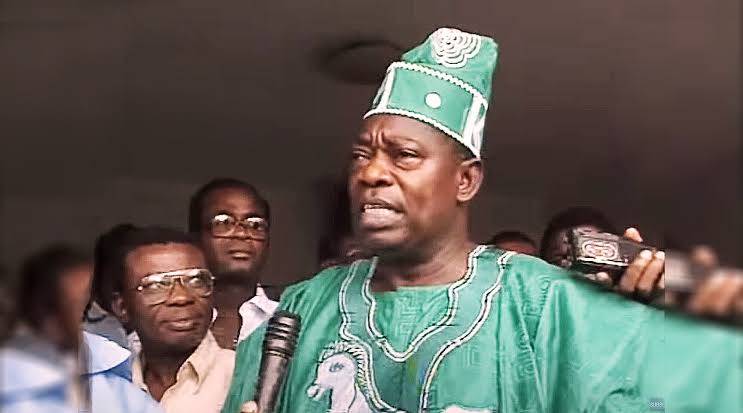
In the First Republic, a critical section of the Yoruba leadership gave the impression they were unwilling to defend Obafemi Awolowo, former regional premier and opposition leader, a hint the rest of the country took. So, the region traded him, and he became the only one of the three leadership legs upon which Nigeria rested at independence that went to jail. In the struggle for national leadership, the country has been mystified by how a shameless Southwest easily subverts their own under the rubric of liberalism and detestation of ethnic politics. Even the rest of the country had sometimes found the Yoruba to be unpredictable, treacherous and spineless. Had the Southwest stood behind their icons – a stand they curiously and paradoxically interpret as tribal – the country would be saved itself from the ordeal of misjudging the region and inescapably plunging the country into chaos. Not only was Chief Awolowo jailed, a humiliation to which the region seemed strangely inured, Moshood Abiola’s election in 1993 was also annulled, compounding their misery. There must of necessity be a leitmotif in all this. That leitmotif is also evident again. The country may, however, this time be smarter than the Southwest, and may be unwilling to take the bait regarding President Tinubu. In the case of Chief Awolowo, the attendant political crisis and betrayals ended in war. In the case of Chief Abiola, the crisis only abated in 1999 after six painful, blood-soaked years.
Given the public protests over the Oyo abductions, the administration’s opponents as well as the terrorists and their financiers may have understood that the easiest way to subvert the Tinubu administration is to reenact more vicious attacks and kidnappings in the region and go for broke. With 31 states in the kitty, unassailable dominance at federal and state legislatures, and a recovering and growing economy, President Tinubu stands electorally impregnable. But that impregnability does not fare very well in the face of attacks and abductions, particularly in the Southwest where the media is concentrated, loud and sometimes unreflective. Whether the Southwest abduction of infants was orchestrated or not, government haters now know how to be President Tinubu’s kryptonite. They will exploit their newfound tactics to the hilt, except the administration draws a red line in the sand and mobilises the country to fight what probably amounts to the greatest existential threat the country has ever faced, far more cataclysmic than the 1967-1970 civil war.
It is also time President Tinubu went for broke. If terrorism, homegrown or imported, is constantly morphing in structure and innovating in tactics, the administration cannot afford to restrict itself to outworn tactics and strategies. Kachallah Mohammadu, the Katsina terrorist leader identified as leader of the militants who abducted former Army spokesman Rabe Abubakar, a retired major general, and his wife, has asked for a prisoner swap. Of course terrorists would want the release of deadly members of their group, but Katsina cannot negotiate those demands. The federal government, which is empowered to negotiate, will, however, be loth to free hardened killers. It has degenerated into a test of wills. It is also suggested that the Oyo and Borno abductions were orchestrated by ANSARU and Mahmuda groups whose leaders were captured by security forces last August. They too have asked for a prisoner swap in addition to other tragicomic demands. The federal and state governments have balked, but the terrorists are deadly, suicidal and ruthless.
Resort to public protests in the face of such daunting security and existential conundrums amounts to Nigerians shooting themselves in the foot. Public protests in the face of these challenges may appear sexy and even revolutionary; it is, however, foolishness to indulge in social media stunts simply because the constitution ennobles freedom of expression. Nigerians should ask Israel and listen to their stories before they foolishly trifle with the future of their country.
Since the terrorists have changed tactics and are learning to drive hard bargains, it is time Nigeria changed tactics as well and made bargains impossible to be countenanced. The terrorists are asking for a swap because the prisoners are high-value assets to them. If those leaders do not survive their encounters with security agents, there would be no bargaining chips. President Tinubu is being confronted with new and unforgiving realities; he must find a way to innovate and set a template for counterterrorism operations that both protect the society and make barter inconceivable. This is why Israel and the United States also target high-profile enemies in ways that make barter arrangement impossible.
Osama bin Laden could have been taken alive, but American leaders at the time weighed the public relations razzmatazz of capturing him against the damage his followers could wreak in order to pile pressure for his release. In the end, they ensured that after killing him, not even his oceanic grave could attract devotees on pilgrimage. The times are changing. If the country does not unite to fight this menace, they will discover to their dismay that Somalia and Sudan would be much better places to live in.
More importantly, it is time to mobilise and confront this menace frontally. Surely, the country has not become so self-destructive that its elites would be eager to trade societal peace for their pet political and religious allegiances. After all, some cultural, political, religious and business elites formed a league with the forces of terror and darkness, and funded them to foist this crisis upon Nigeria. It is still not clear what they hoped to gain, or how to birth the utopia of their fantasies.
For now, the Tinubu administration is caught between a rock and a hard place. The administration fears the public relations damage risking the deaths of some of the abducted children in a rescue attempt could entail. Yet, they cannot afford, under any circumstance, to release the hardened terrorist leaders demanded for the swap, either in Katsina or in Borno or in Oyo. It is, therefore, hard to see why under this atmosphere anyone should consider street protests as the best way to pressure a resolution of the abduction crisis. While intelligence could have prevented the abductions in question, and it is indispensable going forward, it is nevertheless hard to see that tool being applied successfully to preempt future attacks on all possible soft targets. A war of attrition has thus just begun.
The government must, therefore, not be tired of degrading the terrorists until such a time when the outcome is no longer the stalemate politicians, hate speech merchants, and businessmen profit from. For many decades the country had spawned a nest of adders; it is time to find the means and courage to defang and cage the reptiles. But that will neither be easy nor quick, for the soft targets open to the terrorists are ubiquitous, the terrain where they bivouac prohibitive, and the resources as well as the expertise to deal with them frustratingly limited.