

I had the good fortune of accessing two recent publications of the Nigerian Political Science Association (NPSA) last month that rigorously interrogate the positives and negatives of the theory and practice of liberal democracy in Nigeria over the last 27 years, from 1999. This was courtesy of Professor Adekunle Ajisebiyawo, Head of the Department of Political Science, Igbinedion University, Okada, Edo State.
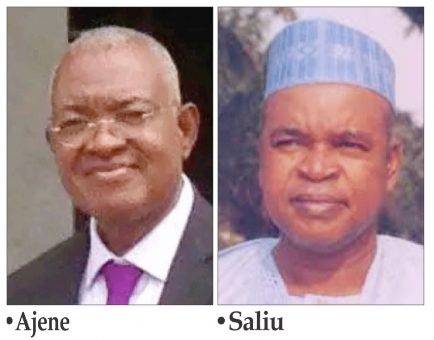
The first was the 2026 annual memorial lecture in honour of eminent political scientist and first President of the NPSA, Professor Billy Dudley. Delivered by Professor Oga Godwin Ajene of the Department of Political Science, Rev. Fr. Moses Adasu University, Makurdi, the engrossing lecture is titled, ‘Liberal Democracy and Governance in Nigeria Since 1999: Beyond Consolidation and Reform.’
Utilising some selected states as case studies, the second publication beams its analytical searchlight on ‘Democracy and State-level Outcomes’ in Nigeria within the timeframe under consideration. These publications suggest resurgence by the NPSA from a period of inexcusable and inexplicable organisational somnolence for the better part of the life of the Fourth Republic.
The current President of the NPSA, Professor Hassan A. Saliu, and his team certainly deserve commendation for the emerging manifestation of the fruits of their hard work, although there is still so much more to be done to maximise the potentials of a body like the NPSA at this critical phase of Nigeria’s political evolution.
The NPSA has over the years, understandably, addressed itself to questions of the appropriate mode of governance for the country, the structure of governance institutions, the character of democratic practice and power contestation and the implications of liberal democracy for the quality of governance, political stability, social values and economic development in Nigeria.
Powered by VidCrunch
Read Also: Tinubu orders immediate security reinforcement at NIPSS after bandit attack
Professor Ajene ‘s rigorous X-ray of liberal democracy and governance in the Fourth Republic could not have come at a more appropriate time when the country has just marked 27 years of unbroken representative governance and also 33 years after the annulment of the June 12, 1993, presidential election. It is also a time when some leading actors on contemporary Nigeria’s political arena – General Ibrahim Babangida, General Yakubu Gowon and now General Abdulsalam Abubakar – have published their memoirs provoking considerable public discourse.
In his bold, insightful and unsparing critique of politics and governance in the Fourth Republic, particularly what he perceives as the moral venality of the political class, Professor Ajene follows in the venerable footsteps of some of his formidable predecessors such as Billy Dudley, Aaron T. Gana and Claude Ake. In his presidential address to the NPSA in 1974, for instance, Professor Billy Dudley had launched a blistering critique of emergent voices that had begun to goad the Gowon administration to perpetuate itself in power on the grounds that it had restored political stability, was achieving economic success and promoting national cohesion.
According to Dudley in his address titled, ‘Exit, Voice and the Nigerian Political System’, “Even though we are only a year old and have not much to report as achievements or successes, there can be no doubt about the role which our association can play in this society. Already some members of this nation have found our inaugural conference sufficiently disturbing to clandestinely react through the medium of a tract they called ‘Nigeria in Confidence’. That in itself is some achievement”.
After clinically and rigorously dismantling arguments for the continuation of military rule beyond 1976, Dudley told the NPSA conference that “Personally, I am convinced that Nigeria has to return to civil rule in 1976. But it is not enough to be convinced. A conviction, if it is to have any force at all, needs to be rationally justified and defended”. In articulating the imperative for the exit of the military and the restoration of representative governance, what did Dudley believe to be the best option for good governance and accelerated development in Nigeria?
He was unequivocal as he asserted that “It should by now be obvious that in advocating exit, I am, by my arguments, also advocating an open, competitive system. This is not being suggested because I have an idealistic attachment to the ballot box and competitive electoral politics. In advocating a system of competitive and open politics, I do so because, first, it is the only form of politics which, in principle, gives every citizen of the state an even chance… Second, it is the only form of politics which enshrines the principle that it is the right of the electorate to choose its leaders unfettered…Thirdly, if we accept that leadership qualities are randomly distributed throughout the society,…no other system can be better calculated to generate the leadership which Nigeria needs than an open, competitive political system.”
Related News
NPSA, the 4th Republic score card and service delivery conversation
Billy Dudley’s boundless optimism as regards the intrinsic merits of the ‘open, competitive’ model of liberal democracy was clearly not justified by the nation’s experience when the presidential system of electoral democracy in the Second Republic (1979-1983) collapsed under the weight of massive corruption, political intolerance, ethnic conflicts, religious tensions, pervasive violations of the rule of law and electoral malfeasance.
And in his Dudley Memorial Lecture, Professor Ajene avers that in the Fourth Republic, presumably under an ‘open, competitive’ system, the Nigerian State has become a victim of state capture and the evils of elite venality, political vagrancy, rule of law violations, religious extremism, cynical ethno-regional manipulations, etc, which ruined earlier experiments in democracy, continue to run rampant.
Over five decades after Dudley’s 1974 presidential address to the NPSA, another former President of the association, Professor Aaron Gana, in his Convocation Lecture at the University of Jos, was less enthusiastic about the prospects of the ‘open, competitive’ system, which seems to be a euphemism for the practice of capitalist democracy. Gana’s lecture titled ‘The Limits of Political Engineering’ was a scathing critique of military President, General Ibrahim Babangida’s Political Transition Programme.
Adopting Professor J.B Macpherson’s argument that while capitalism has enabled the elimination of scarcity, it cannot eliminate poverty, misery and gross inequality because it is a system rooted in greed and avarice, Gana doubts that Nigeria’s buccaneer capitalism and the gross corruption and pervasive inequity it breeds can provide an appropriate framework for democracy to thrive.
Thus, Professor Gana contends that “…in a system where democracy is given exclusively political definition, i.e. in which the basic necessities of life such as food, shelter, education, health, are denied by the structural imperatives of its operations, life cannot but be ‘nasty, brutish and short!’. And this is the experience of 80 per cent of Nigerians, and such conditions cannot but be the very negation of democracy”.
Ajene reinforces this perspective when he avers that “However, contradictions within relationships create tensions in all liberal democracies. These contradictions include the promise of equality in liberal democracies and the actual propensity towards economic inequality in the process of accumulation, with its political consequences. Secondly, class conflicts tend to intensify as the gap in wealth distribution widens. Finally, there is the contradiction between the short-term profit motive of the bourgeoisie and the long-term public good of society as a whole.”
The tenor, tone and temper of Professor Ajene’s 2026 lecture seem to align more with Gana than Dudley’s worldview. Although he comprehensively enunciates the principles that provide, at least in theory, for the practice of the competitive model of liberal democracy as outlined in the 1999 Constitution, these he contends are actually negated in practice. In his words, “…the mere existence of democratic institutions does not guarantee democratic outcomes in governance. In captured democracies, formal institutions coexist with informal power structures that shape decision-making processes”.
Thus, Ajene dwells at length on identified shortcomings and weaknesses in the practice of liberal democracy in Nigeria’s Fourth Republic, including massive elite corruption, alleged legislative and judicial malfeasance, compromised electoral structures and processes, erosion of governmental checks and balances and the negative implications of these for qualitative governance. But what is the way out of what the lecturer portrays as a dead-end to the possibilities of both liberal democracy and development in Nigeria?