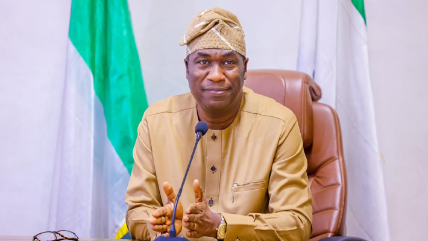



On Friday last week, Presidential media aide, Daniel Bwala, was on his usual binge of Villa hatchet jobs. He flew into Ibadan, the capital of Oyo State, and of Yoruba politics, to peddle mythical tales of presidential impact in the lives of the Southwest people.
Apparently, Bwala’s brief was to deconstruct Governor Seyi Makinde, a state governor who is one of Aso Rock’s biggest 2027 nightmares. In 24 hours, Bwala moved from one broadcast tree to another delivering his sender’s message. Across all the radio stations where he paraded his ware, the marketing message was same: Deconstruct state governors in the hearts of the people. This, he thought would allow Aso Rock have a pretty smooth ride into victory next year.
However, Bwala met his match in Fresh FM’s Isaac Brown and a few others who squared up to his Ibadan scut-work. It was similar to his earlier encounter on a March 2026 appearance on Al-Jazeera’s Head to Head programme anchored by journalist Mehdi Hasan where Bwala was badly bruised and totally shellacked.
Tongue-in cheek, Bwala raised issues that Nigerians should be bothered about: He spoke on President Bola Tinubu’s reforms and “the Federal Government’s commitment to strengthening local governance.” He mentioned figures and tried to incite the local against the state. He spoke about federalism but chose to zero in on only local governments without talking on why the Federal Government has its fingers on all pies.
Nigerians are bothered by the hypocrisy of the so-called federal reforms.
As a Yoruba proverb suggests, when a fox carries a bulging eye, it is not the chicken’s place to draw attention to it. Check the chicken’s own eye balls! Another Yoruba saying makes the same point. Everyone else may bargain over the price of the dye used to mask the odour of urinary incontinence, but not the sufferer himself. His condition leaves him with little room for haggling. Bwala should have first explained why the president’s so-called reforms have benefited majorly only its proponents; why it has been as harsh as inclement weather and as ruthless as Dracula to the man on the street. These reforms have made the rich richer and pushed the poor six feet under. The administration has made life excruciatingly unlivable. The fuel price regime is rudderless, left entirely in the hands of monopolists who tighten the noose around the common man’s neck as they please.
In the 37 months of this Federal Government’s lifespan, even with its 52% revenue allocation, staggering numbers of Nigerians have died from sheer want and deprivation under the Federal Government’s watch. Far more citizens are being wiped out by insurgents, bandits, and kidnappers today than those lost during the 30-month Biafran Civil War.
Yes, the press in sub-national geography should ask their governors critical questions about how state and local government resources are deployed, just as they must raise same question against the Federal Government.
The hypocrisy of Bwala’s mission in Ibadan would make anyone want to puke. Isaac Brown, for instance, asked Bwala if he hadn’t seen the road infrastructure in Oyo State, much of which impacts local administration. While I say that the state can still do more, yet, because I have been in Ibadan for over 30 years, I know the people recognize that no previous governor in the state’s history has executed as much infrastructural renewal as the incumbent has done. Res ipsa loquitur – the facts speak for themselves, as lawyers say. You don’t have to be Makinde’s lackey to recognize this fact.
It was this undeniable reality, this resistance to a pseudo-federal narrative, that Bwala came to break. He failed woefully. Resorting to ad hominem attacks, regime lickspittles broad-brush Brown, Bwala’s interviewer, one of Ibadan’s best broadcasters, with baseless allegations of collusion with the state government. The charge is simply infantile. It does not wash. It is akin to the wonky belief that any pretty lady is a slut. Next time, those who sent Bwala should send someone else who knows how to pronounce tọọrọ (two and a half pennies).
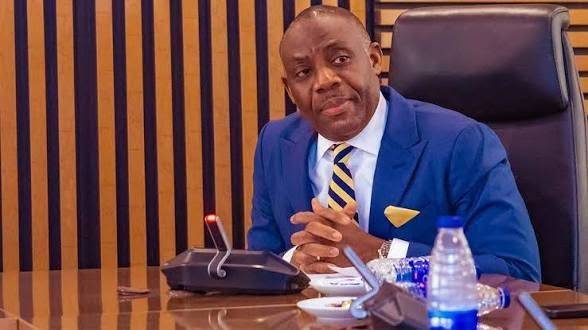
In a similarly misguided vein, last Thursday, Nigerians had the opportunity of reflecting on the concept of National security vs. State censorship. Minister of Information and National Orientation, Mohammed Idris, asked newspaper editors – in the name of “patriotism” – to strip the activities of terrorists, bandits, and other criminal elements of the privilege of appearing on their front pages. “Yes, we have to do our work, we have to report whatever happens, but you must know that the best reporter, the best editor, is the one who knows what not to report in the interest of nation-building. Please, take these terrorists and criminals off your front pages. This is what they crave, free of charge,” he pleaded.
Idris was simply reactivating the old ivory-tower debate: What constitutes national security? This question gained currency during the Ibrahim Babangida regime. Defense experts and intellectuals have long submitted that national security is not the security of the president; it is the security of Nigerians. It is not measured by the armaments a government defence procures, but by national food security and personal safety of the people who make up the nation. Today, all those have vamoosed from the Nigerian equation.
By the same token, national security is not achieved by scrubbing stories that embarrass the presidency from the front pages of newspapers. National security means actively securing the peace and tranquility of the country and keeping her borders safe from blood-sucking demons. The Federal Government has been fatally ineffectual in that regard. Keeping those grim stories on the front pages ensures that insouciant Nigerian leaders – who might otherwise remain unbothered by the daily slaughter of citizens – are publicly pressured into taking action. It also keeps the vulnerable very alert. Acceding to Idris’s request simply invites insurgents into every Nigerian’s backyard, like thief in the night, leaving them free to slaughter us at their whims.