

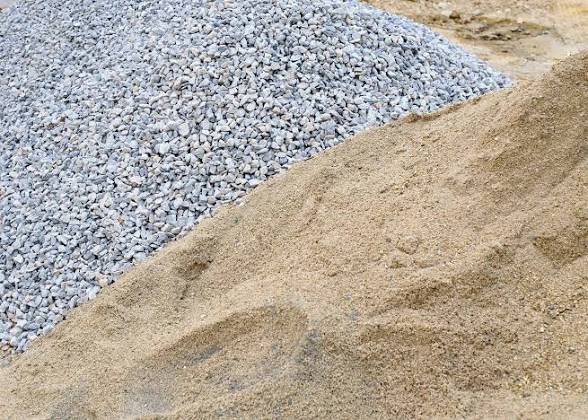

The UN says humanity is extracting sand and gravel faster than nature can replinish it, warning that sand is not an endless resource.
This warning was stated in a new UN Environment Programme report, ‘Sand and Sustainability: An Essential Resource for Nature and Development’.
UNEP said surging global demand for sand, driven by population, economic, urbanisation and infrastructure growth, is outpacing sustainable sand supply, threatening the ecosystems and livelihoods on which we depend.
The UN agency decried the sand dilemma, saying, “We depend on ‘dead’ sand for infrastructure and ‘alive’ sand for natural services.”
The study found sand demand for buildings is expected to rise by 45 per cent by 2060, triggering UNEP’s warning that the world may be left without sand.
“Sand is extracted for various infrastructure needs that underpin modern society and development,” UNEP said. “It took nature hundreds of thousands of years to generate sand through gradual, geological erosion processes. Yet we are using sand at the staggering rate of 50 billion tonnes per year; its use for buildings alone is projected to rise by up to 45 per cent by 2060.”
The study found that population growth and urbanisation were among the main drivers increasingly fuelling demand.
“We have seen that particularly in Asia and Southeast Asia where the economy was booming. But we will see it now in Africa because the population is going to double from now to 2050,” Pascal Peduzzi, a senior UNEP official said. “That’s plus 1.27 billion people. All of them will need homes and schools and infrastructures.”
The report found that extraction was increasing taking place in fragile rivers, lakes, coastal zones and protected marine areas.
Climate change is also one of the main drivers of rising demand, as more sand is needed to build infrastructure such as sea walls to protect against rising oceans.
The UNEP report warns that while sand is essential for economic development, it is equally vital for ecosystems, livelihoods and water security.
The report argues that many governments still treat sand as a cheap construction material rather than a strategic resource linked to biodiversity, water security and climate resilience.
The UN global agency for the protection of the environment urged governments and industry to adopt more sustainable approaches to sand extraction.
UNEP said some countries are beginning to rethink sand use and expanding the use of “ore-sand” as an alternative.
Ore-sand is a by-product of mineral processing, which could reduce pressure on rivers and coastal ecosystems traditionally targeted for extraction.
UNEP calls for stronger environmental oversight, greater transparency around extraction permits and a shift away from lowest-cost sourcing practices that often overlook long-term environmental damage.
The UN agency also highlighted alternatives such as compressed straw, which can be used as a durable and energy-efficient building material.
(NAN)