

Born in December 1967, a few months after the Nigerian civil war began, Governor Seyi Makinde of Oyo was not a living witness of the Operation Wetie which he spoke so glibly and romantically about two Saturdays ago when he railed against the ruling All Progressives Congress (APC). Addressing a political summit convened by opposition politicians in Ibadan on April 25, he warned the APC to remember that Ibadan was the cradle of violent and fiery defiance of political machinations. “Those that are carrying on as if there is no tomorrow,” he gloated in his usual unhurried manner of speechifying, “should remember that Operation Wetie started from here. This is the same wild, wild West.” Cryptic and loaded, his remarks were meant to instill fear in the hearts of the Bola Tinubu administration which had managed to bring under its roof 31 state governments and a dominant majority of the legislature. The APC accretion of states and national and state legislatures were a threat to democracy, Mr Makinde concluded airily.
Mr Makinde’s logic was strange, casual, and dismissive. There were no indications when he read his address at the summit – though he seemed to have spoken of operation wetie off the cuff – that his audience thought lightly of the alarm he raised. His source for the wetie response to political machinations in the early 1960s, when rival political factions fought for supremacy in the Western Region, was in the first instance secondary, perhaps a little overdone, and even inaccurate and inapplicable. That he drew a parallel between the unforced herding of politicians and state governments into the APC column on the one hand and the forced appropriation of votes during elections in the early 60s in the region on the other hand is an indication of how facilely he internalises the lessons of history. Secondly, as his administrative style has shown in about seven years, the uncharismatic but fairly popular governor is specious and emotional. A dour but sentimental engineer, he sometimes conflates mutually exclusive issues or concepts and casually juxtaposes the past with the present. His conclusions are, therefore, often shaped and informed by his flaws.
His recall of historical lessons, his aides later explained, was meant to deter the Tinubu administration from engendering a one-party state and dictatorship. To him, the mere agglomeration of about 31 state governments under the APC flag is a red flag for democracy. Nigeria has over 20 political parties with the theoretical possibility of winning any number of states if they apply themselves and their internal structures in a way that conduces to electoral victories. If they fail today, there are no theoretical strictures that prevent them from succeeding tomorrow. To conclude that democracy is endangered simply because of the overwhelming dominance of one party in what is clearly a heterogeneous and multiparty society is dangerously and incitingly non sequitur. And to go further to insinuate that Oyo or Ibadan could once again serve as the epicenter of violent reaction to unfavourable political outcomes indicates he is prepared to lead the charge, does not mind burning down the barn to catch a flea, and that in fact he romanticises that ugly part of Yoruba history when squabbling brothers doused one another in petrol and lit the fire as a means of achieving political supremacy. By recalling a disturbing era of Yoruba history as a means of threatening opposing or dominant parties gives the impression that, to him, democracy is not worth defending as long as he is disadvantaged.
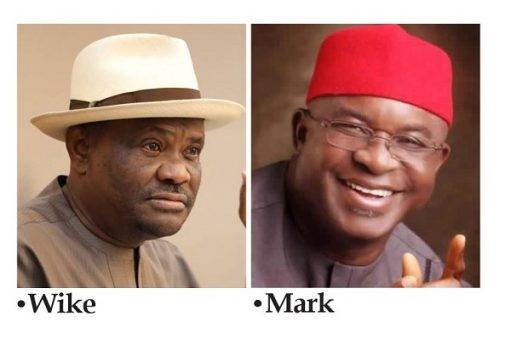
Mr Makinde’s frustrations are myriad, hence his desperation. He loathes the dominance of the ruling party, having surmised and simplified in his mind the mathematical fulcrum upon which he believes democracy must ineluctably be balanced. He also feels embittered by how effortlessly the Nyesom Wike faction of the Peoples Democratic Party (PDP) had outplayed his faction, leading to the total juridical negation of his efforts to take control of the leading opposition party. He had rejected every warning in the past few months issued by reflective party elders urging him not to play his hands poorly and wrongly, or use his jokers too quickly and incautiously, or put all his eggs in one dizzying basket of errors. Defiant and suicidal, he had rejected the warnings, and went on to fall on his sword by manipulating the courts in a wasteful party convention in November last year.
As a mark of his worsening frustrations, he fulminated about what seemed to be a contrived blockade of possible exit routes to other parties by the ruling party. If his PDP faction had become untenable, surely he could not be barred from migrating to the African Democratic Congress (ADC) where he hoped to joint up with former vice president Atiku Abubakar whom he had rejected in 2023. But as it turned out, even that road has appeared inaccessible, not because the Tinubu administration made it so as he has insinuated, but by the incompetent hijack of the party enacted by supposed leading politicians who could not pass muster. The ADC has nevertheless won a small respite; but there is no telling how long that respite will last, seeing how tenuous the party’s legal victory of last week has been. Mr Makinde, against common sense, reads his troubles and blocked entries and exit to the APC’s meddlesomeness. How he musters his logic remains a mystery. For a governor who has railed against what he believes are the Tinubu administration’s illiberal policies, he has crossed swords with everyone in Oyo State over his determination to foist a successor on the state. In the weeks ahead, his frustrations will intensify as he finds himself outflanked on the subject of succession by that same everyone.
Against his wishes and efforts, Mr Makinde is tragically unraveling. He cannot remain in the PDP, for the doors have been shut against him, and his effort to lead or influence the party has become futile. His main headache will be on what platform to enthrone his successor. He might wish to head to the ADC, but that party is also troubled on all sides, whether legally, administratively, or ideologically. If he throws in his lot with the ADC, he will have blocked his entry into former Bayelsa governor Seriake Dickson’s untrammeled Nigeria Democratic Congress (NDC). So he will agonise bitterly in the days ahead, and attribute his dilemmas to the political chicanery of the APC and particularly President Tinubu. In short, he will blame everybody but himself for his bad choices, poor reading of political weather, serial goofs, egotism, and contradictions. Having spent the past few months sailing near the wind, he will find it increasingly difficult to manoeuvre into advantage or evade the shipwreck he has courted so carelessly.