

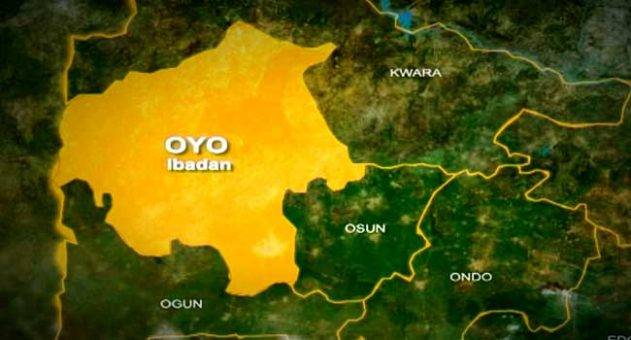

Nigeria’s mass abduction crisis has exposed a concerning pattern of selective responsiveness. Simultaneous mass abductions in Oyo and Borno states on May 15 have drawn vastly different levels of public and official response, exposing a flawed perception that the Oyo State incident is somehow more deserving of national attention.
Heavily armed terrorists riding motorcycles carried out coordinated, simultaneous raids on three schools in Oriire Local Government Area (LGA) (Ogbomoso axis), Oyo State.
Eighteen children were abducted from Baptist Nursery and Primary School in Yawota, while seven students were taken from Community Grammar School. Seven teachers, including the Vice Principal of Community Grammar School, were also abducted. Tragically, it was later confirmed that one of the abducted teachers, Michael Oyedokun, was killed by the terrorists while in captivity.
On the same day, armed insurgents carried out a synchronised mass school abduction in Borno State, reawakening deep-seated trauma across the region. The attack struck Mussa, a remote farming community in the Askira-Uba LGA of southern Borno, near the fringes of the Sambisa Forest.
While early morning classes were in session, dozens of armed terrorists arrived on motorcycles and encircled the Central Primary and Junior Secondary School in Mussa. The children were loaded into two Hilux vehicles parked just outside the town and driven deep into the forest.
Senator Ali Ndume (Borno South) and independent humanitarian tracking agencies confirmed that 42 students were abducted; the majority of them were toddlers and young children between the ages of 2 and 5 who were attending Nursery and early Primary classes.
While both the Oriire and Mussa mass school abductions occurred on the exact same morning, the Oriire incident in Oyo State almost immediately dominated national headlines, drawing an aggressive federal response that the Mussa crisis in Borno State did not receive.
This may be because for over a decade, mass school abductions have been viewed by the public, media houses, and foreign observers as a tragic but localised crisis of the North-East and North-West.
Additionally, the South-West—specifically Oyo State—was widely considered a relatively secure region, insulated from terrorist school raids.
So, when heavily armed men simultaneously stormed three schools in Oriire LGA, it shattered that sense of security. It signalled to the country that school banditry had breached its historical boundaries and was moving rapidly south, creating an acute sense of national panic.
Two other factors that may be responsible for the focus on the Oriire incidents are the release of a horrific video showing the beheading of a mathematics teacher, Oyedokun, and the young age of many of the abducted schoolchildren.
Because Oriire was seen as an existential threat to the peace of the South-West, and indeed southern Nigeria, it triggered an immediate, high-powered political apparatus: President Tinubu dispatched a top-tier delegation led by Chief of Staff Femi Gbajabiamila, National Security Adviser Nuhu Ribadu, and the Minister of Defence, General Christopher Musa (rtd), to Oyo State to manage the fallout.
Furthermore, the Federal Government used Oriire as the catalyst to approve the immediate recruitment of 1,000 forest guards and deploy Nigerian Air Force surveillance aircraft over the Old Oyo National Park, where the abductors are said to be hiding with their captives.
In response to the Oriire abductions, Governor Makinde signed Executive Order 001 of 2026 to strictly regulate, register, and coordinate local hunters, vigilantes, and informal security groups to ensure better grassroots intelligence streaming.
The Federal Ministry of Education has accelerated the implementation of the “Safe Schools Framework” in the zone, beginning the process of mapping physical vulnerabilities, suspending rural field trips, and establishing rapid-response communication links between vulnerable border schools and security commands.
Also, the Nigerian Union of Teachers (NUT) implemented a month-long strike and staged massive protests, keeping the pressure squarely on Governor Makinde’s administration until a comprehensive security pact was reached on July 2.
Protesters in Ibadan took to the streets on the morning of June 22, venting understandable outrage over the perceived delay in rescuing the Oriire kidnap victims—now in captivity for more than a month.
They urged the state government and security agencies to intensify rescue efforts and reinforce security to prevent further abductions.
The demonstration underscored a growing public impatience with the official response to the crisis—more than a month has passed, and the rescue operations remain agonisingly slow.
From an analytical standpoint, Oriire completely overshadowed Mussa. The security situation regarding the Mussa Primary and Junior Secondary School abduction in Borno State, remains a deeply concerning and unresolved crisis.
There has been no massive or comprehensive rescue of the Mussa pupils. Despite sustained pressure and military patrols by the 115 Task Force Battalion, the children remain in captivity.
In early June, the Borno State chapter of the NUT alongside aggrieved parents staged demonstrations in Maiduguri, condemning the slow pace of rescue operations and demanding that the Federal Government and military top brass intensify intelligence-driven tracking.
The intelligence footprint suggests that the insurgents—suspected to be a faction of Boko Haram or ISWAP—closely monitored the security architecture. The May 15 raid occurred less than 15 minutes after a military patrol team departed the community, indicating active local espionage by the terrorists.
The vulnerability of the area has only heightened since the Mussa incident. On June 29, terrorists wearing fake military fatigues and forest guard uniforms launched another horrific assault within the same LGA at Government Day Secondary School, Lassa.
The attackers opened fire while students were writing their National Examinations Council (NECO) exams, killing a teacher, injuring several others, and abducting at least 36 students.
The successive strikes on Mussa (May 15) and Lassa (June 29) underscore a coordinated, aggressive push by insurgents to weaponise school abductions along the southern fringes of the Sambisa Forest, severely disrupting rural education across Borno State.
The Borno State Police Command and theatre commands are reportedly coordinating fresh joint operations to comb the forest terrain, but substantial progress on a safe extraction has yet to materialise.
In the final analysis, because Borno State has endured nearly 15 years of continuous asymmetrical warfare, the media and general public have succumbed to a disturbing level of “compassion fatigue” regarding the North-East. A mass abduction in Mussa is tragically treated as a routine statistic, whereas the exact same crime in Oriire is treated as a national emergency.
NOTE: Views expressed by contributors are strictly personal and not of Theliberationnews