
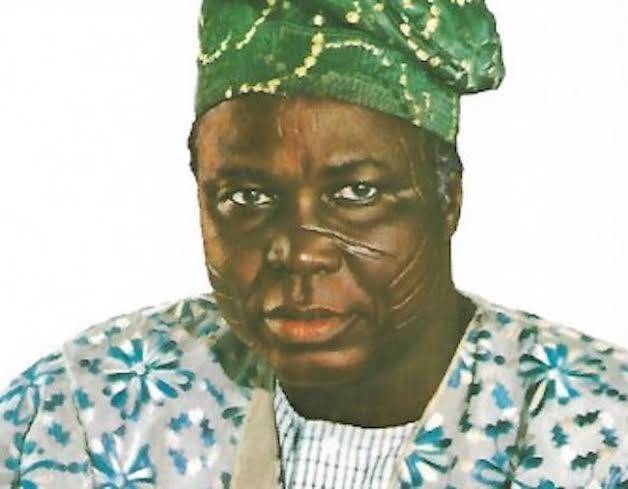

When I put the phenomenal dramatist, poet, novelist, and essayist on trial for partisanship tracking back to the first radio heist, someone came after me with a dismissive narrative about the multilingual orator and eminent lawyer called Samuel Ladoke Akintola (SLA).
He spoke as if Akintola was a crumpled sheet of paper in the bin of history.
His father’s house in Ibadan almost got burnt because the man supported Akintola.
What’s wrong with people who preferred Akintola, I asked.
Akintola betrayed the Yorubas, he claimed, and I felt intrigued by how history is sometimes conflated with the rumour you heard from a man’s rival’s gang.
On the 14th of March 1960, the Western House of Assembly met formally under its new premier for the first time.
Samuel Ladoke Akintola (SLA) invited both the government and the opposition to be jointly responsible for the progress of Western Nigeria.
He called for mutual respect and cooperation. In the budget of the fiscal year of 1960 to 1961, his government abolished the payment of taxes by women.
That decision was received like rain after a long drought. On the 14th of January 1961, he forced a cut in the cocoa price from £160 to £100. Yet, in an unprecedented move, he engaged the farmers in person to explain the economic realities, maintaining their trust. On the 10th of August election, Akintola won as premier and the Action Group increased its number of seats.
Action Group won five seats in Ibadan, a city that was a stronghold of the NCNC. Akintola built schools across the region, one technical school in every division, so that whoever could not enter a secondary school had a pathway into skilled trades. There were also farm areas for young school leavers equipped with tractors and tools designed to give educated young Nigerians a life of dignity on the land.
In July 1960, Akintola promised that his government would establish a state university in the Western Region. On the 8th of June 1961, the Western House of Assembly enacted the law for the establishment of the University of Ife.
On the 26th of June 1961, the government inaugurated a Provincial Council under Chief F.R.A. Williams. This initiative grew into what my sister called Great Ife—one of the finest universities on the African continent.
Samuel Ladoke Akintola (SLA) was the kind of man people were drawn to listen to whether he was speaking English, Yoruba, Hausa, or Nupe. Right from the launching of Action Group in Owo, Akintola was too bright for anyone to shove aside into the shadows. The great Awolowo saw in him a strategic partner and he lived up to billing.
Never mind the bold Ogbomosho identity marks etched on his face, he was called to the bar in London, was editor of a newspaper, and was the first Nigerian ever to serve as Central Minister of Labour and Social Welfare. As Federal Minister of Health, it was under his watch that the first teaching hospital complex in West Africa, the University College Hospital in Ibadan, was built and opened in 1954.
Don’t forget he was the charismatic first leader of the opposition in the Federal House of Representatives. On the 1st of October 1958, Nigerian Airways bought its first aircraft for six million pounds sterling.
Akintola, founder of *Irohin Yoruba*, pushed for a Yoruba front, reaching across party lines because he believed that political divisions were costing his people what was rightfully theirs.
Now, to what your ears are probably eager to hear: The crisis between Awolowo and Akintola.
It wasn’t a volcanic eruption like our modern copy between Wike in Abuja and Siminalayi Fubara in the oil city. From the first day Akintola moved into the state house in Ibadan, Awolowo started eroding and redefining what it meant to be the premier of the Western Region.
Awolowo sat in Lagos and, through appointments into boardrooms and government offices, was ‘Fubaraying’ Akintola into the shadows.
Men who owed loyalty to the Premier of the Western Region were replaced by those who answered to a leader now settled in Lagos. From Ibadan, Akintola watched his constitutional power getting dialed down with every new appointment.
The Premier’s lodge in Ibadan became a government without full control. So, nor be today yansh dey back.
The lucrative corporations were packed with Awolowo’s men. Alfred Rewane sat at the head of the Western Nigeria Development Corporation, running it as though the Premier’s office was the boys’ quarters. Chairmen and executive directors took their orders from Lagos and bypassed the premier. So, though Akintola was holding the title, Awolowo was holding the goat and the rope around its neck.
As long as Akintola was quietly enduring being sidelined, there was no crisis in the West.
It’s when SLA was growing popular with the Oyo Yoruba, building working relationships with the Prime Minister and the Sardauna of Sokoto, and making decisions without picking up the telephone to party headquarters, that’s when the frustration in Lagos deepened. The assertiveness in Ibadan also hardened, and that’s when the showdown at dusk became inevitable.
In January 1962, the Action Group held its eighth annual party congress in Jos.
It was supposed to be the moment the party resolved its contradictions. Instead, it became the moment everything broke open in public.
Awolowo doesn’t take prisoners.
The conference was packed full of Awolowo’s supporters, including many who weren’t eligible to attend. When the congress opened, Awolowo was more concerned with party discipline than calling his men to order.
Akintola was particularly guilty of receiving the Sardauna without party approval. Everyone in the room understood what was happening. This was not a policy debate. It was a trial. Akintola sat through it all. Then he stood up, and walked out of the congress.
The premier of the Western Region had friends that the party leader in Lagos could not reach.
On Saturday, the 10th of May, 1962, an extraordinary meeting of the Action Group was convened at the party’s headquarters in Ibadan.
Chief Obafemi Awolowo spent five hours reading out a catalogue of accusations.
For two hours, Akintola defended himself, highlighting the impossible conditions under which he had governed, the dual loyalties Awolowo had created in his cabinet, the millions of pounds diverted to the National Investment Properties Company before he even took office, and the chairmen and directors who took orders from Lagos and ignored their own ministers. It made no difference. Eighty-one members called for Akintola’s immediate resignation as premier and deputy leader of the Action Group. Twenty-seven members stood with him. Akintola refused to resign. He was a constitutional premier, he said.
A party meeting had no legal powers to take his office from him.
The stage was set for the wild, wild west.