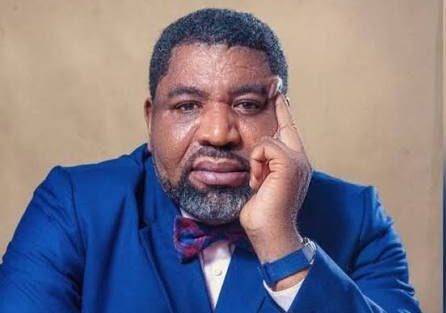

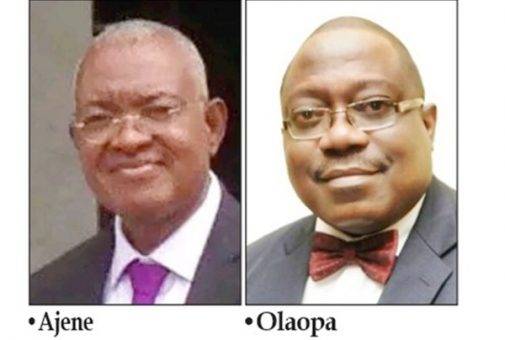

Until I read the piece, ‘NPSA, the ideology for Nigeria and Political Science praxis’, by Professor Tunji Olaopa in last Sunday’s edition of this newspaper, I was blissfully unaware of the 35th Conference of the Nigerian Political Science Association (NPSA), which focused on the theme: ‘26 Years of Democracy in Nigeria: Reflections on Praxis and Challenges’. Professor Olaopa’s paper was apparently his contribution at the conference and reflected the characteristic pungency, logical rigour, rhetorical fluency and patriotic commitment the Chairman of the Federal Civil Service Commission (FCSC) is well known for.
Incidentally, I have read on several occasions Olaopa’s concerns about the state of the NPSA and his recommendations regarding the critical roles that such a key association can and should play in Nigeria’s political and democratic development. A political scientist, public administration scholar, experienced administrator who rose to the rank of federal Permanent Secretary in the nation’s public service and foremost researcher, writer and advocate of public sector reforms, he is eminently well placed to adumbrate on the Town-and-Gown nexus that should define the relationship between the NPSA and the larger Nigerian polity.
Situating his analysis within the context of what he describes as ‘The Awolowo -Dudley Discourse’, Professor Olaopa highlights complementary and divergent aspects of the political thought of one of the country’s most eminent political scientists, Dudley, and the no less cerebral lawyer, politician, administrator and statesman, Obafemi Awolowo, on the best path to actualise the country’s developmental potentials. He sought, in his words, to “set the basis for understanding the intellectual and ideological lenses through which Chief Obafemi Awolowo and Professor Billy Dudley articulated critical but intersecting frameworks by which the Nigerian State could move towards nationhood in the manner of, say, Singapore”.
Given his Frontline preoccupation over the last four and a half decades with the theory and practice of public sector reforms in Nigeria and Africa, it is understandable when Olaopa asserts at the outset of his piece that “…we cannot even begin to understand the possibilities of democratic consolidation unless we have a clear path towards a national consciousness of the type of nation Nigeria can and should be”. For Olaopa, continuous and ceaseless reforms constitute the pathway to consolidating incremental democratic gains and achieving the open-ended objective of promoting meaningful political development in Nigeria.
The comprehensive reforms that he has advocated in his various academic papers, books and newspaper opinion pieces over the years encompass strategies and tactics to achieve positive structural changes, continuous improvement in processes and techniques, as well as engineering the underlying ethical value-re-orientation he considers indispensable to concrete national transformation. Olaopa avers that there are various aspects of Nigeria’s ongoing democratic development that require consolidation through a process of systemic and ever-deepening reforms.
But here, there is a divergence between the ideas, insights and worldviews of Professor Oga Godwin Ajene, as expressed in his 2026 Billy Dudley memorial lecture, which we began dissecting last week and Professor Olaopa, as regards the necessity for and prospects of consolidating democracy and actualising reforms towards strengthening the practice of liberal democracy in Nigeria. Professor Ajene ‘s position on Nigeria’s democratic itinerary so far is terse and stark: “Democracy in Nigeria has not facilitated the required development due to monumental corruption and mismanagement of resources”.
For him, attempts at consolidating liberal democracy in Nigeria or making reforms count are exercises in futility. In Ajene’s words, “Any keen observer of Nigeria’s democracy will realise that, after 25 years of the fourth Republic and experimentation with the 1999 Constitution (as amended), democratic institutions and processes are not consolidating. If anything, their trajectory is towards chaos and dysfunction. Reforms are endless, and at the end of every election cycle, there is a clamour for more, and we end up with more.”
As we noted last week, Ajene believes that the problem lies in “the contradictory relationship between capitalism and liberal democracy” such that “there is a conflict between the promise of equality in liberal democracies with the actual propensity towards economic inequality in the process of accumulation, with its political consequences”. He asks questions such as ‘why is there so much passion to consolidate the form of democracy embraced and to reform aspects of it? Is it possible to consolidate or reform aspects of a democracy that has derailed?
Arguing that there is the imperative for a fundamental shift in the principles and practice of democracy in Nigeria, Ajene submits that “For many years, the religion of liberal democracy has preached that the only narrow route to the paradise of development is through liberal democracy…In Nigeria, the search has been for the elusive “dividends of democracy”. The rapid transformation of China, which wholeheartedly rejected that route and has become the world centre of innovation and development, is a testament to a long-standing scam, which liberal democracy holds for African countries.”
Ajene sees little prospects for ceaseless advocacy for reforms of the electoral system, the party system, or the public service, including the judiciary, the legislature and the executive. Despite impressive constitutional provisions, he decries the reality that political parties in Nigeria since 1999 scarcely adhere to the federal Constitution, INEC regulations or their own constitutions. The consequence has thus been “lack of internal democracy, imposition of candidates by powerful godfathers, control by moneybags, charging of excessive fees for candidacy. Lack of institutional stability or ideological depth and the endemic crisis of defections”.
His conclusion is thus radical and scathing. His words, “In truth, transforming our political culture of corruption, electoral malfeasance, institutional rot and decay through reform is neither practical nor achievable as long as we continue to consolidate on the path of democracy we have chosen”. What then is to be done? Where lies the path to the institutionalisation of concrete democracy in Nigeria that truly promotes the collective good and does not sacrifice communal well-being on the altar of private greed and avarice?
Professor Ajene’s submission is concise: “Thinking outside the box in order to overcome the crisis of liberal democracy in Nigeria requires that we begin to contemplate a non-violent revolutionary change, which, at the intellectual and ideological levels, involves carefully weaving together the original Athenian conception of democracy with the thoughts of the late President Julius Nyerere of Tanzania, on African socialism, with the peculiar socio-cultural environment of Nigeria”. This proposal seems to be pitched at a high level of abstraction and theorisation that may require further elaboration on the practicalities of actualisation.
It seems then that we are thrown right back to the path of systemic consolidation of democratic gains through unceasing rigorous reforms as articulated by Professor Olaopa. That is the only possibility for “a non-violent revolutionary change”, which I read as far- reaching transformation pursued within the context of democracy, no matter how flawed, in the thought of Professor Ajene. Incidentally, Olaopa is himself not insensitive to the flaws of liberal democracy and the need for a nuanced calibration of adopted models of democracy by a country like Nigeria, taking into account implementation practicalities and national socio-cultural peculiarities.
Thus, he contends that “China, like post-war Japan and India, is very unique in its ideological choice of a state-controlled capitalism that blends central planning with a market-driven entrepreneurial ideology that has been the basis of massive infrastructural development. India’s example is close to that of many African states like Nigeria, and its courageous negotiations with the IMF and its conditionalities constitute a template by which many African states could make sense of an economic future outside of the gaze of neoliberalism”.
A reformist like Olaopa certainly shares the far more revolutionary inclined Ajene’s concerns with such challenges as endemic corruption and the perils of ‘state capture’. It is difficult, however, to disagree with the position that there is little alternative now to confronting the undeniable ills of current democratic practice in Nigeria through sustained reforms to consolidate incremental governance gains, unceasing political education, enlightenment and mobilisation of the citizenry.
Needed patriotic exertions to mitigate the negative consequences of ever deepening poverty, pervasive inequality, brazen class injustices and a society built on the shifting sands of selfishness, greed and venality that characterise perverse and underdeveloped capitalist systems like ours can only be safely and productively pursued within the context of competitive democracy, despite its undisputed flaws.