

Something transformational is unfolding quietly in the Nigerian economy. While public debate fixates on debt profiles and political noise, the real story is happening in the engine room of national productivity: the MSME sector.
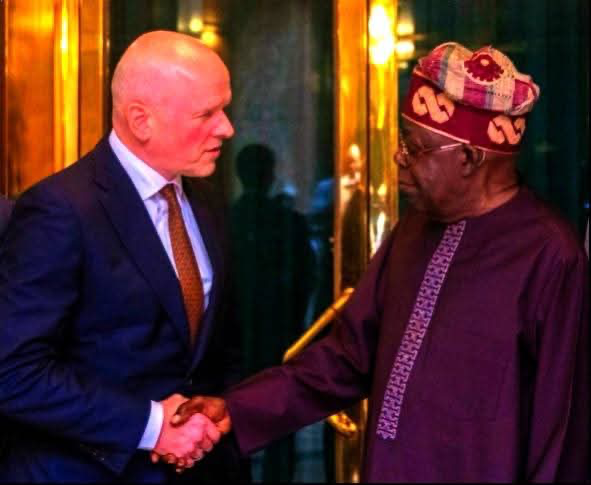
Mastercard’s proposal to train five million Nigerian businesses in digital skills is not just another corporate box ticking exercise. It is a structural economic intervention aligned with President Bola Tinubu’s agenda of renewal, growth and acceleration.
This is how nations gain momentum.
Why This Matters
Nigeria’s informal economy accounts for roughly 58 percent of GDP and about 80 percent of employment. It is massive, vibrant and under leveraged. Digitising its operational core unlocks three strategic outcomes:
1. Formalisation at Scale
Digital rails create verifiable transaction histories for millions of cash based merchants. Suddenly, the unbanked become bankable. Risk becomes measurable. Credit becomes accessible.
2. Transparency and Trust
Five million digital footprints reduce leakages, strengthen tax visibility and reinforce anti corruption architecture. This is how to widen a tax net without raising tax rates.
3. Productivity and Expansion
Digital literacy, e-commerce tools, cybersecurity competence and cloud based operations give MSMEs the power to scale beyond geography. Women and youth led businesses gain resilience against fraud and operational shocks.
The Global Proof
This playbook has worked before.
India: Digital formalisation contributed an estimated 1 to 1.5 percent annual GDP lift, expanded the tax base and cut cash handling inefficiencies.
Kenya: Structured MSME digitisation delivered 10 to 20 percent productivity jumps within two years.
Nigeria (early pilots): LSETF and FCMB Mastercard beneficiaries scaled rapidly once training was paired with digital payments and credit access.
Strategic Prize
Digitising five million businesses is not a training programme. It is a GDP level intervention.
World Bank models show that a 10 percent rise in digital penetration can drive 1.5 to 2.5 percent GDP growth in emerging markets. By targeting the heart of Nigeria’s retail and services economy, this initiative lays the groundwork for the country’s ambition to build a one trillion dollar economy.
The Bigger Picture
While the tunnel view remains fixated on debt, the real work of nation building is happening in the trenches of economic modernisation. Tinubu’s administration is betting on skills, technology and enterprise renewal as the accelerators of long term prosperity. This alignment of public policy and private innovation is how a nation shifts from potential to monumental impact.
#Nigeria
#MSME
#SMEDAN
#entrepreneur