
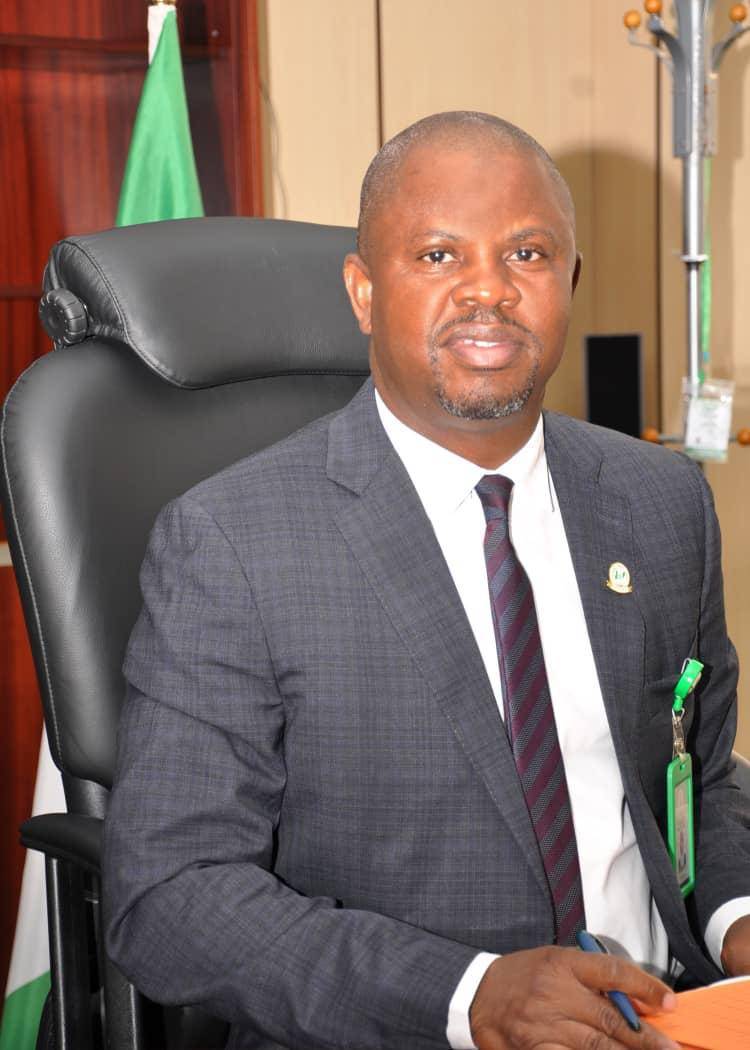

In a country where public service is often measured by noise, publicity, and political theatrics, Ahmed Gambo Saleh has built an extraordinary legacy through silence, substance, and service. As the highly respected judicial administrator turns 57, tributes continue to pour in from across the legal community, celebrating a man many now describe as one of the silent architects of modern judicial reform in Nigeria.
From the ancient town of Hadejia in Jigawa State to the pinnacle of judicial administration in Nigeria, the story of Ahmed Gambo Saleh is one defined by discipline, competence, humility, and transformational leadership.
Born on June 3, 1969, Saleh’s rise within Nigeria’s judicial system remains one of the most remarkable success stories in public administration. A brilliant legal mind, he obtained his first and second degrees in Law from Usmanu Danfodiyo University and Bayero University, respectively, before beginning his legal career as a private practitioner.
He later joined the Jigawa State Ministry of Justice in 1998 as a Senior State Counsel and rapidly distinguished himself through exceptional professionalism and administrative brilliance. By 2002, he had risen to become Director of Legal Drafting — an uncommon feat that underscored his intellectual depth and leadership capacity.
He was between 2003 to 2005 seconded to the Federal Ministry Works where he served as Special Assistant to the then Minister of State.
Those who knew him closely during his early years often describe him as exceptionally calm, brilliant, and humble to a fault — traits that continue to define him decades later despite occupying some of the most influential positions in Nigeria’s judiciary.
Ahmed Gambo Saleh’s rise to national prominence accelerated when he served as Special Assistant to former Chief Justice of Nigeria, Idris Legbo Kutigi. The appointment exposed him to the highest levels of judicial administration and national legal governance.
Two years later, he was appointed Deputy Director of Litigation before eventually becoming the 16th Chief Registrar of the Supreme Court of Nigeria — a position that became a turning point not only in his career, but also in the modernization of Nigeria’s judicial system.
It was during his tenure as Chief Registrar that Nigeria witnessed one of the most significant technological transitions in its judicial history.
At a time when digital transformation was still largely absent in public institutions, Saleh initiated court automation processes at the Supreme Court. Under his leadership, courtroom proceedings began migrating to modern electronic systems with centralized repositories for audio and video recordings, transcripts, and digital courtroom documentation.
In another groundbreaking reform, he introduced the live-streaming of interviews for candidates seeking the prestigious rank of Senior Advocate of Nigeria (SAN). The innovation was widely applauded for promoting transparency and reducing allegations of favoritism and manipulation in the process.
He also introduced document-camera technology capable of digitally displaying court exhibits for judges, lawyers, and registrars during proceedings — an innovation that significantly improved courtroom efficiency and transparency.
To many within the legal profession, those reforms marked the beginning of a new era in judicial administration in Nigeria.
On June 30, 2017, Ahmed Gambo Saleh assumed office as the Executive Secretary of the National Judicial Council (NJC), arguably one of the most strategic and sensitive administrative offices within Nigeria’s judiciary.
The office serves as the central coordinating nerve center of the judiciary, overseeing administration, policy implementation, funding supervision, judicial discipline, and institutional coordination across the country.
Since assuming office, Saleh has emerged as one of the leading voices behind efforts to institutionalize an independent, transparent, financially autonomous, and technology-driven judiciary in Nigeria.
Under his watch, the NJC has continued pursuing reforms aimed at strengthening judicial integrity, improving administrative efficiency, and repositioning the judiciary to better serve democratic governance and the rule of law.
Legal observers note that, unlike many public officials who thrive on publicity, Saleh’s achievements have largely been technocratic and behind the scenes — focused more on institutional strengthening than media attention. Yet, his influence within the judiciary remains profound.
Beyond his official duties, Saleh has also served on several critical national committees, including the Presidential Swearing-in Committee of 2015, the Judiciary Information Technology Policy Committee, the Federal Judiciary Tenders Board, and numerous other strategic judicial bodies.
He also previously served as Chairman of the Nigerian Bar Association (NBA), Dutse Branch, further cementing his credentials as a respected figure within both the Bench and the Bar.
Despite his towering accomplishments, those closest to him insist that humility remains his defining characteristic.
Described as God-fearing, peaceful, generous, courageous, and exceptionally intelligent,.Ahmed Gambo Saleh continues to command enormous respect across Nigeria’s legal and judicial community — not merely because of the offices he occupies, but because of the integrity and dignity with which he has carried them.
Ahmed Gambo Saleh, Esq., LLB, LLM, is naturally reserved and carries himself with the calm disposition of an introvert. His quiet nature often makes him appear intimidating from a distance. Yet, those privileged to know him personally speak of a remarkably warm, open, and humble man. Many recount how he personally attends to guests with uncommon simplicity, sometimes even serving meals himself and clearing the dishes afterward.
His simplicity, compassion, and magnanimity distinguish him as an exceptional personality. To many who know him, he stands out not only as a distinguished judicial administrator, but also as a philanthropist deeply committed to humanity.
Happy 57th Birthday Ahmed Gambo Saleh — a silent achiever, a compassionate leader, and a remarkable nation builder.
Adamu Muhd Usman writes from Kafin-Hausa, Jigawa state