

One narrative widely peddled in the run-up to next year’s presidential election is that the North is set against President Bola Tinubu’s re-election and will use its large share of registered voters to frustrate the President’s bid for a second term. There have been reports of some groups wearing ‘Tinubu must go’ T-shirts in parts of the North, and others organising anti-Tinubu demonstrations. But this week, a large group of pro-APC youths organised a huge ‘Tinubu must go again’ rally in Adamawa State, the home State of Alhaji Atiku Abubakar, presidential candidate of the African Democratic Congress (ADC).
The spokesman of the group, Professor Sheriff Almuhajir, National Coordinator of the Tinubu Must Go Again Movement (TMGA), said they were committed to mounting an aggressive grassroots campaign in support of President Tinubu’s re-election across Northern Nigeria. At the well- publicized event, he reiterated at length the incumbent administration’s several developmental projects spread throughout the length and breadth of the North and debunked the unfounded notion that the President is disliked in the North. It would appear that the voices of a few vocal anti-Tinubu elements in the region are amplified misleadingly to represent the views of the majority.
In reality, political opinion and support in the North are as variegated as is the case in the other geopolitical zones of the country. Indeed, there is no indication that the kind of near-monolithic support that the then Presidential candidate of the Labour Party (LP) in the 2023 election, Mr Peter Obi, enjoyed will obtain in the 2027 election in the Southeast. In 2023, Obi recorded close to 95% of the votes in the Igbo States. But the performance of the ruling APC in the various executive and legislative by-elections across the country since 2023, over 80 per cent of which the party has won, suggests that it has significantly consolidated its electoral hold nationwide over the last three and a half years.
In the 2023 presidential elections, Alhaji Atiku Abubakar had the upper hand in the Northeast zone while President Tinubu triumphed in the Northwest and North-Central. And this despite Atiku openly campaigning as the Northern candidate and asking voters in the region not to vote for a non-northern candidate. There is also every indication that a group of northern politicians in the late President Muhammadu Buhari administration, belonging to the APC but with a strong antipathy to Tinubu’s candidacy, worked in futility against his election even in the North. Some of the latter have emerged as leading lights in Atiku’s ADC.
Early in the Tinubu administration, there had been attempts to incite northern sentiments against the government through the allegation that the President’s appointments were skewed in favour of the South and against the North. This claim has since been silenced as presidency spokesmen came up with indisputable statistical data on the distribution of federal appointments across geopolitical zones, which demonstrated that the North was in no way disadvantaged. A similar claim had been made about the citing of major projects by the administration, which was said to be detrimental to the interest of the North. Again, concrete facts and figures now in the public domain do not support this distortion.
Just like electoral behaviour in other geopolitical zones, voting in the North in the 2027 elections will clearly not be a uni-directional affair. No zone of the country is politically monolithic, and so any talk of a uniform voting pattern in the North in 2027 is entirely farcical. Indeed, there is nothing to suggest that the support that President Tinubu enjoys in the zone has not been strengthened since the last election cycle.
Indeed, the National Secretary of the APC, Dr Ajibola Basiru, articulated this point forcefully on national television this week, citing, among others, the party’s control of 18 of the 19 governors in the North, strong party structures in the region, the support of influential regional stakeholders and President Tinubu’s impactful programmes in the region.
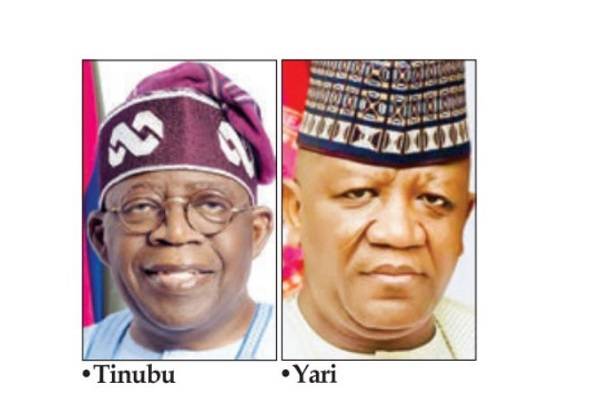
Of course, it is always preferable for northerners themselves rather than outsiders speaking of the President’s high electability rating in their region. But they have not hesitated to do so, and consistently too. The Chairman of the APC-Presidential Campaign Council, former governor Abulaziz Yari, and other leading northern members of the Council, including the APC governors and ministers from the region, have been vocal in their support of the President’s re-election. The Deputy Director of Youth Mobilisation of the Arewa for Asiwaju Campaign Organisation, Comrade Murtala Gamji, recently articulated the case for President Tinubu’s re-election while canvassing massive support for the project in Northern Nigeria.
In his words, “We are canvassing to Nigerians, particularly Northern Nigerians; nobody should deceive you that Tinubu does not like us. Who told you? During the military era, SDP, during the IBB regime, when late General Shehu Musa Yar’Adua contested for President, Tinubu supported him. And Tinubu supported our father, the former Vice-President, Alhaji Atiku Abubakar, for President. He supported the Sardauna, Mallam Nuhu Ribadu, for President. And above all, he is the person who contributed 70 to 80 per cent to make Buhari to be President of Nigeria. So what kind of love do you want from President Bola Ahmed Tinubu? And it is President Bola Tinubu who created the Livestock Ministry; since the time of the late Sardauna of Sokoto and Tafawa Balewa, we have wanted this; Tinubu has made it a reality.”
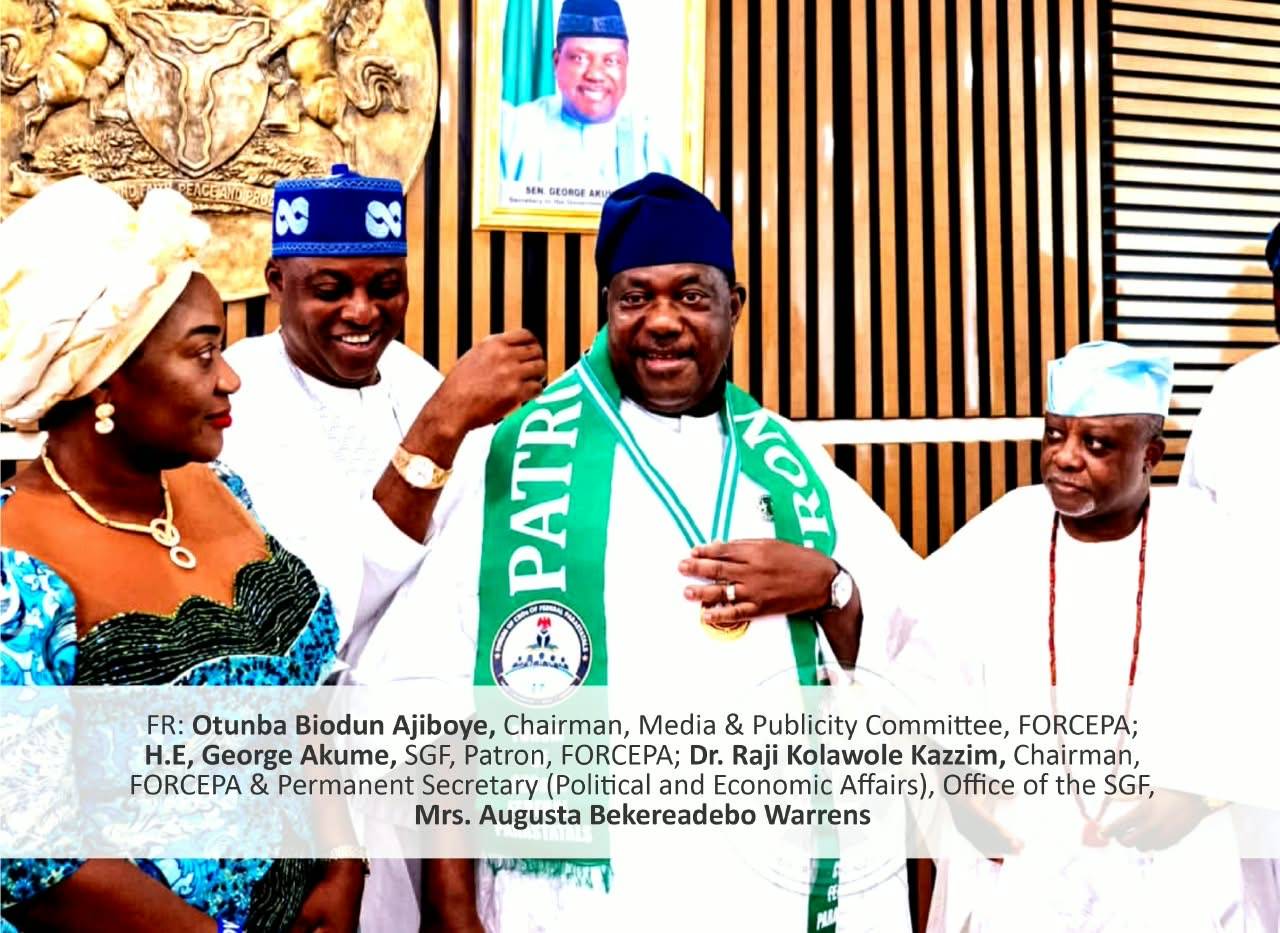
The Secretary to the Government of the Federation, Senator George Akume from Benue State, during the week reiterated the moral imperative for the North to back Tinubu to complete two terms in office in accordance with the zoning agreement reached in Kaduna in 1999 for power to rotate for two terms of eight years each between the North and the South. He said that having completed eight years under former President Muhammadu Buhari, the North should demonstrate political sincerity and commitment to national cohesion by allowing the South to complete its own eight-year cycle under the current arrangement.
This newspaper reported that Akume stressed that the zoning agreement “was not merely a convenient political arrangement but a fundamental understanding designed to preserve Nigeria’s territorial integrity, deepen democratic governance and prevent any region from feeling excluded from the highest public office” and that “the principle had contributed significantly to the continuity of democratic governance by providing a framework for managing the country’s regional diversity and addressing competing political interests. The SGF urged political stakeholders to resist attempts to subordinate the arrangement to individual ambitions.”
Obviously mindful of the subsisting zoning agreement, Oyo State governor and presidential candidate of the Allied Peoples Movement (APM), Engineer Seyi Makinde, this week urged Nigerians to vote for him to complete the South’s eight-year cycle. This implies that he pledges to spend only one term of four years in office. Earlier, the presidential candidate of the Nigerian Democratic Congress (ADC) had also promised to do only one term if elected into office. The problem is that no one believes that a President from the South who is entitled to two terms in office will be content to do only one term and quit.
Beyond this is the fact that, acting in what he perceived as being in the best interest of the country, Tinubu took bold and courageous economic reform decisions that other leaders, with an eye on the next election, would have selfishly pushed to their second term. These include the fuel subsidy removal and the harmonisation of exchange rates that have halted the drift in the economy, introduced stability and enabled positive macroeconomic indices that indicate an economy on the path of accelerated recovery. However, the opposition has focused on the inevitable temporary hardships associated with the reforms while turning a blind eye to the long-term prospects for growth and prosperity that both local and foreign economic experts have highlighted.
Short-circuiting the reforms midway by an abrupt change of leadership in 2027, bent on aborting current policies for partisan reasons of political expediency before the realisation of their promise, will erode visible present gains and usher in possibly irreversible economic retrogression. A leading member of the APM and governor of Bauchi State, Alhaji Bala Mohammed, recently alluded to the hugely beneficial impact of President Tinubu’s reforms on the finances of his State, and that has been the expressed experience of most governors.
The governor of Enugu State, Dr Peter Mbah, at a Town Hall meeting last week warned against a return to the old wasteful and destructive fuel subsidy regime and that has been the reaction of virtually all governors and stakeholders to Alhaji Atiku Abubakar’s campaign promise to return fuel subsidy on production without articulating what this means in concrete terms. As the Anambra State governor, Professor Chukuma Soludo, said during the inauguration of the APC presidential campaign council, for the first time in the country’s history, there is remarkable and unprecedented elite consensus over politics and policy under the Tinubu presidency. The 2027 presidential election offers an opportunity to consolidate, not rupture, that consensus in the national interest.
That the North is not excluded from this developmental consensus is demonstrated by such landmark projects as the ongoing six-lane Sokoto-Badagry Superhighway; the Abuja-Kaduna-Zaria-Kano and Kaduna-Maiduguri Highways, including accelerated work on the Abuja-Kaduna expressway; continued progress on the Kano-Maradi rail line, the Abuja-Kaduna-Zaria-Kano-Maiduguri railway and the approval of N1 trillion for the Kaduna Light Rail project.
There are also expanded petroleum and mineral exploration efforts in Bauchi and Gombe states; revival of the 255-megawatt power plant in Kaduna to restore and stabilise electricity supply; and the progression of the 614-kilometre Ajaokuta-Kaduna-Kano (AKK) gas pipeline across the Niger River to supply power, compressed natural gas (CNG) and fertiliser feedstock to the North. Northern States have not been excluded from the increased federal revenue allocations to state and local governments following subsidy reforms, nor have thousands of students from Northern institutions been excluded from access to the national education student loan program and institutional disbursements.