
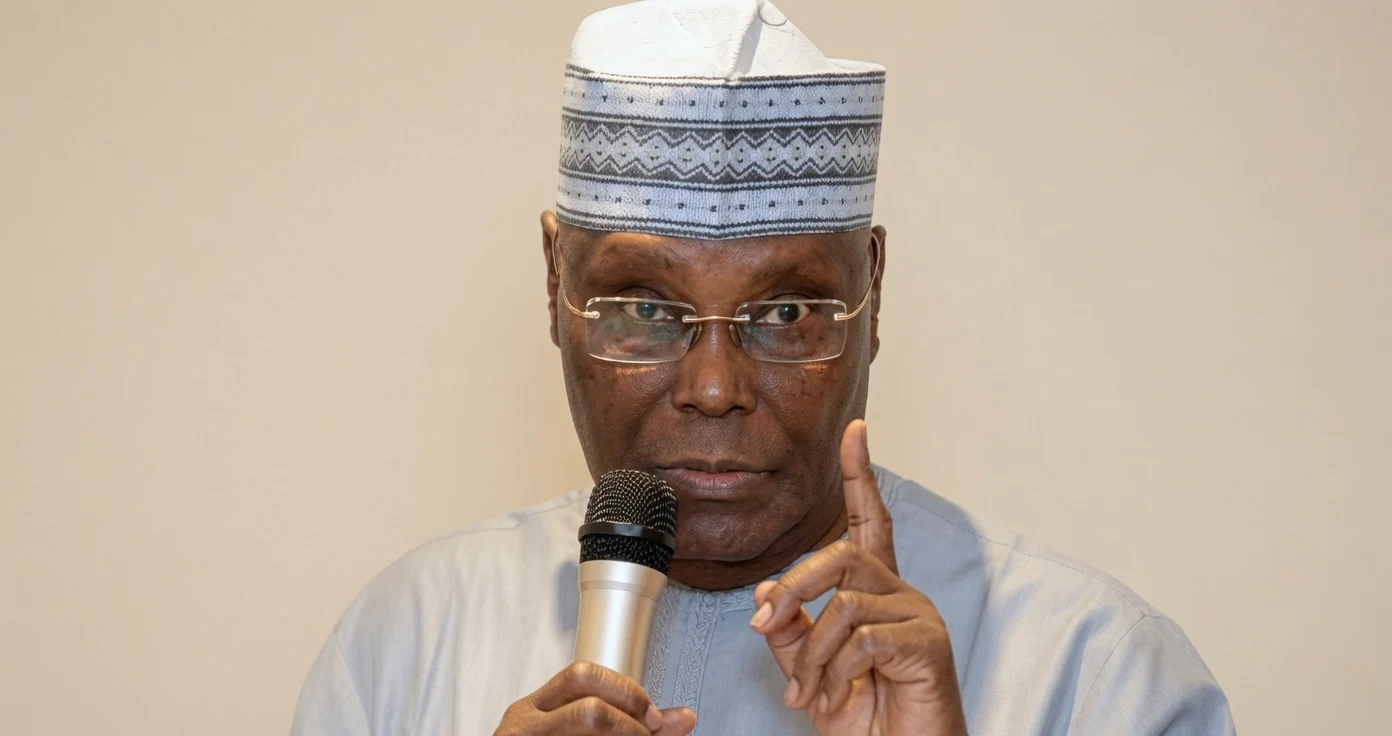

Nigeria has endured military adventurism, sectional uprisings, and the slow decay of public trust. Yet in all its turbulent history, it has rarely confronted a presidential candidate whose own words and conduct pose such a direct threat to the solvency, unity and stability of the republic. Atiku Abubakar is not merely a flawed politician. He is a destabilising force desperate to wreck the country.
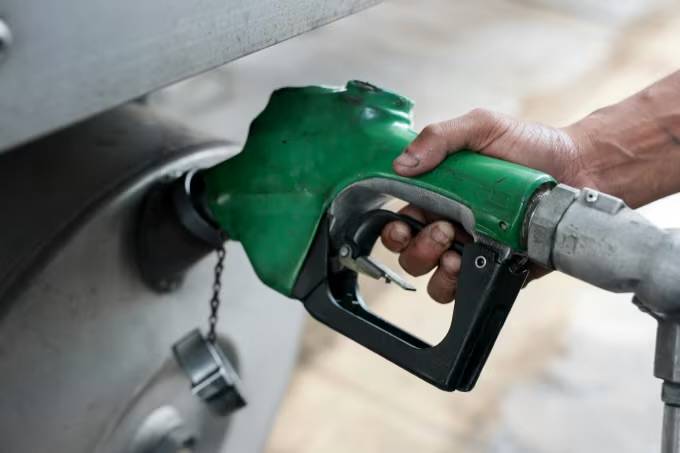
After decades of fiscal haemorrhage, institutional decay, and economic self‑harm, the country finally executed the single most consequential reform since the late 1980s: the removal of the fuel subsidy. This reform did not merely adjust petrol prices. It rescued the federation from a structural collapse that had been quietly building for nearly four decades. It stopped the bleeding. It restored liquidity. It revived state and local governments that had been suffocating under a regime that consumed national revenue faster than the country could generate it. Then, suddenly, Atiku stunned the nation. He announced that if elected President, he would bring back the most devastating policy.
By that pronouncement, Atiku showed he did not care a fig if Nigeria collapsed economically. He escalated the level of his immediate personal threat to national survival to code red. To understand the depth of Atiku’s devilish machinations by this policy somersault, we need to unpack the calamity that fuel subsidy became, the scale of the damage it inflicted, and the catastrophic consequences of returning to it.
The Calamity Nigeria Survived: A Subsidy That Nearly Destroyed the Republic
Fuel subsidy was not a social welfare programme. It was a national tumour. It devoured revenue, crippled infrastructure, and forced the government into a borrowing spiral that ballooned public debt from roughly ₦3 trillion in 1999 to over ₦87 trillion by 2023. It was the single largest driver of Nigeria’s debt explosion.
Over an 18‑year period, subsidy consumed ₦20.37 trillion. When earlier years were included, the cumulative burn exceeded ₦22 trillion. In 2023 alone, subsidy swallowed ₦5.10 trillion, representing nearly 70% of actual federal retained revenue. Nigeria was borrowing simply to keep petrol artificially cheap. States were starved. Local governments were suffocated. Infrastructure was abandoned. Hospitals and schools were sacrificed so that smugglers could divert subsidised fuel across borders.
The subsidy regime was not merely expensive. It was fraudulent. Daily petrol consumption was officially pegged at 66 million litres, a figure inflated by smuggling and round‑tripping. Once subsidy was removed, consumption collapsed to 24 million litres, exposing the scale of the criminal enterprise that had been feeding on the nation.
This was not governance. It was national self‑harm.
Before the Tinubu government implemented the reform, even Atiku himself acknowledged the insanity of the subsidy regime. In his own 2023 policy document, he pledged to remove fuel subsidy within his first 100 days in office, describing it as fiscally irresponsible and economically ruinous. That was when he needed to sound serious. Today, he has capitulated, promising to restore the very calamity he once vowed to eliminate. A man who reverses himself on a matter this fundamental is not offering policy. He is offering peril. He is not guided by principle. He is driven by convenience rather than conviction.
The Reform That Saved Nigeria
Fuel subsidy removal reversed the trend. It freed ₦15.83 trillion between June 2023 and December 2025. It allowed the federal government to deploy ₦9.39 trillion to wage adjustments and ₦6.5 trillion to infrastructure. It restored the fiscal oxygen that states and local governments had been denied for decades.
The transformation was immediate and measurable. The total shared FAAC pool increased by 282.49%, rising from ₦786.16 billion in May 2023 to ₦3.007 trillion by July 2026. Every tier of government experienced nearly a fourfold increase in allocations. For the first time in decades, states could pay salaries without borrowing. Local governments could function. The federation could breathe.
Nigeria did not simply remove subsidy. Nigeria survived subsidy.
Why Atiku Abubakar’s Plan Represents an Existential Threat
Atiku Abubakar has signalled his intention to return Nigeria to the subsidy era. He has criticised the removal, suggested reinstatement, and offered vague assurances that he would “fund it through increased production and elimination of corruption”. Yet he has provided no mathematical blueprint, no fiscal pathway, and no credible mechanism for covering a liability that historically consumed virtually all federal oil revenue. According to NEITI and CBN records, in the final full year leading up to its removal (2022), the fuel subsidy consumed 100% of Nigeria’s net oil revenue, effectively wiping out all federal earnings from crude oil sales.
A return to subsidy would immediately impose an annual burden estimated at over ₦10 trillion. It would reignite the borrowing spiral that created a ₦53 trillion sinkhole. It would revive the CBN Ways and Means overdrafts that ballooned to ₦22.7 trillion. It would plunge states back into the salary crisis that once left 27 states unable to pay workers without loans. It would collapse the FAAC gains that revived the federation.
Any politician who proposes to drag Nigeria back into the catastrophe it narrowly escaped is not offering leadership. He is offering liquidation. He is not proposing policy. He is proposing regression. He is not defending citizens. He is endangering them.
This is why flip-flopping Atiku Abubakar represents an existential threat to Nigeria’s economic survival. His subsidy stance is not merely misguided. It is dangerous.
Astroturfing: The Digital Sabotage of National Confidence
Beyond the fiscal threat lies a quieter, more insidious danger. Since 2023, Atiku’s camp has orchestrated a coordinated ecosystem of social media entities designed not to critique policy but to sabotage national confidence. This is not organic dissent. It is political astroturfing.
The apparatus manufactures a gale of negativity around every government action, regardless of merit. It seeks to convince global markets that Nigeria is collapsing, thereby depressing investor confidence and harming ordinary citizens. It is a digital strategy aimed at weakening the state by weaponising despair.
Global history offers a warning. In Brazil, Jair Bolsonaro deployed “digital militias” to delegitimise national institutions and project an artificial image of a failing state. Brazil’s Superior Electoral Court recognised this weaponised negativity as an abuse of political and media power and barred him from running for office to protect national stability.
Nigeria faces a similar threat. A Loyal Opposition is essential. A Sabotage Opposition is dangerous. When politicians weaponise coordinated disinformation to undermine the sovereign interest of the nation, they cross a line from opposing a temporary government to attacking the permanent republic.
Atiku has crossed that line.
Divisive Rhetoric: A Threat to National Unity
On 15 October 2022, Atiku told Northern voters that they did not “need a Yoruba candidate or an Igbo candidate.”
This was not a slip. It was a creed. It was dismemberment.
A man who campaigns this way will govern this way. A president who displays animosity toward entire regions will not suddenly become a unifier once sworn in. He will marginalise. He will exclude. He will reward cult loyalty and punish geography.
Nigeria is too fragile for such a man.
His Other Liabilities
Atiku’s eight years as Vice President, particularly in his first term, were marked by privatisation exercises that became synonymous with insider dealing. ALSCON, Delta Steel, NITEL. Billions lost. Assets stripped. Workers abandoned. Decisions that should have strengthened national institutions instead strengthened private networks.
President Olusegun Obasanjo, who worked closest to him, described him as a man with “a propensity for corruption and a readiness to sacrifice national interest for self and selfish interest”. He later warned Nigerians never to allow Atiku near the presidency.
These are not rumours. They are historical liabilities.
Conclusion: The Most Dangerous Candidate in Contemporary Nigerian Politics
In my view, Atiku Abubakar is dangerous because he threatens the two pillars Nigeria cannot afford to lose: unity and solvency.
He threatens solvency by proposing a return to a subsidy regime that would bankrupt the nation.
He threatens stability by weaponising digital astroturfing.
He threatens unity through sectional rhetoric.
He threatens governance through a record of cronyism.
Nigeria needs a unifier. Nigeria needs a reconciler. Nigeria needs a leader who understands that the presidency is not a sectional throne but a national trust.
Atiku Abubakar has shown, repeatedly and openly, that he is not that leader.