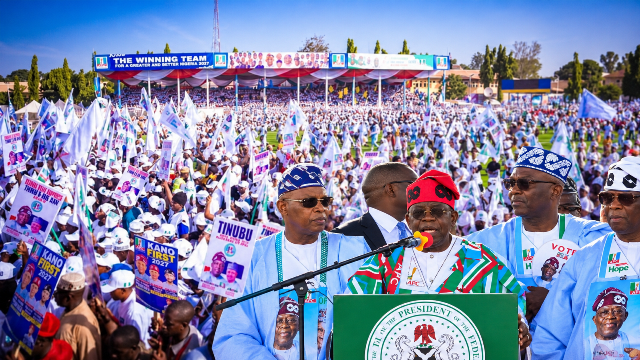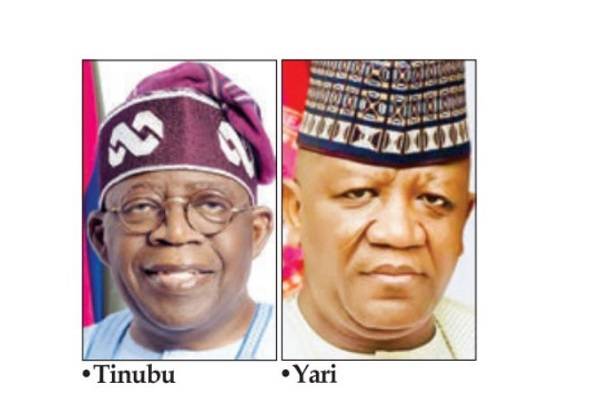

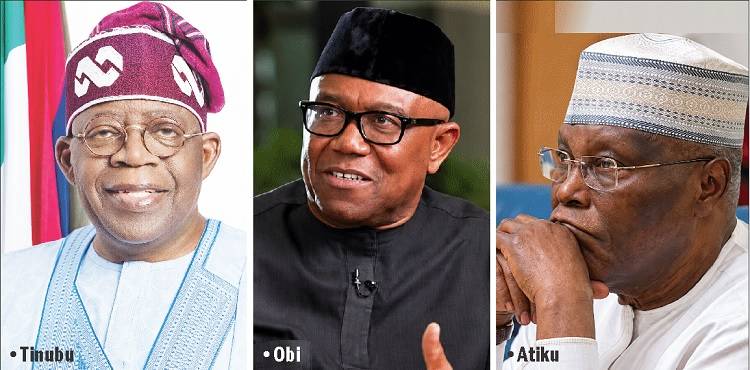

Despite the stiff media and elite opposition to the All Progressives Congress (APC) administration and candidacy of President Bola Tinubu, he is expected to win the January 2027 presidential poll. The reasons are self-evident, but three factors clearly recommend that conclusion and an electoral outcome expected to leave the opposition nonplussed. The opposition will use every social media tool possible to demarket the president and his party, accuse the administration of planning to rig the polls, and stoke household anger over inflation and hardship consequent upon the administration’s reform programmes; but none of these efforts will yield the expected outcome. In frustration, the opposition will attempt to crash the entire edifice, but even that desperation will not save the opposition from the humiliation they will likely experience in January.
The three factors are: (a) successor elite dynamics and rotational presidency; (b) reforms and national political and business consensus; (c) politics of South-South and North Central inclusiveness. These factors are not exhaustive, but they serve as the preliminary touchstone for the 2027 elections and campaigns. Firstly, the next elite and the rotational presidency formula combine two powerful factors capable all by themselves of tilting the election in favour of the president and the APC. Either by design or accident, President Tinubu’s reforms and rejigging of the entire gamut of the society have birthed new political elites in the Northwest and Northeast as well as in the Southeast who are positioning themselves for the 2031 sweepstakes. They are not as rabidly ethnical and regionalist as the ageing elites in their regions, and they understand that four more years of President Tinubu would not harm but advantage them.
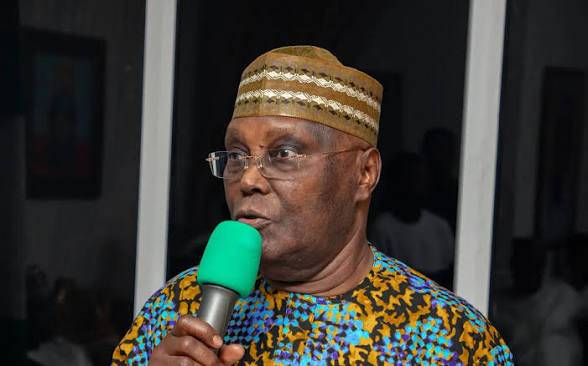
In 2031, they recognise that the presidency would naturally rotate to the far North for a nondisruptive and uncomplicated eight years, while the vice presidency, from all indications, would rotate to the Southeast. So, why needlessly try to hurry or even sabotage an inescapable change? They also reason that it would be far healthier for the Southwest, and by implication the South, to enjoy eight unbroken years from 2023 to 2031, regardless of any reservations they might have about the strong presidency of the incumbent. Their calculations are simple and engaging. The presidential candidate of the African Democratic Congress (ADC), former vice president Atiku Abubakar, has pledged to spend only four years if elected, and, if he can be trusted, back a South-South candidate for the presidency. Neither the traditional nor political elite of the far North would gamble away eight years beginning from 2031 just to satisfy the ambition and craving of the ADC standard-bearer. The far North elite may be unaccustomed to having a Nigerian president govern Nigeria with a mind of his own, but they will be loth to take foolish risks just to demonstrate that ephemeral unease and, in the process, trigger national instability and ethnic and regional animosity.
The Southeast may have voted massively, if statistically implausibly, for former Anambra State governor and Labour Party candidate Peter Obi in 2023, but they did it with the understanding that should he win, he would rule for eight years. Therefore, his promise of spending only one term of four years should he win in 2027 effectively makes the race all about himself and his ambition, not a stirring regional effort to erase marginalisation and restore Igbo pride. When they voted for him in 2023, they knew from his undistinguished records in Anambra that he did not have the capacity and boldness to rule or reposition a terribly distressed nation. He still has not acquired that capacity; so, the idea of Mr Obi winning and ruling for only four years is anathema to the Southeast. Worse, the new and transcendental political elite being nurtured in the region, and who are positioning themselves as potential presidential running mates in 2031, are determined not to have a self-centred Nigeria Democratic Congress (NDC) candidate bargain away their future. They are tantalised by the aggressive and scientific manner President Tinubu won the presidency in 2023, and believe they can do the same on their own merit as well as claw their way back into the presidency, far away from the mawkish and shortsighted din of spiteful social media propaganda.
The Northeast, Northwest and Southeast do not lack brilliant and cosmopolitan political elite to make a difference in 2031. Some of them are governors, and others are senior and ranking lawmakers. They are already networking their way into the future and are not trammelled by ethnic and sectarian prejudices to an extent that have hobbled Alhaji Atiku’s and Mr Obi’s politics and ambitions. Compared to the new elites emerging from the far North and the Southeast, the ADC and NDC candidates are antediluvian. The new elites have done their calculations well, resent the desperation of Messrs Atiku and Obi, and appreciate the wisdom of waiting for another four years. This is one of the reasons they seem genuinely passionate about backing President Tinubu in 2027.
Secondly, despite the economic anguish the Tinubu administration reforms have elicited, the country and nearly all 36 governors back the president’s re-election. Oyo State governor Seyi Makinde, who is one of the two odd men out, is embittered by what he claims to be the repudiation of a political agreement he reached with the president during the 2023 presidential poll. However, his party’s national leader, Bauchi State governor Bala Mohammed, is secretly enamoured of the president but keeps faith with his party, the Allied Peoples Movement (APM). Other than the two, all the remaining 34 governors throw in their lot with the president and are dedicated to getting him re-elected. The reason is not because they submit supinely to the APC or are giddy over the president’s blandishments; it is simply because they see in President Tinubu a leader who takes the bullet on behalf of his followers, a leader who is re-engineering the economy of the country structurally and on a scale that has freed funds to make states governable and governance pleasurable. They may have reservations about some of his reforms, such as the Local Government autonomy matter, both legislated and successfully litigated, but they see him as a leader and presidential exemplification. Suddenly, they have started to see arcane governmental intricacies become simplified and presidential system alluring. Their support for his re-election, especially those who have had to defect to the APC, was neither coerced nor induced. The defections and the support have been genuine.
In addition, and more importantly, the political and business elites, not to say a significant percentage of the electorate, think that re-electing President Tinubu is a vote for the continuation, refinement and consolidation of the reforms begun in 2023 and which are beginning to pay off. The reforms have made the states and local governments liquid and able to fund projects and embark on infrastructural renewal. They have also stabilised the foreign exchange market and eliminated arbitrage as well as made business planning more predictable and even pleasurable, turned the country into one gigantic project site crisscrossed by roads and rail works, attracted foreign investment by the tons, and in short sorted out the country’s long-running macroeconomic crisis. A commentator will have to be ignorant of how an economy works to belittle the impactful changes and reforms that have taken place in a little over three years. Insecurity may still be a headache, but the state has fought back on a reassuring scale that gives hope of victory. Discontent may still be noticeable, but the economy is responding faster and growing bigger than anticipated. Even the once contemptuous foreign economic think tanks and rating agencies have begun to give the administration solid pass marks, and Nigeria is once more a global attraction and destination for investment. Nigerians are unlikely to turn their backs on the progress that has been made so far or join the opposition to press for the reversal of reforms and policies that have started to turn things around.
In fact, notwithstanding the agitations in some parts of the country, particularly a few parts of the far North and half-heartedly the Southeast, the traditional and political elites are unlikely to embrace the half-baked panaceas of the opposition. Some of the elites may have reservations about the president and resent his self-confident and independent style of leadership, but they won’t risk a return to the chaotic past. Brinkmanship has its limits. The traditional and political elites in those regions know a thing or two about economics; and they know that Mr Obi has no clue how to run or manage a complex and modern economy, while Alhaji Atiku has tended to oversimplify some of the knotty economic questions bedeviling the country, such as fuel subsidy. The elites are mystified by how the country, despite Organised Labour instigations, has weathered the vicissitudes of the global economy engendered by the Russo-Ukrainian war and the US/Israeli-Iran war. That there have been no fuel queues or foreign exchange disruptions, but instead the economy has grown at more than 4.43 percent, with a balance of trade surplus of more than $3bn and foreign reserves of over $58.8bn, are testaments to the durability and farsightedness of the reforms. Moments before the elections, the elites will embrace common sense and pass the word down to their supporters to vote for stability rather than jump over the cliff or chase chimera for ethnic reasons simply because they see the president as self-willed.
Thirdly, and as an icing on the cake, President Tinubu has initiated ‘outreach’ and far-reaching programmes and projects, some of them properly described as legacy projects, to bring the North Central and the South-South in from the cold. These were regions Mr Obi tore to pieces with sectarian sorcery and ethnic seductions, and Alhaji Atiku sullied with bitter recrimination. Instead of cold-shouldering them, the president systematically overwhelmed them with projects and appointments and made them feel once more like stakeholders in the Nigerian project after decades of alienation begun under military rule. They will reward him with their votes to guarantee their own survival and future. They are not oblivious to the dynamics of Nigerian politics, and they know that not every ethnic group can constantly aspire to the presidency in a nation of over 240 million people and over 370 ethnic groups and more than 500 languages. But with the right and inclusive leadership, the two regions, like all other regions, can procure a good and more abundant life for themselves, unfettered by ethnic and religious discrimination and limitations.
The pure electoral arithmetic of the 2027 poll is still in flux. As the elections draw near, it will be time to focus on that subject and deliver far more accurate predictions. But if the presidential election were held today, President Tinubu would be hard to beat. He has delivered on most of his promises, many of them region-specific. He has dragged the economy back from the brink and given it stability and oomph. He has taken some tentative steps, within the ambit of the constitution, to make Nigeria genuinely federal, including tax reforms and state police. And despite fierce and ongoing opposition, he has refused to be distracted from the goal of re-engineering Nigeria for the future, not only to serve as an economic powerhouse for Africa but to be globally competitive in the shortest possible time. He has, in short, in three years or so, delivered probably the most impactful governance in recent decades in the sub-region and in Africa. He has done so much heavy lifting that it is inconceivable he could falter in the coming votes.
However, since the elections are still months away, and the opposition is bent on unseating him by fair or foul means, including orchestrating deliberate falsehoods and enunciating populist slogans to ensnare the poor and susceptible, the president must prove adept at countering his challengers. Already, the opposition are inundating social media with either false narratives or beguilingly simple and enticing propaganda. The administration must find ways to answer the falsehoods before they take root and better the opposition narratives. Moreover, the president’s campaign must also find ways of generating their own poignant messages and disseminating them overwhelmingly on social media on a scale that would leave no one in doubt as to the administration’s landmark achievements. The Tinubu administration does not just have a responsibility to govern as well as it has done so far, it also has a greater responsibility to survive the onslaught being launched at it by the opposition and the wider public hooked on propaganda and falsehood. Surviving one’s enemies is the safest way to guarantee the stability of a government and the durability of an administration’s programmes and projects.
In the end, far more than in 2023, Nigerian voters and their many powerful vote herders can be generally trusted to do what is right. On balance, the far North and the even more fanatical and persuaded governors, recognising the necessity to nurture and sustain the informal rotational presidency formula necessary for national stability, will give decisive votes to the APC. The only rigging that took place in the last elections was in the Southeast where Mr Obi, a native son, fetched an unprecedented and dizzying 95 percent of the votes on average. No other candidate came close to 40 percent turnout even in their home states. This time, however, having lost the momentum of 2023 for obvious reasons, and with the electoral commission more alert and enterprising than ever, the NDC candidate will struggle to secure 50 percent of the Southeast votes on a turnout of equally less than 50 percent. The North-Central will respond to the administration’s politics of inclusion by giving significant votes to the APC, while the South-South and Southwest will follow suit. The poll may not be the rout everyone expects, but it will be decisive enough to make any legal challenge perfunctory. By some accounts, the voting outcome may even turn out to be anticlimactic. Expectedly, the APC and its presidential candidate have not taken the poll for granted; they have pursued every lead and herded every vote with the fastidiousness of a new suitor and the ferocity of a hunter.
The party is not expected to run a flowery and bedazzling campaign in which leading candidates mesmerise the electorate – they don’t have too many men with the gift of the gab in the great Zikist tradition. But they have shown a great inclination to run a very scientific campaign not seen in these parts since 1999, as exemplified by their exhilarating and brilliantly organised Kaduna campaign flag-off. That structured campaign will obviate the minor but sometimes eye-popping policy and appointment mistakes the administration made in its first one year or so in office and eventually give them the desires of their heart.
NOTE: Views expressed by contributors are strictly personal and not of Theliberationnews