
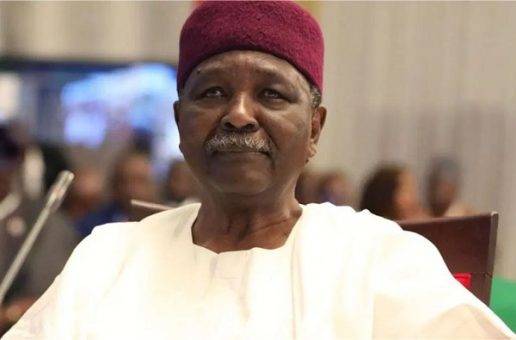
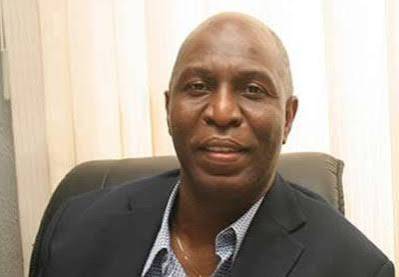
Three books on our country’s reckoning became bookshelf habitues in the past year, and that is a good thing. All three have generated flaps. And that is a good thing. It means we care about our history. The books are, A journey in service by General Ibrahim Babangida, Call of Duty by General Abdulsalami Abubakar, and My Life of Duty and Allegiance by General Yakubu Gowon. IBB pens back to June 12, Abubakar recalibrates its solution, but Gowon writes empathy into the first and most enthralling of all crises: the Nigerian crisis and the civil war of the 1960’s. NigeriaCurrent Affairs
What do these three books argue? That those who say we should not open old wounds are labouring under illusions. That life, especially of a country of fractious tendencies like Nigeria, will always be an open wound. The wound hurts but not as much as the denial. All three led the country. All three inked a firestorm. All three are either loved or reviled. IBB engrafted his crafty hand on June 12, telling a story as though he does not. Abubakar unveils a tame tale, more like a position paper than a yarn of flesh and blood. In his book, the stories of post-Abacha period, with its NADECO fulminations, temper the tempest of the era.
For Gowon, he was in the crosshairs of a maelstrom. This essayist argues in the first instalment on his book that he was a man of peace who held the bull of an irate nation. Children would name cone-shaped sweets after him – Ekanna Gowon. (Gowon’s finger). In Government College Ughelli, my English teacher Mr. Tieku isolated the National Ttheatre as how humans make metaphors in common speech. We called the theatre Fila Gowon. (Gowon‘s cap). Yet he was not flawless but a miracle of calm.
His engagement of the civil war years brings up some personalities. They include Odumegwu Ojukwu, Obafemi Awolowo, Murtala Muhammad, Olusegun Obasanjo. Of all, Ojukwu is most intriguing. Was Ojukwu out for Biafra or himself? Was Gowon too soft for his choleric bluffs? Many Nigerians read tendentiously, to confirm and amplify their prejudices. A new BBC documentary on the civil war, for instance, delineates more gore than context.
President Richard Nixon asserted that the fate of nations hangs more on personal relations than many think. He was also echoing Thomas Carlyle, who says history is about the exploits of great men. Nixon was referring to how his personal interactions with Soviet Union’s Leonid Brezhnev leashed the superpowers.
While many speak of Aburi, the occupation of the western region by northern soldiers, the economic blockade before the hostilities, the storm might have been avoided if Ojukwu ceded ego for peace.
Ojukwu would not yield to Gowon as supreme commander. After Aburi, Awolowo led a delegation to Enugu with Aluko and Samuel Marierie, former premier of the Midwest. The minutes are in a book, Awolowo on the Nigerian Civil War. Gowon’s book falls shy of its details. The meeting reflected the effort of a man to bring the country from the brink. For all the bitterness in the east over the pogrom, not going to war could still have saved the country the millions dead and financial losses. The war was not inevitable. The grief was between the east and north. The north griped over the killing of their hero, the Sardauna and the prime minister and their touchstone army officers. The east bellyached over the pogrom. NigeriaCurrent Affairs
Awo wanted two wrongs not to writhe with blood. It was painful to read the minutes of the Enugu meetings in which the eastern cognoscenti like Okigbo, Mbanefo, et al, buoyed Ojukwu’s position and hedged and even huffed. It became clear that the meeting was a technicality. Ojukwu would tell Awo later that he did not want to waste his time. The east had decided to secede. Attempts by Gowon to meet with Ojukwu had met with stonewalls. The bearded rebel could not stomach the “bible-thumping Jack.”
Another point he made about Ojukwu was his bumbling war strategy. He said the rebel had time and resources to take Lagos early. But he wanted to pass through Ibadan rather than take shorter route. He could also have shelled Lagos to rubbles from the sea. He was too intellectual to lead an army.
Murtala was Gowon’s schoolmate at Barewa College. A hothead, Murtala was one of the masterminds of the July countercoup that flushed out Ironsi and made mincemeat of Igbo officers. He was at the centre of a corps of officer who decided on Gowon as head of state. Gowon was a Murtala beneficiary. That was beneath the hothead’s defiance of his officer during the war. He defied Gowon’s orders over his bumbling forays at Asaba that claimed many federal soldiers because he decided to cross the bridge rather than take other routes that he eventually followed. General Alani Akinrinade noted to this essayist that the hothead was relying on a Marabout who was always with him. Akinrinade posted the man to Lagos. Gowon says Awo sedated his anger to remove Murtala, citing the heat of the war. Murtala, who liberated the Midwest, would later abandon his troops and return to Lagos. Gowon did not fire him. I think it was a mistake. The same man would knock him out of office in cahoots with trusted kinsman and ally Joe Garba.
Gowon spends quite a portion of the book about how he knew about the plot but did nothing. He denies he was too soft. As a school boy I remember the headline, “I knew I would fall ten days before the coup.” As a boy, I pitied him. As an adult, I wonder at his naivety. If he had such great plans like the now Badagry-Sokoto highway, why did he endanger the state in the hands of mercurial beast like Murtala?
In fact, Special Branch chief M.D. Yusufu warned him and named names. Rather than act, he wanted more facts. I thought he was a soldier in cassock. Yusufu explained in his biography written by Ayo Opadokun that even army chief Hassan Katsina openly told Murtala and his men that he knew of the plot. Murtala was a man without subtlety, and no good soldier would brook his inanities.
Obasanjo inspired Gowon’s ire. He was grateful that the Owu man helped him out when he was broke. He thought him a genial man until he appointed him as Murtala’s rear commander. Obj said he could not work under him. But Gowon insisted hence he held Ibadan and rebuffed Soyinka and Banjo’s entreaties for a third force. The same Obj would become Murtala’s deputy as head of state.
He also said Obj was not a good commander. He would have delayed and complicated the war when he defied Gowon’s instruction of the Aba and Umuahia linkup. Alabi Isama and Akinrinade, exploited Obj’s absence to obey Gowon’s order and the war and Biafra surrendered. But he took the credit. In his My Command, he asserts that Gowon knew nothing of the surrender. In a book The Letterman by Musikilu Mojeed, we learn that, under OBJ, thousands of federal soldiers died.
Gowon also tells the story of how OBJ witch-hunted him over the Dimka coup. He denies any knowledge. He was not in Lome. He was at school in Warwick. He was stripped of his pension, his rank as soldier and status as former head of state. He was a wanted man. The government under Obj wanted him repatriated. Gowon wanted to defend himself in a neutral place. He reprinted Ayida’s letter in which Obj sent him secretly to deny to the British government what he claimed in public. Was Obj under siege by the power cabal to torment his former benefactor?
But subsequent acts of Obj showed that he had an axe to grind. Why did he make Gowon homeless and not allow him to acquire his Ikoyi residence? Why did he approve, again, to revoke Gowon’s land in Abuja that IBB gave him? Who did the revoking? Our man Nasir El Rufai. It took the intervention of General T.Y. Danjuma to restore it. Obj had asked him to refer his request to chief of staff Abdullahi Mohammed, who was a trusted head of military intelligence when Gowon was head of state. Mohammed excused himself from Gowon’s Kampala and final trip. Gowon did not know he was part of the coup to unseat him. Gowon uttered perhaps the most damning quote of the book to Mohammed: “I hope your loyalty to your boss – Obasanjo, C-in-C – will be greater than your loyalty to me.”
Some things stand out for rumination in his book. He never spilled the interiority of his agony when he was betrayed or when he suffered homelessness and financial strains in the UK.
He was more able to relate rage than pain, especially against Ojukwu, Obj and the man who opted to stay with him after he lost the throne. He was with him and his family through thick and thin. He left them with all in tears. It was discovered he was a spy, taping conversations in the house to incriminate Gowon, without evidence in Dimka’s coup. That episode gave me a pause.
Another point is his son Musa. From his age (58), does it mean Gowon was somehow still seeing Edith when he was head of state and married? In her book Erewon, former beauty queen Julie Coker says she had a date with Gowon the day he was appointed head of state. What might have been?
Gowon was a noted long-distance runner at school. He has outlived many of his enemies in the race of life. The man who wanted only to be a teacher turned his biography into a classroom.