

The Federal Government has approved a N70,000 monthly transport allowance for public servants for six months, beginning in November 2026, as part of measures to ease the rising cost of living.
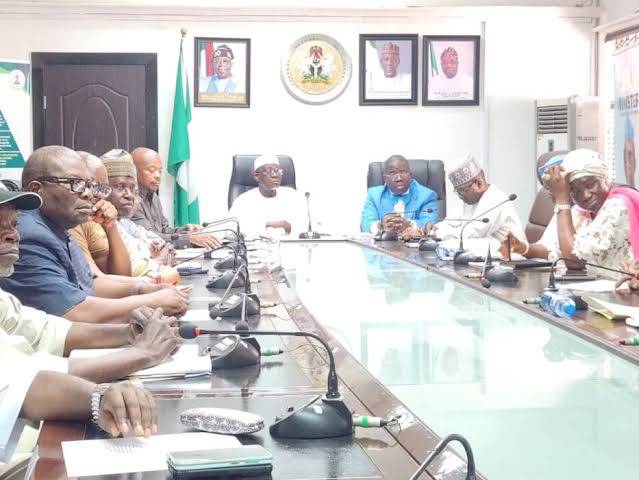
The approval was reached during a meeting between the government and the Nigeria Labour Congress (NLC) in Abuja on Tuesday, October 27, following disagreements over workers’ welfare, outstanding allowances and the implementation of minimum wage agreements.
The government also approved the payment of outstanding peculiar allowance arrears from May 1, 2026, with the payments scheduled to begin in November and spread across three equal monthly instalments.
The agreements were contained in a memorandum of understanding signed by representatives of both parties at the end of the conciliation meeting convened by the Federal Ministry of Labour and Employment.
Under the agreement, the N70,000 transport allowance will be paid across all levels of the public service for six months. The memorandum did not specify the exact payment dates or the arrangements for disbursement.
The NLC Assistant Secretary-General, Chris Onyeka, described the meeting as productive but said the outcome fell short of the union’s expectations.
“It was productive, but not as we had expected,” he said.
Onyeka added that negotiations often required compromises, noting, “Sometimes you win some, lose some.”
One of the major issues left unresolved was the effective date for implementing the national minimum wage. Although both parties agreed to constitute a Minimum Wage Negotiation Committee immediately, they failed to reach an agreement on when implementation should take effect.
The committee will comprise representatives of the government, workers and employers.
The disagreement comes after the Federal Government and organised labour negotiated an increase in the statutory minimum wage from N30,000 to N70,000 in 2024, with the new rate subsequently enacted into law.
The latest meeting also addressed outstanding payments and other welfare demands affecting public servants across different sectors.
For health workers, the government agreed to clear 19 months of outstanding allowance arrears within three months, beginning in December 2026. The memorandum did not disclose the total amount involved or provide specific payment dates.
The National Salaries, Incomes and Wages Commission also undertook to complete an updated assessment of the cost implications of a proposed adjustment to the Consolidated Health Salary Structure (CONHESS) within three weeks.
The assessment is expected to guide the Presidential Committee on Salaries in deciding on the proposed adjustment. No final decision on the salary structure was announced at the meeting.
The payment of hazard allowances to agricultural officers also remains subject to verification. The Federal Ministry of Agriculture and Food Security had submitted the list of beneficiaries and the associated costs to the commission for review.
The verification is expected to be completed within two weeks, after which the commission will issue an implementation template. The memorandum did not state the number of eligible officers or the total amount to be paid.
On tax relief for workers, the government and the NLC agreed to refer the matter to the National Executive Council for consideration because of its statutory implications. The agreement did not specify the proposed relief measures or when the council would consider them.
The memorandum acknowledged the NLC’s concerns about the government’s handling of workers’ demands, stating that the union leadership “expressed concern over the Federal Government’s attitude towards the above issues.”
It also said the Federal Government “stated that it fully respect the right of the Congress to advocate for improved working conditions for Nigerian workers, and is genuinely trying to address every aspect of it through a structured intervention.”
The latest discussions followed an earlier conciliation meeting held on October 22 to address disagreements between the government and organised labour.
The resolutions also urged state and local governments to participate in the intervention process, given their responsibility for the welfare of workers in their respective public services.
The memorandum stated, “State Governments and Local Governments are urged to key into the intervention process. Unions are equally enjoined to push for its implementation.”
Both parties agreed to meet again after one month to review progress on implementing the resolutions, including the transport allowance, outstanding peculiar allowances and other welfare issues.
While the agreement provides for several financial interventions, decisions on minimum wage implementation, CONHESS adjustment and tax relief remain outstanding. The payment of agricultural officers’ hazard allowances is also dependent on the completion of verification and the issuance of the implementation template.