
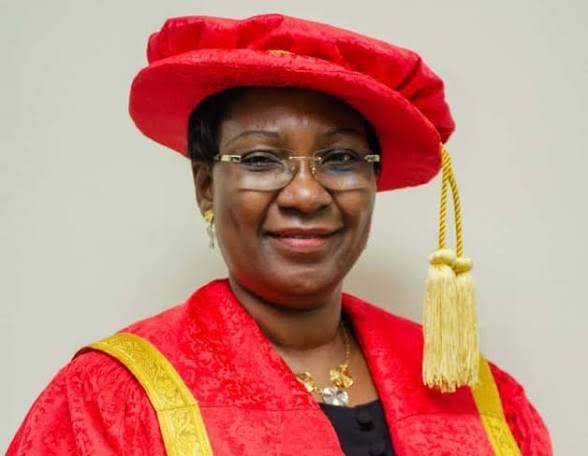

The immediate past Vice-Chancellor of Lagos State University (LASU), Prof. Ibiyemi Olatunji-Bello, has clarified her recent remarks on university funding and the cost of providing quality tertiary education.
Olatunji-Bello had been quoted as saying that public universities in Nigeria might need to charge a minimum of N1 million per student annually to achieve financial self-sustainability.
The comment generated reactions, with some reports and social media discussions interpreting it as a call for students or their parents to bear the full cost of university education.
However, her media aide, Emmanuel Adeyemi, said in a statement issued in Lagos on Wednesday that the former Vice-Chancellor’s remarks had been taken out of context.
According to Adeyemi, Olatunji-Bello was speaking against the backdrop of the cost of providing university education that meets international standards.
He said her central argument was that delivering the quality of undergraduate education Nigerians desire costs approximately N1 million per student annually.
“Crucially, however, she did not suggest that this cost must necessarily be transferred wholesale onto students or their parents,” Adeyemi said.
He explained that Olatunji-Bello’s position was that universities could achieve financial sustainability by innovating, improving their institutions and developing additional sources of revenue.
Quoting the former Vice-Chancellor, he said: “Universities can achieve financial self-sustainability. If they can innovate and ensure improvements in the institution, money will come in.”
Olatunji-Bello also urged parents to prioritise the education of their children, stressing that quality education requires adequate funding.
“I enjoin parents to ensure their children are well-educated by prioritising their fees. Good quality education needs money,” she was quoted as saying.
Adeyemi said the former LASU Vice-Chancellor’s comments should therefore be understood as a broader call for universities to explore innovative and diversified revenue streams, rather than as a proposal to transfer the entire cost of university education to students.
He added that her position recognised the respective roles of universities, government, parents and other stakeholders in sustaining quality higher education.
Olatunji-Bello consequently urged the public, media organisations and stakeholders in the education sector to consider her complete remarks and the context in which they were made, rather than relying on isolated statements.