
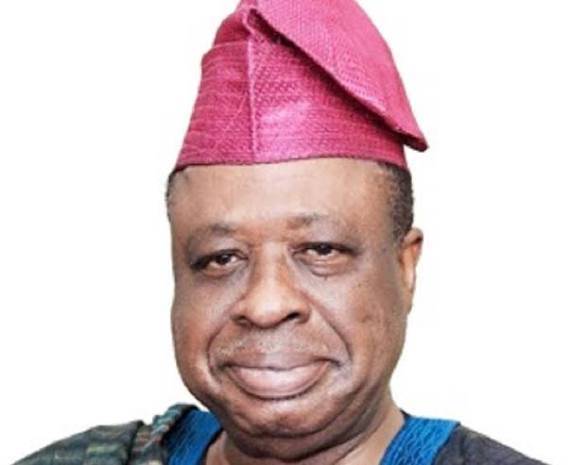

It is a thought-provoking irony that the name of an acclaimed master of letters remains conspicuously absent from the roll of the prestigious Nigerian Academy of Letters (NAL).
As Prof. Adebayo Williams turned 75 on September 9, my attention focused on this intriguing reality. His formidable lifetime output presents an overdue case for recognition by the country’s apex body for scholarship in the humanities.
A scholar trained at the University of Ife (Obafemi Awolowo University), Williams established himself in the Theory of African Literature, Postcolonial Criticism, and Political Theory. He is internationally recognised as a multidisciplinary and multidimensional intellectual.
His academic trajectory includes serving as a Senior Lecturer at Ife, Professor of Liberal Arts, Savannah College of Arts and Design, Georgia, USA, holding the Amy Freeman Lee Distinguished Chair of Humanities and Fine Arts at the University of The Incarnate Word in Texas, USA, and research appointments at the University of Birmingham, England, and the African Studies Centre in Leiden, Netherlands.
Crucially, his appointment as Director General of the Africa Policy Group—a London-based think tank addressing critical issues of African governance—underlined an intellectual footprint that spans both academic theory and global policy implementation.
His contributions extend beyond critical theory into creative production. His novels —The Year of the Locusts and The Remains of the Last Emperor — won the Association of Nigerian Authors (ANA) Prize in 1988 and 1995, proving his creative mastery of the medium he critiques. His third novel titled Bulletin from the Land of Living Ghosts was published in 2002.
Widely regarded as one of Africa’s foremost essayists and public commentators, Williams has spent nearly five decades utilising public prose as a tool for democratic defence, socio-political critique, and humanistic engagement across national and international platforms.
It is noteworthy that his high-minded, essayistic writing produced for the public square bridges the gap between rigorous academic discourse and accessible journalistic commentary.
His newspaper columns and public essays are not mere topical commentary; they are densely crafted, elevated prose works that deploy literary theory, historical depth, and political philosophy in a popular medium. He won the Odunewu prize for Informed Commentary in 1993 and 2000.
He was a columnist for Newswatch, African Concord, Tempo/The News, and Africa Today. He writes a must-read weekly column for The Nation under a pen name. LatestNews Updates
As a columnist, he writes consistently about the country’s underdevelopment and why underdeveloped leaders cannot bring about development in Africa. It is a testament to his mental power and energy that he continues to write a compelling column at his age.
He has made a name for himself as an arresting and inimitable prose stylist. His essays, thoughtful and thought-provoking, combining literary theory and political philosophy, are presented with linguistic grandeur. They constitute a major contribution to national letters, deserving of apex recognition rather than institutional exclusion.
Perhaps the question of why eminent public intellectuals—such as Williams—may not yet be listed as Fellows of NAL boils down to the inner mechanics, statutory limitations, and procedural constraints of the Academy itself, rather than a lack of scholarly merit or recognised humanistic output.
The election of Fellows into the NAL is a highly competitive and rigorous peer-review process. The Academy admits scholars and distinguished public figures across four main categories. Regular Fellows: Full professors in the humanities resident and working within Nigeria. Overseas Fellows: Eminent Nigerian or international humanities scholars based at institutions outside Nigeria. Honorary Fellows: Non-academics or distinguished public figures who have made exceptional contributions to arts, culture, literature, or humanistic practice. Foundation Fellows: The founding scholars of the Academy (a static, non-elected historical body). NigeriaNews Subscription
Significantly, a candidate can only be nominated by a living Fellow of the Academy. Self-nomination is strictly forbidden.
The NAL Screening Committee subjects candidates to peer review, evaluating academic output, intellectual depth, institutional leadership, and overall impact on humanistic scholarship. The screened list of short-listed candidates is presented to the College of Fellows (composed of all living elected Fellows) at their statutory meeting. The College conducts a formal vote to elect new Regular and Overseas Fellows.
Nominations for Honorary Fellows and Awards of Excellence in Humanistic Practice are separately evaluated and endorsed by the NAL Executive Committee.
Admission into the Fellowship is strictly capped to maintain the Academy’s elite character. Guidelines mandate that not more than two candidates from any single discipline and typically a limited number per year can be admitted into the regular College of Fellows.
Elected candidates are publicly announced ahead of the Academy’s Annual Convocation (traditionally held in August at the University of Lagos).
Candidates are formally admitted during the Investiture Ceremony, where they take an oath and are granted the post-nominal letters FNAL (Fellow of the Nigerian Academy of Letters) for life.
Williams embodies the ultimate synthesis of academia and public intellectualism; his work fulfills the spirit of humanistic practice better than many purely enclosed academics.
Indeed, it is possible to make a strong case for his admission under NAL’s Honorary Fellowship category—which is explicitly designed for distinguished public intellectuals and cultural figures whose impact transcends standard faculty tracks.
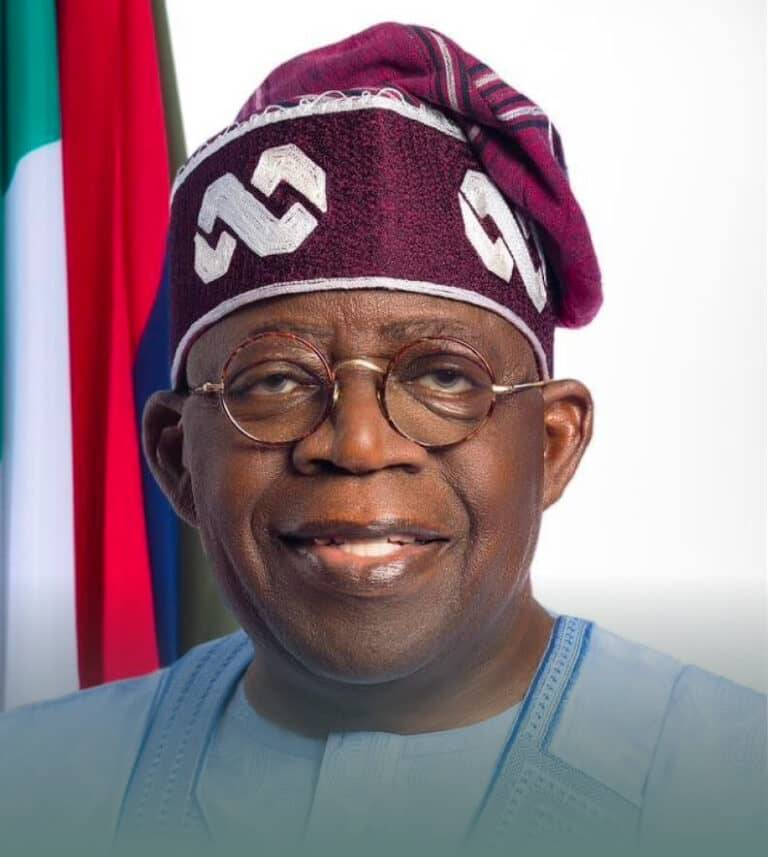
In a striking birthday tribute, President Bola Tinubu noted that Williams “has, through his writings, teaching and intellectual engagements, inspired generations of students, academics, writers and readers.”
Tinubu added: “He distinguished himself as a formidable intellectual whose scholarship, writings and commitment to knowledge have continued to illuminate our national conversation.”
As part of the 2025 Democracy Day celebrations, President Tinubu conferred the national honour of Commander of the Order of the Niger (CON) on Williams, among other pro-democracy activists, journalists, scholars, and resistance figures.
He was recognised in the academic and policy influencer category for using his scholarship, literary criticism, journalism, and public intellectualism to shape national democratic discourse and civic education during periods of military dictatorship. It underscores that his writing was not just academic theory, but an active, heroic force in the restoration of Nigerian democracy.
He has served as Chairman, Lagos State Electoral Reform Panel, member Board of Trustees Obafemi Awolowo Institute for Governance and Public Policy, and Chairman, Lagos State Gubernatorial Advisory Committee.
In his ancestral hometown, Gbongan, Osun State, Williams is Asiwaju Otun Olufi of Gbonganland. The title is a senior high-chieftaincy honour within the traditional council, signaling both community leadership and institutional reverence for his global accomplishments as a native son.
The responsibility now rests squarely with the living Fellows of the Nigerian Academy of Letters. As Williams marks his 75th milestone, nominating him is more than a tribute to an extraordinary mind. It is a necessary act of institutional completeness. JoinDiaspora Networks
By bringing one of the country’s most potent public intellectuals into its fold, the Academy will not merely be honouring a decorated scholar and patriot; it will be honouring the essence of Nigerian letters.
NOTE: Views expressed by contributors are strictly personal and not of Theliberationnews