

There are moments in public life when one must pause, not because silence is easier, but because truth deserves to be spoken while the evidence is still fresh. The August 15, 2026 Osun governorship election provides one such moment.
I write this not merely as a Senior Advocate of Nigeria and a former student of Professor Joash Ojo Amupitan, SAN, but as someone who has had the privilege of watching his journey from the lecture rooms of the University of Jos into one of the most consequential offices in Nigeria’s constitutional democracy. In my own modest capacity as a legal practitioner and public servant, I have also followed, participated in and contributed to the continuing national conversation on law, governance, democracy and public institutions.
My connection with Professor Amupitan, however, predates all of this. I first knew him not as the Chairman of INEC, but as my lecturer at the University of Jos. There he stood before us as a teacher, scholar and intellectual, teaching us the law and, perhaps without knowing it, demonstrating something beyond the law, the discipline of scholarship and the dignity of character.
Today, that same lecturer presides over the Independent National Electoral Commission (INEC), the institution entrusted with Nigeria’s electoral process- a responsibility that directly shapes the leadership, direction and development of the country and, ultimately, the lives of its citizens. The office has changed, the responsibility has changed, but, in my experience, the man has not. And that distinction matters.
On October 9, 2025, President Bola Ahmed Tinubu, GCFR nominated Professor Amupitan to lead INEC. The National Council of State subsequently endorsed the nomination, the Senate confirmed him on October 16, and on October 23, 2025, the President swore him in as Chairman of INEC.
When that appointment was announced, I did not hesitate to speak publicly in his support. I did so not because he was my former lecturer, and certainly not because personal acquaintance should ever become a substitute for merit. I spoke because I knew something about the man that an appointment letter cannot confer and a résumé cannot fully explain: character.
I knew the scholar before the public officer, I knew the teacher before the Chairman, and I knew the man before the office. And I said, in substance, that Professor Amupitan would perform. Not because I possessed the gift of prophecy, but because I had watched and studied, for years, the trajectory of his career, his scholarship and, above all, his character.
Professor Amupitan’s journey, from his LL.B. at the University of Jos in 1987, through his long academic career at the same institution, to his elevation to the rank of Senior Advocate of Nigeria (SAN) in 2014 and, ultimately, to the chairmanship of INEC, is a remarkable meeting of scholarship, professional accomplishment and public responsibility.
But history is merciless to predictions. It eventually asks a simple question: You said he would do well. Did he? The Osun election has now provided part of the answer.
On July 30, 2026, ahead of the election, Professor Amupitan assured stakeholders in Osogbo that INEC was operationally, technologically and logistically prepared to conduct a free, fair and credible election, while reaffirming the Commission’s commitment to strict neutrality. Those were words, but August 15 supplied the test.
And the significance of Osun is not merely that an election was conducted. Nigeria has conducted many elections. The question has always been whether the election can command confidence. That is the harder test.
An election can be conducted without being credible. A ballot can be cast without the voter’s will being respected. An electoral body can be constitutionally independent and yet institutionally distrusted. The difference lies in integrity.
The Osun experience is therefore important because it gives Nigerians an opportunity to examine the distance between institutional promises and institutional conduct. And that distance is where leadership lives.
Professor Amupitan did not inherit a blank slate. He inherited an electoral institution carrying the weight of decades of public expectations, disappointments, reforms, controversies and suspicion. His inaugural charge was clear: INEC under his leadership must deliver elections that are free, fair, credible, transparent and inclusive, with electoral credibility treated as non-negotiable. Osun has now offered the first major opportunity to measure those words against reality.
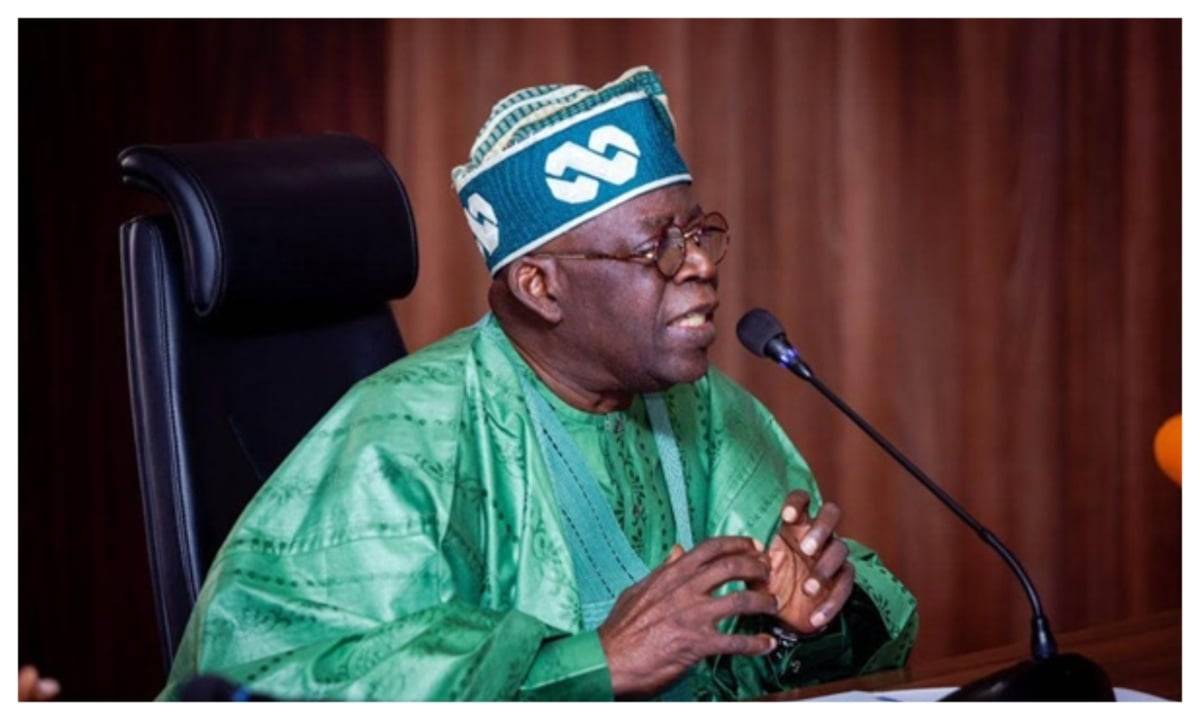
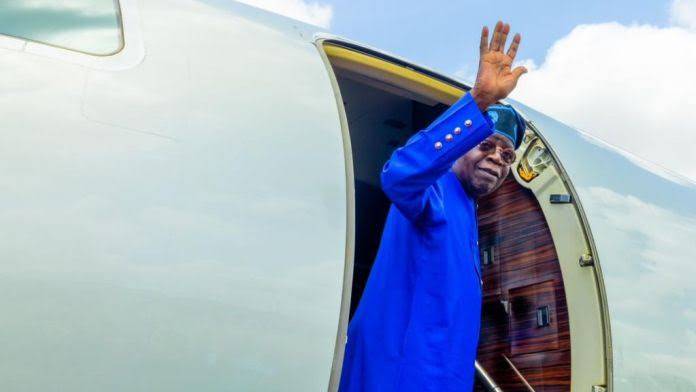
There is, however, another figure whose role deserves recognition in this unfolding democratic story: President Bola Ahmed Tinubu GCFR. It is easy, in our political culture, to celebrate an appointment and forget the greater responsibility that follows it. But leadership is not merely the power to appoint. Leadership is also the discipline to allow an appointee to perform.
President Tinubu deserves commendation for choosing Professor Amupitan for this important assignment and, equally, for the charge he gave him at his inauguration: to protect the integrity of Nigeria’s electoral process and strengthen the institutional capacity of INEC.
But the more revealing test of democratic leadership came in the days preceding the Osun election. On August 5, 2026, the EFCC obtained a court order freezing accounts of the Osun State Government. With the governorship election only days away, President Tinubu directed the EFCC to return to court and seek to vacate the order, explaining that the timing could create the impression that a federal institution was being used to interfere with the electoral process.
That intervention deserves to be viewed through the larger lens of democratic responsibility. The President did not say that anti-corruption agencies should abandon their statutory responsibilities. Indeed, he expressly reaffirmed their independence. His point was that the timing of an otherwise lawful process could undermine confidence in the fairness of an electoral contest. That is an important distinction.
A strong leader does not merely ask, “Is this lawful?” A statesman must sometimes ask the additional question: “What does this do to public confidence in democracy?” That is the difference between the exercise of power and the responsible exercise of power. The State belongs to all of us; public institutions belong to all of us; and elections must also belong to the people.
This is why the Osun story should not be reduced to the fortunes of one political party or another. The deeper issue is whether Nigeria is beginning to understand that democracy requires institutions strong enough to resist political pressure and political leaders mature enough to accept institutional restraint.
A true democrat does not appoint an umpire to predetermine the result. He appoints an umpire and allows the people to determine the result. A true democrat does not demand victory at all costs; he demands that the process be worthy of the people. A true democrat does not ask the security agencies to protect his political interest; he asks them to protect the citizen.
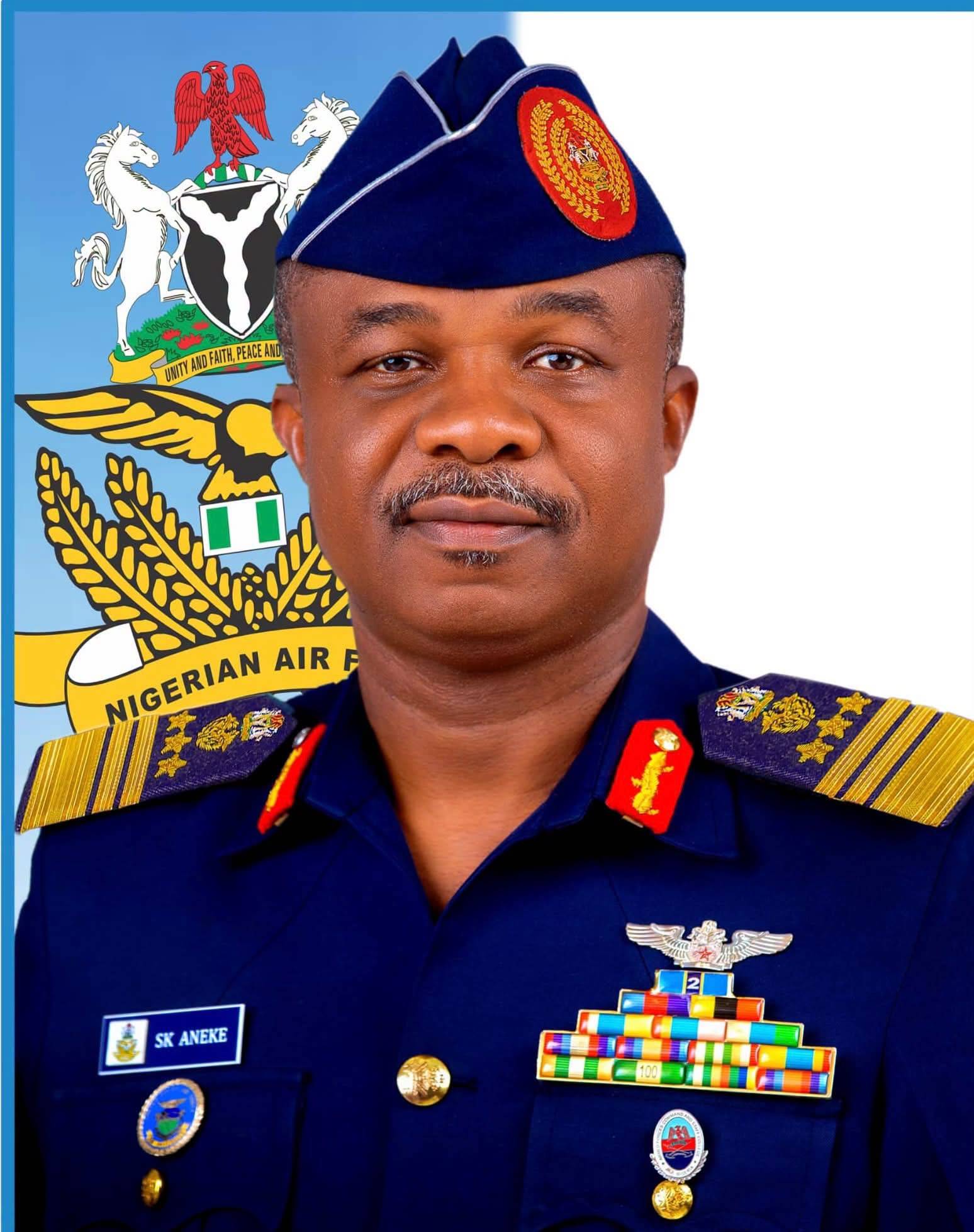
This brings me to the role of the security agencies. The Nigerian Army’s own instructions to troops deployed for the Osun election were unequivocal: they were to remain professional and impartial, operate principally in support of the police, stay away from polling units except when required to respond to security threats, and avoid political bias. That principle is indispensable. Soldiers are not party agents. Police officers are not political enforcers. Electoral officials are not political contestants. Their loyalty must be to the Constitution and the Nigerian people.
Democracy cannot flourish where the uniform is perceived as belonging to a political party. The uniform must belong to the Republic. This is the moral architecture of a credible election: the politician contests, the voter decides, INEC administers, the security agencies protect, the courts adjudicate, and everybody respects the constitutional boundaries of the other. That is democracy, and it is also why I find the Osun experience personally significant.
Years ago, I sat in a classroom at the University of Jos as one of Professor Amupitan’s students. Today, I watch that same lecturer preside over an institution at the centre of Nigeria’s democratic experiment. When his appointment was announced, I went out publicly to say that I believed he would perform. I did so because I believed that the character I encountered in the classroom was not an incidental quality. It was foundational.
Today, I do not withdraw that confidence. I place it beside the evidence. However, this commendation should not become complacency. INEC must be praised when it performs well and scrutinised when it falls short. The electoral umpire must be above both praise and pressure.
The standard cannot be: “Did my party win?” It must be: “Was the process credible?” Not: “Did my candidate prevail?” But: “Was the voter’s choice respected?” Not: “Did I benefit?” But: “Did democracy benefit?” That is the standard by which Professor Amupitan must ultimately be judged.
And that is also the standard by which President Tinubu’s democratic credentials should be measured, not merely by whom he appoints, but by whether he permits institutions to function; not merely by the victories of his political party, but by whether his government can accept the possibility of outcomes that may not favour it. For, ultimately, the greatest test of a democrat is not how he behaves when he wins, but how he behaves when the people exercise their sovereign choice.
The Osun election may therefore be only one chapter. 2027 is the larger book. The real challenge is whether the principles demonstrated around Osun can become institutional culture across Nigeria; whether neutrality can survive pressure; whether professionalism can survive politics; whether truth can survive propaganda; whether institutions can survive personalities; whether the ballot can remain more powerful than the bullet; and whether those who wield political power can demonstrate the rarest quality in public life: the willingness to respect a democratic outcome even when it does not serve their immediate interest.
And that is why I commend Professor Joash Ojo Amupitan, SAN, not merely as a former student praising his former lecturer, but as a citizen who once placed his confidence in the character of a man and now sees that character being tested in public office.
I also commend President Bola Ahmed Tinubu, GCFR, not simply for making the appointment, but for the larger democratic responsibility of allowing the electoral process to breathe, for recognising the danger that the freezing of Osun’s accounts so close to an election could create, and for insisting that public confidence in the electoral process must not be compromised. The President appointed the umpire. The umpire conducted the contest. The security agencies were charged to remain neutral. And the people were given the most important role of all: to choose. That is how democracy should work.
I once knew Professor Amupitan as my lecturer. I later defended the wisdom of his appointment as INEC Chairman. Today, after Osun, I am content to say that character, when entrusted with responsibility, eventually introduces itself. But there is an even greater lesson for Nigeria. We must stop measuring leadership by the grandeur of office, the noise of political victory or the applause that accompanies appointment. We must measure it by what happens when power is tested: by restraint, by fairness, by institutional independence, by respect for the people and, ultimately, by the courage to place the national interest above personal or political advantage.
Titles will fade. Offices will change hands. Political victories will become history. But character remains. And when history finally comes knocking, it is character, not office, that answers the door.
_Dr. Ajulo is the Attorney-General and Commissioner for Justice, Ondo State_