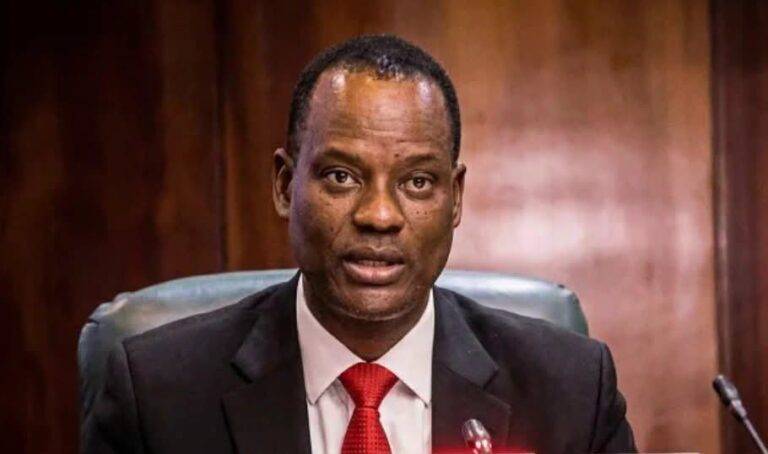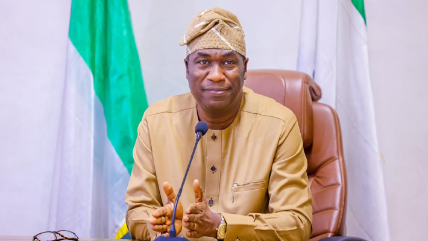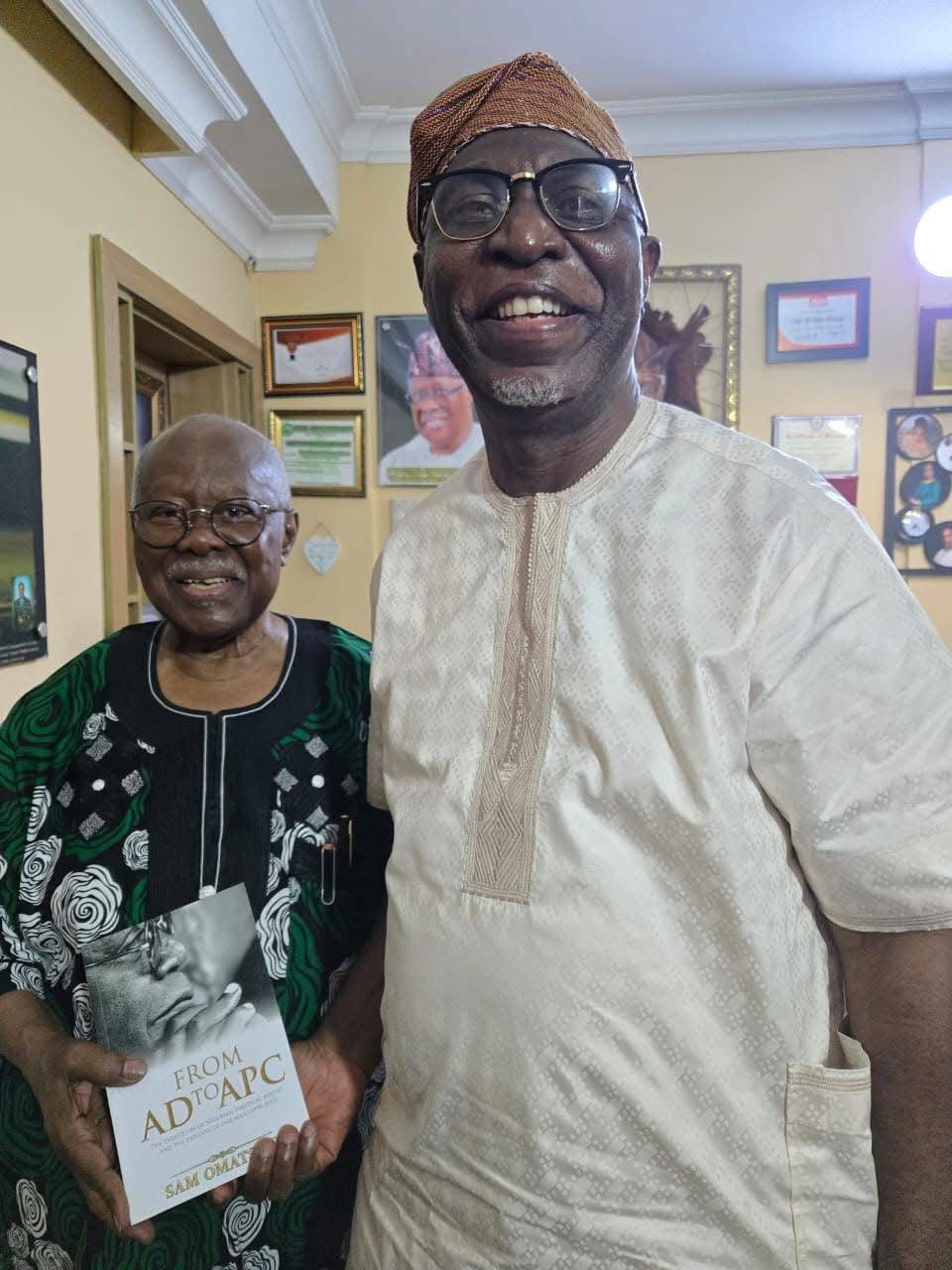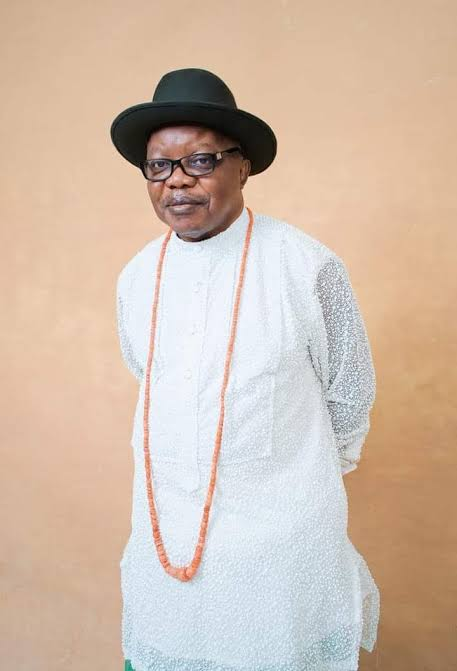

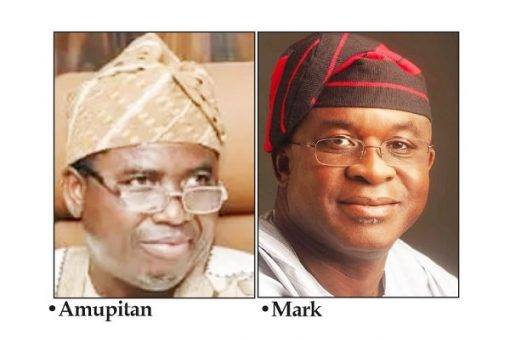

Only a few days after the announcement of his appointment as the new National Chairman of the Independent National Electoral Commission (INEC), there was a viral social media post that Professor Joash Amupitan, a respected legal scholar and Senior Advocate of Nigeria, had served as a counsel to President Bola Tinubu in cases arising from the contentious 2023 presidential election. It turned out to be scandalous fake news. It was the no less distinguished Professor Taiwo Osopitan (SAN) who had been, perhaps inadvertently, mistaken for Amupitan. The fact that the news item was posted without adequate verification indicated desperation to discredit the new INEC Chairman right from the inception of his tenure.
Following the confirmation of his appointment by the Senate and his settling down to supervise the conduct of successful elections in Anambra State and the Federal Capital Territory (FCT), Abuja, social media platforms were once again astir by claims that Amupitan, before his appointment, had authored an academic paper in which he contended that acts of genocide were being carried out against Christians in the Middle Belt by Fulani/Islamic extremists and terrorists. There was the subtle insinuation that the professor harboured anti- Fulani and anti-Islamic sentiments, which rendered him unsuitable for the sensitive position of headship of the electoral umpire.
Of course, those who made such insinuations did not avail the public with the original content of the said publication, the range of arguments presented, and the context in which the purported statements were made. Amupitan hails from Kogi State in the Middle Belt, and there is no doubt that, given the population dynamics of the region, large numbers of casualties from terror attacks and communal violence are, understandably, Christians. But stating such an obvious fact certainly does not make anyone anti-Muslim, especially as the preponderance of victims of terroristic violence in the densely Muslim -populated Northeast and Northwest are Muslims.
Since these attempts to taint and discredit Amupitan did not gain the desired traction, new allegations have recently surfaced on social media that the INEC Chairman, on his Twitter account, posted at least two messages which insinuated support for President Tinubu during the 2023 elections. The INEC Chairman has denied the allegations, dismissing the purported posts as social media fabrications designed to malign his character and damage his reputation. INEC, as an institution, has stood by its Chairman and published the outcome of an internal forensic investigation, utilising independent experts, which demonstrated the falsity of the allegations.
Yet, members of the strident Amupitan must go orchestra have doubled down on their demand, insisting on the veracity of the allegations even as other schools of thought contend, equally vehemently, that no wrongdoing has been credibly and plausibly proven against the INEC Chairman. It is unsurprising that these allegations of bias against Amupitan coincided with the decision of the electoral body to de-recognise the Senator David Mark-led leadership of the African Democratic Congress (ADC) in compliance with a court order that the status quo ante bellum be maintained as regards the leadership tussle within the party pending the final determination of the case before it.
Orchestrated efforts are thus being made to portray the INEC Chairman as biased, and the propaganda for his removal intensified. Leading opposition figures make blanket allegations that the incumbent administration at the centre is weaponizing the electoral, security and Judicial authorities to weaken and undermine opposition parties while conveniently glossing over the roles of inordinate individual ambitions, incessant infighting and lack of organisational discipline and cohesion in creating the sorry circumstances in which they find themselves. No concrete instances are cited to prove that the ruling party is responsible for the debilitating crises that the major opposition parties confront.
In any case, many of the key figures in the ADC today were prominent members of the erstwhile ruling party, the PDP, when, at the zenith of its power, it actively and undisguisedly destabilised such leading opposition parties of the time as the All Nigeria People’s Party (ANPP) and the Alliance for Democracy (AD). The fact that the PDP controlled almost 31 states at a point did not discourage such leading opposition politicians like the late President Muhammadu Buhari and incumbent President Bola Tinubu from utilising opportunities available in the democratic space to organise and work towards ultimately gaining control of power at the centre. Such avenues for purposive political activity are available to serious opposition elements today.
One of the allegations against Professor Amupitan is that he once argued that there is indeed Christian genocide in the Middle Belt. If it is true that he harbours strong anti-Muslim emotions, which is what this claim seeks to prove, it is highly unlikely that he would have supported the APC and its Muslim-Muslim ticket in 2023. A Christian academic from the Middle Belt, it would be more logical to assume that Amupitan’s sympathy would be for a candidate like Mr Peter Obi and his rousing campaign rally of Christians to “take back your country”.
Faced with the reality that they have become even more fractured than they were before the 2023 elections, a key factor responsible for the outcome of that contest, leading opposition politicians, going by their body language and verbal vehemence, would rather assault and erode the integrity and credibility of electoral, judicial, and security agencies, rather than condone another electoral loss. The only election they will admit to being free and fair is that in which they are declared victorious. Ironically, key opposition elements give no indication of being prepared to make the necessary compromises and sacrifices to enable them to offer the incumbent administration the desired keen competition at the polls.
The truth of the matter is that former Vice President Atiku Abubakar ought not to have jettisoned a tested and seasoned PDP platform, which still offered the best opportunity for a viable opposition to the ruling party, to seek to hijack an alternative platform, the ADC, in an untidy process that has now resulted in avoidable and distracting litigations. This is particularly so when the mismanagement of the outcome of the 2023 PDP presidential primaries was responsible for the deep fractures that resulted in the party’s loss to Tinubu in the presidential election.
Surely, the PDP cannot blame its current pathetic plight on Tinubu or INEC, the judiciary or security agencies. If Atiku had affected less arrogance, placated the five aggrieved governors of his party or persuaded the National Chairman, Professor Iyorchia Ayu, to step down for a Chairman of southern extraction, the crisis in the party could have been contained rather than degenerating so badly. It is so easy and convenient now to accuse Mr Nyesom Wike of working against the party in 2023, accepting a key appointment in the Tinubu administration and working for the President’s reelection.
But can he be blamed, given the utter disdain and insolence with which he was treated by the Atiku camp despite the strong showing he put up in the intra-party polls in which he came second? Perhaps because of the ever-increasing stridence, vehemence and intolerance of the opposition rhetoric, particularly from the beleaguered ADC, President Tinubu adopted an uncharacteristically combative stance in response during the week. Critics have been quick to describe his comments as ‘boastful’, thus suggesting that the incumbent administration exhibit timidity in the face of incessant withering attacks and create the impression that it is intimidated. This is unrealistic.
As the 2027 elections draw nearer, there will be even more desperate attempts to demean the person of Professor Amupitan, denigrate his office and damage his credibility and that of INEC as an institution. This will be the case especially if the opposition does not get its act together and acquire greater organisational cohesion and a sense of purpose. But Amupitan is unlikely to be ruffled. That is the burden of anyone occupying the critical office of INEC Chairman. Hardly any of his predecessors were spared vitriolic criticism in a political culture in which no candidate ever concedes to losing in free, fair and credible contests, and all electoral outcomes are objects of Judicial litigation up to the highest court in the land.
But the opposition, in its strident denunciations of Amupitan, grossly exaggerates the influence of one individual, the INEC Chairman, in determining the outcome of election results in a complex organisation like the electoral body. As this newspaper’s columnist, Sanya Oni, rightly noted in his piece last Tuesday, “Sure enough, the matter, in the coming days, would not be whether or not the gentleman from Kogi can take the heat, but how far those in the business of concocting lies would go to undermine the process simply because the odds are not going their way. While they are at it, they have still not told Nigerians how the lone individual, out of 37 odd Resident Electoral Commissioners (RECs) and 12 National Commissioners, with two representing each of the six geo-political zones, has suddenly become the ultimate decider of how things will go in 2027.”
The truth of the matter is that, thanks to successive reforms of the Electoral Act over the last two decades, the process of management of elections by INEC has been radically transformed from what it used to be. For instance, in the 2003 and 2007 elections, the National Chairman of INEC routinely unilaterally announced the results of elections in various states from Abuja. It is no longer possible under the law. That responsibility is now that of the RECs in the states. Due to technological innovations, duplication and multiplication of names on the voters’ register is no longer possible. The Biometric Voters Accreditation System (BVAS) has rendered nugatory multiple thumb-printing of ballot papers to illegally manipulate the outcome of elections.
Again, those who unduly focus on their clearly exaggerated perception of the influence of the INEC National Chairman in determining electoral outcomes ignore the unique organisational dynamics of INEC as a body. For instance, critical in the institutional structure of INEC are the 15 Standing Committees through which key aspects of the Commission’s functions are supervised and administered. These include the Appointment, Promotions and Discipline Committee (APDC), Board of Survey and Technical Committee on Equipment Acquisition (BOSTEAC), Electoral Operations and Logistics Committee (EOLC), Election and Party Monitoring Committee (EPMC) and Legal Services & Clearance Committee (LS&CC), to name a few.
Apart from no less than 20 Departments and Directorates headed by full-fledged Directors, the Commission has Electoral Officers in charge at its various Local Government Area Offices and Registration Area/Ward Offices where elections actually take place. True, the National Chairman sits astride the structure and steers its direction but he must do so in concert with a highly diversified and decentralized personnel structure and operating within a mosaic of administrative rules and guidelines as well as electoral laws.
It is practically impossible for an INEC Chairman to be picked from outer space with no linkages whatsoever, emotionally and otherwise, with the larger Nigerian society. As a human being, he will have his views, sentiments, predispositions and orientations formed over time even when he is not expected to be overtly partisan. But the critical thing is that once appointed and he takes his oath of office, its ethos, stipulations and demands become binding on the appointee.
A successful Chairman will extensively rely on the collective decision-making mechanisms and structures of the Commission while not shying away from taking tough but legal decisions in fear of howling mobs. The critical challenge for any INEC Chairman, not excluding Amupitan, is to strive at all times to be fair, just and equitable to all, operate strictly within legal parameters, but to remain firm in the implementation of decisions taken in accordance with the law and in good conscience. Resorting to outright blackmail, blatant falsehood and incessant verbal assaults against an incumbent Chairman, even without the slightest veneer of credibility, comes with the terrain.