
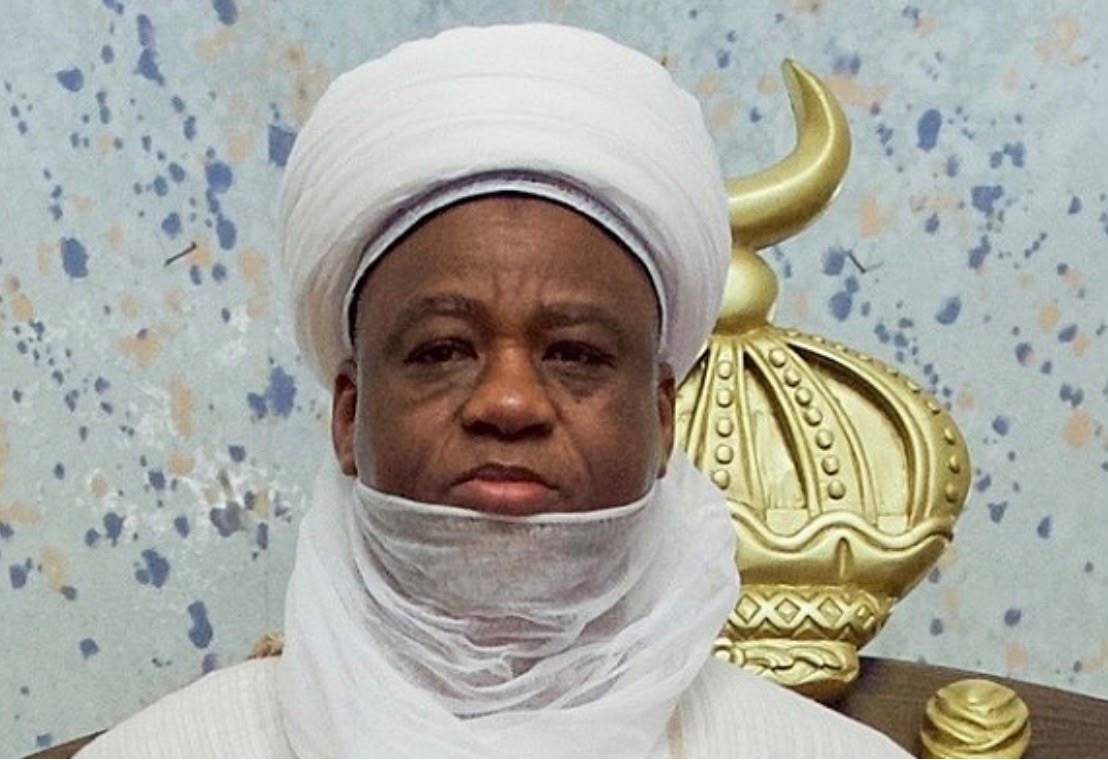
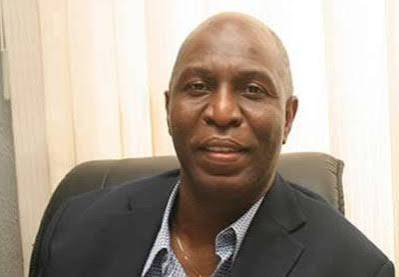
Even in his wildest dreams, he did not think the realm was within his ken. His father held sway as sultan for over 50 years. Ensconced in his Pakistan redoubt, to be the next sultan seemed farfetched for Saad Abubakar. The sultanate has no term limits. It does not answer to cycles or republican caprices. Death ends a reign, not the law, because the law makes it so. His father was Sir Siddiq Abubakar III. He was known as a man of immense charisma and even mystique.
After Sultan Macciddo expired that dark 2006 Sunday in a plane crash, few thought the lot would favour him. Menches of royalty still heaved around the throne. We knew of the imperious Alhaji A. Alhaji, alias Triple A. We knew of Shehu Malami, the wheeler and dealer of politics. And more. Saad Abubukar was already a topflight soldier awaiting a new posting, and higher epaulet. His was a humble quest, a career quest. Unlike Triple A, the unequaled bureaucrat and Malami the presidential hopeful, Abubakar was not in the throes of royal politics. Eventually though, the throne embraced him. He became His Eminence, Alhaji Saad Abubakar III. Garlands!
For the others who sought it, it was a solitary affair. As Conrad says in The Heart of Darkness, “We live as we dream – alone.”
The little stone became the head of the corner. Unlike the Shakespearean sequence where, in Hamlet, a wedding precedes a funeral. In Sokoto, it flipped for a happy ending. A funeral preceded a coronation.
For those who have followed his story from childhood, they saw something of a destiny in his journey. Like all destinies, trials burnish the path. But a telling story he himself remembers was as a little child when his father, the sultan was to visit the emir of Kano, Sanusi I. He picked out Saad, his youngest son, and asked him to accompany him on the journey. You could say, he was picked out as an inkling of a thing to come. To be selected was that the father saw in his lad the spark of royal dignity. He could not be a regent. He had the soul of one. It recalls the innocuous prophecy when Bill Clinton paid a visit to John F. Kennedy, who was president.
Once, when Abiola Ajimobi accompanied his father to see Bola Ige as governor, his father had admonished him as they waited in the governor’s lounge. “Sit down properly like a governor,” he said in Yoruba. “You too would be a governor one day.” How prophetic.
After attending the prestigious Barewa College, he proceeded to the Nigerian Defence Academy. The prince became a soldier. I think that was a double threat, especially in those days when the army was perceived as under the shadow of the Caliphate. He rose and moved from posting to posting, showing that he was not a prince of entitlement but of work. When he was a major, he had attracted the attention of the top brass of the army. On three occasions he was promised he would be made a governor. Why did Babangida and also Abacha, being the matadors of power, not come through for him? Were they afraid of him? It is a rigging that still needs some digging.
Did they think, he could become too powerful as a soldier, and become a threat to them? Even as lieutenant colonel, his mates and juniors were promoted governors. They might have looked down on him as a royal without influence.
But as a source close to the throne tells me, it may have been a good thing. He was not governor, so he did not face the temptation of office, and his image and credibility were sheltered from the suggestions of filth that accompanies public office. He was unscented by scandal. Yet he held hefty positions, one of which was as a commander of the armoured guard for General Babangida.
He became sultan, almost unknown, like fresh mint. All the pains and frustrations made sense. Euclid, the Greek mathematician, known as the father of Geometry, once told King Ptolemy that “all roads lead to geometry.” But that phrase has been regalised. It is often cast as “there is no royal road to success.” The piquant part is the line, “but after success, every road becomes royal.” So, the sultan’s earlier trials were royal rivulets. As the scriptures say, “all things work for good.”
Today, he is 20 years on the throne. It is a paradox that the first sultan, Uthman Dan Fodio, was a soldier of the faith, a soldier on horseback for war in the sense of blood and arrows. Saad Abubakar is a soldier of a different stripe. He is likely to be seen condemning Boko Haram rather than calling for a jihad. He is the leader of Muslims in the country, and he has applied that office with warm embrace of the Christian Association of Nigeria (CAN). His relationship with Reverend Onaiyekan when the latter led Christian bodies is a metaphor of inter-religious harmony. He has never been known to say a wayward word, or seen in the wrong circle, or betray himself as a malignant partisan.
His speeches are cerebral. He has appeared at Harvard, Chatham House and other highflying platforms. One of his major interests is in the field of education. He has been particularly interested in the area of the girl child education.
His profile as soldier has broadened his world. He has served in every part of the country in his soldiery. Recently he played host to Peter Obi of the NDC and it was also because both were friends during his tour in the Southeast .He is also a friend to President Bola Ahmed Tinubu, and they have been known to meet even in his days as governor before he became sultan. With such temperament, he exhibits royal restraint and urbanity that only ennobles the sultanate. Hence when some youths lynched Deborah Samuel in Sokoto, he spared no words for the miscreants.
Hence whenever he is in the public space, he exudes ominous gravitas, the sort of sublime foreboding that has been associated with such leaders as Washington, De Gaulle and Roosevelt.
Some leaders have the ominous quality but no gravitas. Those are brutes. Some have gravitas but not ominous. Those are lightweight dignities. But to have both, it is nobility.
NOTE: Views expressed by contributors are strictly personal and not of Theliberationnews