
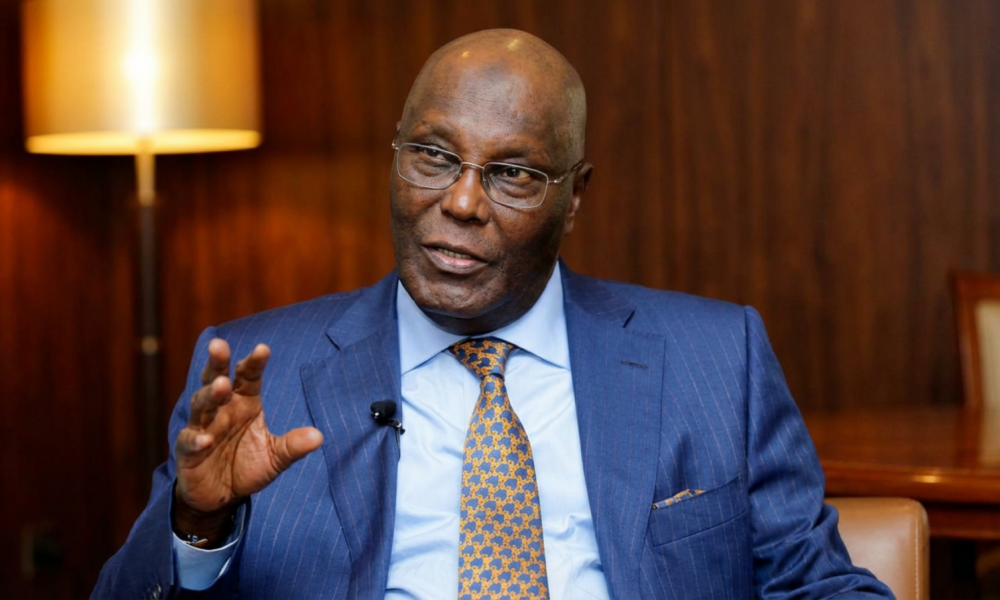

In his latest, widely read Saturday analysis, the highly respected columnist Professor Farooq Kperogi hit the absolute nail on the head. He rightly observed that former Vice President Atiku Abubakar’s strategic policy pivot to a reformed petroleum subsidy framework has drawn real political blood, leaving the presidency visibly rattled.
Yet, Kperogi also handed down a crucial, non-negotiable challenge: if Atiku is to maintain this powerful narrative advantage, he must move beyond campaign rhetoric. He must explicitly lay out the hard mechanics—the exact costs, funding sources, anti-corruption safeguards, and legal paths under the Petroleum Industry Act (PIA) that will ensure cheaper energy safely reaches Nigerian households and industries.This column accepts that challenge in full.
To understand the cost and funding matrix of the Atiku Economic Recovery Plan (AERP), one must first dismantle the fiscal illusion created by the current administration. The presidency claims that the country cannot afford an energy subsidy, yet the state oil company’s own delayed financial reports reveal that trillions of naira are already being quietly burned under the opaque guise of “under-recoveries” and “energy security costs.”
Atiku’s plan does not require printing new money or worsening the national debt. Instead, it systematically captures these unbudgeted, multi-trillion-naira leakages, brings them fully into the national budget, and redirects them into a transparent, production-tied intervention. The funding source is the immediate eradication of the covert, backroom subsidy regime currently operating behind closed doors.
Crucially, the legal path for this targeted intervention is entirely compliant with the statutory provisions of the Petroleum Industry Act (PIA). Critics claim the PIA completely outlaws subsidies, but they deliberately misread the law. Section 31 of the PIA explicitly grants the federal government the statutory power to intervene in domestic market pricing during periods of severe economic distortion to protect public welfare.
Under Atiku’s proposed model, the intervention is executed as a “producer subsidy,” not a consumer giveaway. By leveraging state shares of equity crude to supply local refineries at a capped, budgeted feedstock price below international market rates, the policy operates safely within the commercial boundaries of the PIA while completely insulating domestic pump prices from volatile foreign exchange shocks.
The anti-corruption safeguards of this new model directly address the elite round-tripping that ruined the subsidy regimes of the past. The old, fraudulent model subvented foreign invoices and import logistics, which were naturally prone to systemic inflation and ghost vessel claims. Atiku’s “follow the barrel” framework completely eliminates foreign middlemen. Because the discounted feedstock is supplied strictly to verified, functioning domestic refineries operating within our borders, every single liter can be digitally tracked from the refining facility straight to the local retail stations. The mechanism shifts from verifiable paperwork to verifiable physical production.
Ultimately, this production-tied model ensures that cheaper energy directly reaches everyday households and manufacturing industries. Lowering the feedstock cost for local refiners creates a natural, downward price correction at the retail pumps. This immediately reduces transportation costs for food logistics, lowers the cost of running small business generators, and eases the severe inflationary squeeze on household incomes.
As Kperogi rightly demanded, these commitments are not vague promises; they are measurable policy milestones. The AERP framework stands fully ready to be audited by the public, offering a clear, human-centric alternative to a fiscal orthodoxy that has prioritized fat government accounts over the survival of its citizens.
Chief Ibrahim Nasiru, A Public Affairs Analyst writes from Abuja
NOTE: Views expressed by contributors are strictly personal and not of Theliberationnews