

On July 28, the world commemorated World Hepatitis Day 2026 under the theme, “Hepatitis: Let’s Break It Down.” This theme urges the removal of barriers such as cost, complexity, stigma, and misinformation that prevent millions from accessing testing, vaccination, and treatment. It also calls for simplifying complex information into clear, actionable steps for families, health workers, and governments.
Globally, an estimated 287 million people are living with chronic hepatitis B (240 million) or hepatitis C (47 million) infection. These infections frequently remain asymptomatic for years or even decades, often resulting in irreversible liver damage. Together, hepatitis B and C are responsible for roughly 78 per cent of all primary liver cancer cases and 51 per cent of cirrhosis cases worldwide and caused a combined 1.3 million deaths in 2024 alone; hepatitis B deaths alone are now almost double those caused by HIV globally.
Nigeria bears one of the heaviest viral hepatitis burdens in the world. According to the 2026 Hepatitis Investment Case for Nigeria, developed by the Federal Ministry of Health and Social Welfare with the World Health Organization (WHO) and the Center for Disease Analysis Foundation, an estimated 20 million Nigerians are living with chronic hepatitis B or C, or both, with hepatitis B prevalence at 8.1 per cent and hepatitis C at 1.1 per cent. Nigeria accounts for roughly 15 per cent of the world’s chronic hepatitis B infections, or one in every seven cases globally. It is among the 10 countries that together account for 69 per cent of global hepatitis B deaths and 58 per cent of global hepatitis C deaths. Viral hepatitis causes an estimated 50,000 deaths and cancers in Nigeria every year. Yet, fewer than 10 per cent of people living with hepatitis B know their status, and fewer than five per cent of those who need treatment are receiving it. Among children under five, hepatitis B prevalence stands at 2.7 per cent, nearly double the 1.4 per cent average across the WHO African Region and 27 times above the 2030 elimination target of 0.1 per cent.
Unlike diseases with immediate symptoms, hepatitis often goes undetected. This allows ongoing transmission, as individuals may unknowingly infect others, including their children. When diagnosed, treatment options are often limited, and outcomes are frequently poor.
A primary challenge in combating hepatitis is the insufficient coverage of testing and treatment. Despite the availability of effective diagnostic tools and therapies, millions remain undiagnosed. Pregnant women are frequently excluded from routine screening programmes. Timely testing and vaccination are essential to prevent mother-to-child transmission and interrupt the cycle of infection.
Consider the experience of Grace Nfwang, a 34-year-oldman in Plateau State, who completed her pregnancy without being tested for hepatitis B. Although her baby was born healthy, the absence of vaccination at birth placed the child at significant risk of infection. Years later, Grace developed symptoms such as fatigue and abdominal pain. Her experience illustrates the silent epidemic perpetuated by low awareness, stigma, and insufficient healthcare access.
WHO aims to eliminate viral hepatitis as a public health threat by 2030 through its Global Health Sector Strategy on Viral Hepatitis 2022–2030. Nigeria supports this goal with its National Policy for the Control of Viral Hepatitis (2025–2030), which seeks to diagnose 90 per cent of people with hepatitis B or C, treat 80 per cent of those eligible, achieve 90 per cent hepatitis B birth-dose vaccination within 24 hours, and reduce hepatitis B prevalence among children under five to 0.1 per cent by 2030. In 2025, Nigeria also adopted a Triple Elimination Strategy to prevent mother-to-child transmission of hepatitis B, HIV, and syphilis, introduced universal hepatitis C screening in antenatal care, and began forming State Viral Hepatitis Technical Working Groups. Sustained investment in testing, treatment, and vaccination is essential to meet these targets.
The theme “Hepatitis: Let’s Break It Down” highlights an urgent public health need. Each year without decisive action results in 1.3 million deaths globally and about 50,000 deaths and cancers in Nigeria. Continued inaction causes preventable loss and ongoing transmission, especially among children. The year 2026 should be a turning point for governments, health institutions, and communities to close gaps in hepatitis testing and treatment.
In Nigeria, the stakes are high, but so is the opportunity. The 2026 Hepatitis Investment Case for Nigeria shows the country already has many of the tools needed to eliminate viral hepatitis: affordable diagnostics, WHO-recommended antivirals costing under US$10 per person per month for hepatitis B and US$55–100 for a complete hepatitis C cure, and a hepatitis B vaccine included in the routine immunization schedule. Yet coverage remains inadequate. Only 57 per cent of infants complete the three-dose hepatitis B vaccine series, while just 42 per cent receive the essential birth dose within 24 hours, far below the 2030 target of 90%.
Following WHO’s simplified test-and-treat guidance, the investment case prioritises closing immunisation gaps, testing all pregnant women for hepatitis B and C, providing antiviral prophylaxis where indicated, and expanding treatment through a national patient registry, decentralised primary health care, and equitable access pricing across public and private sectors. Modeling indicates this approach could prevent over three million new hepatitis B infections and liver cancers.
Although the statistics are daunting, effective solutions are available. Immediate implementation of testing, treatment, and vaccination is essential. The critical question is whether sufficient commitment and resolve will be demonstrated. For individuals like Grace, her child, and millions of others, timely action is imperative.
This issue affects mothers, infants, families, and future generations. Routine testing for pregnant women and universal administration of the hepatitis B vaccine to newborns are among the most effective public health strategies. These interventions are straightforward, cost-effective, and lifesaving, yet they are often neglected.
A future Nigeria could offer routine hepatitis B testing for all expectant mothers in every maternity ward. In this vision, every newborn would receive the hepatitis B vaccine within 24 hours of birth. Communities would engage in open, stigma-free discussions about hepatitis, and treatment would be accessible to all. Achieving this requires immediate and coordinated action.
World Hepatitis Day 2026 is more than a date; it is a reminder that combating hepatitis is vital to preserving life, dignity, and hope. The theme “Hepatitis: Let’s Break It Down” urges everyone to remove barriers of cost, stigma, complexity, and neglect, moving Nigeria toward a future where no child is born with hepatitis, no family loses a loved one to liver cancer, and no community suffers in silence.
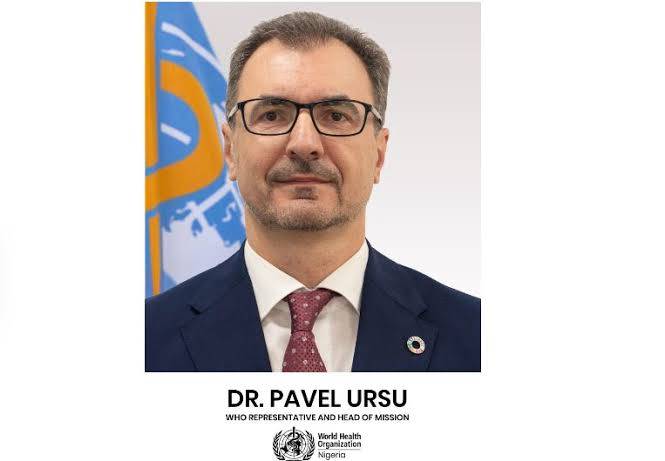
Dr Ursu is WHO Resident Representative and Head of Mission in Nigeria.
NOTE: Views expressed by contributors are strictly personal and not of Theliberationnews.