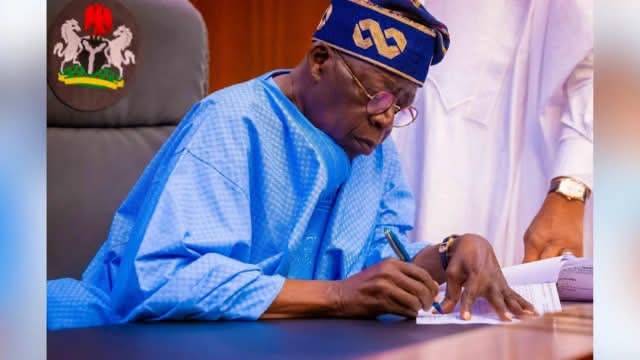

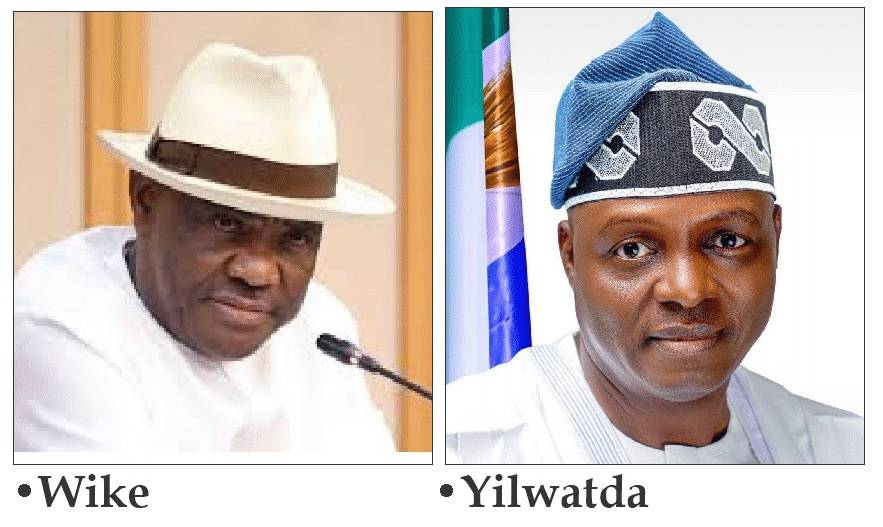

In the best of times, former Rivers State governor and now Federal Capital Territory (FCT) minister, Nyesom Wike, was never liked in the All Progressives Congress (APC) where he is held in suspicion. Nevertheless, in the APC federal administration and in Abuja among all peoples and political parties, he has become a superstar well regarded by President Bola Tinubu. He had supported the president’s bid for office in 2023 and went at it hammer and tongs until the president won. Since then, every assignment the president gave him had become, to him, a source of delight. Apart from frequently overreaching himself and sometimes being unable to draw boundaries as expertly as his work ethic denotes, the FCT minister has now inspired a political rainbow coalition threatening to expand beyond the confines of his beloved Rivers State. APC juggernauts are, however, pushing back, leaving the president in the uncomfortable position of becoming an arbiter. But Mr Wike has an answer for everything and is always armed with an explanation for every puzzle.
While the former governor and APC juggernauts are squabbling over a quaint coalition threatening to envelop them, or what a coalition means and how expansively it should be interpreted, the opposition, particularly the two main opposition parties, are also engaged in a different war of finding the titre value of their opposition coalition to determine whether it is strong enough to defeat their common enemy, the APC presidential candidate. Each opposition titrant, especially the African Democratic Congress (ADC) and the Nigeria Democratic Congress (NDC), sees itself as sufficient to be an endpoint capable of unseating President Tinubu, their main obsession. Twice in recent months they had made attempts to cobble together a coalition, and twice they had failed. Eventually, they gave up. However, because the corpse was still warm and rigor mortis had not set in, a few exorcists, among whom is Pat Utomi, a political economist, are determined to wave the magic wand once again and chant the usual abracadabra to revive the corpse.
In short, Nigeria is in the grip of coalition makers on the left and right sides of the political divide. How far the conjurers can go will depend on the coherence of the rubric of their exorcism and the potency of their charms. In the APC, party apparatchiks facing unusual political mess wave off Mr Wike’s impertinence, insisting they already had a super coalition formed out of the myriads of defections schemed since they assumed the presidency. That coalition is durable enough to retain power in 2027 and beyond, including in 2031, they swear. Had Mr Wike defected to the APC, they groaned, he would have been welcomed and accommodated. They did not say whether the minister would have had as much success in neutralising potential opposition to the president, politicians denied the opportunity of a viable opposition platform. They did not also estimate the seismic impact of forcing the likes of former vice president Atiku Abubakar to seek refuge in a fringe and infant ADC needing nursery.
The APC juggernauts may have an incomplete understanding of what a coalition is and what benefits accrue from its formation. In the August 15 Osun governorship poll, they had assumed that once they schemed the defections of top elected national and state lawmakers into their fold, they were home and dry. They could not imagine that with the dozens of political heavyweights absorbed into their party, nearly all of them unalterably opposed to the sitting governor, Ademola Adeleke, they were in any danger of losing the poll. After all, Mr Adeleke had trifled with governance and exhibited incompetence and lack of imagination. To the APC, little was happening in the state, except perhaps dancing and frolicking, and with Mr Adeleke still on the throne, even lesser would happen. When he reached out to APC leaders to be allowed to follow other defectors into the APC, the doors and windows were disdainfully shut against him.
That was not the kind of coalition the APC juggernauts wanted, they giggled. A coalition could always do with more members, but, alas, that was a lesson lost on the Osun APC leadership.
So, when APC governors bandied together last week to denounce Mr Wike, they seemed to scorn the lessons of recent Osun politics. However, despite their dreadful unease, APC governors will stop short of giving the president an ultimatum. They fear that Mr Wike’s so-called Rainbow Coalition was a recipe for electoral and balloting disaster and a potential for party weakening or even disintegration. But Mr Wike never shirks a fight. He derided the political competence and integrity of many of the querulous APC governors, denounced their fears about balloting errors, and asked whether they hoped he would lend them a helping hand in putting their houses in order. As far as he knew, he thundered, he remained a member of the PDP, had formed a rainbow coalition only to help get the president re-elected, and would brook no opposition to his method of achieving the president’s electoral success in 2027. His Rivers straddle is politically befuddling, and his attempt to foist that measure on other states presumptuous, but he believes that in the long run, his unearthly brilliance would trump the APC governors’ political conservatism.
The coalition drive among opposition parties is less glamorous, more stifling, and somewhat irritating. From inception, the attempt to forge a coalition to unhorse President Tinubu had seemed more like tilting at windmills. Despite their abysmal inability to play opposition politics properly, and though they seemed even destitute of the imagination opposition leaders should have, the two leading opposition figures, Alhaji Atiku and Mr Obi, have looked indomitable.
But both are implacable. Both know that this is their last chance at competing for the highest office in the land; the first because of his age, and the second because in 2031, the office would rotate back to the North. Mr Obi and his supporters may thumb their noses at the Southwest, the farthest they would go against the North is speak of religious war. What is more, the two opposition leaders enjoyed about four months dalliance in the ADC but were very quickly disillusioned. Each had hoped the other would step down in a display of political altruism. But trapped by their followers and supporters, and shackled by the geopolitical logic of their candidacies, it became quickly clear that neither would dare countenance any kind of altruism.
Impervious to the relevant lessons of this election cycle, and unwilling to deconstruct the issues as an intellectual who he professes to be, Prof. Utomi has, however, put on his armour, wielded his lance, and is launching full gallop at the APC, assured that a coalition was in sight, and the defeat of President Tinubu near.
To this end he has made himself the team lead of a political commission he claimed was inspired by the Movement for Credible Elections, another of his brainwaves, a chaotic and unproven organisation saddled with the responsibility of herding opposition leaders behind a single candidate against President Tinubu. How the political economist was unable to disaggregate the factors militating against a unified opposition is impossible to explain. Put simply, however, should Alhaji Atiku step down, say for Mr Obi, it would cost the opposition the former vice president’s entire northern support base.
And should Mr Obi step down for Alhaji Atiku, the meagre votes ordinarily expected from the Igbo east would dissipate into nothingness.
NOTE: Views expressed by contributors are strictly personal and not of Theliberationnews