

Hard as they tried, leaders of the All Progressives Congress (APC) failed to penetrate the reinforced armour of media establishments opposed to their electoral successes since 2023. The ruling party’s fortunes have not changed. Most media houses, especially the social media, loathe the ruling party. That the APC won in 2023 without their help and despite their opposition has left the said media enraged. As the party prepares for the 2027 campaigns, and given the unyielding posture of the said media houses, it must by now have made up its mind to go it alone. The party is unable to win new media friends, and has perhaps given up.
To make a headway next polls, it must first reflect on the deeply contrasting Ekiti and Osun governorship elections. On June 20 and August 15, the two elections were conducted, barely two months apart, with few intervening variables, and in the same Yoruba region. If it hopes to win next year, it should review newspaper publications of the period, June 21 and 22; and August 16 and 17, all representing before and after the poll results. The media reports were both revealing and troubling.
Before the Ekiti poll, the papers displayed a sense of resignation, warning darkly about the consequences of rigging the poll or denying the electorate the right to elect a governor of their choice. But the poll went seamlessly, the outcome predictable weeks before, as former governors of the state queued behind the incumbent, Biodun Oyebanji. For media houses which had repeatedly rhapsodised democracy and freedom of choice unfettered by electoral shenanigans, it was expected they would capture the popular mood and abjure the projection of their beliefs and prejudices on the electorate. From casting doubt on the integrity of the polls in their June 20 reports, the media went on, a day after the poll on June 21, to feign objectivity by acknowledging that Mr Oyebanji was leading in the vote count amid vote-buying allegations, accreditation glitches, security concerns, unconvincing turnout, and other insinuated malfeasances. There always had to be a but.
If their reports grieved at what they feared was an inevitable but probably resented results, their coverage of the declared results on June 22 was sensationally more pessimistic. The battle was one-sided in favour of the APC, and any report should reflect both that statistical reality and the popular mood in the state.
Instead, the newspapers sidelined and demoted the results to either second, third or fourth lead on their front pages. In one of the papers, there was no mention at all on the front page. Of the seven newspapers reviewed to gauge the perspectives of media coverage, only The Nation and ThisDay acknowledged the results in their celebratory lead. The remaining five papers were muted in their reports, and one reminded readers of the reactions of the opposition in the state as well as the unflattering reviews of some election observer groups. Of course, the irreverent social media simply unleashed a cacophony of abuse, scepticism, and bigotry on both the Independent National Electoral Commission (INEC) and the APC.
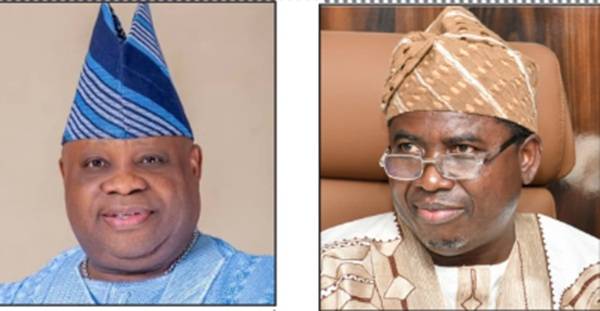
The coverage of the Osun August 15 poll was more revelatory. If the media pulled its punches in covering the June 20 Ekiti poll because the outcome was preditable, the Osun poll was their ultimate catharsis, a great and unmistakable opportunity to rid themselves of the frustrations they felt reporting the earlier governorship poll. Days before Osun voted, newspapers and their companion social media issued apocalyptic warnings to the APC to ‘cease and desist’ from tampering with the ballots and insinuated that any other outcome except one that returns Governor Ademola Adeleke to office would be questioned and rejected. Musician Davido catalysed the threats to the delight of the newspapers, while the legitimate actions of the Economic and Financial Crimes Commission (EFCC) to leash the suspicious movement of huge state funds a little over a week before the poll was deployed as a fiery argument against state manipulation. The blackmail worked, and the EFCC backpedalled.
Tasting blood and gorging on gossips, newspapers and social media ran amok belabouring the APC and ordering the federal government to stay neutral because Mr Adeleke was poised to win. There was no attempt whatsoever to question whether Mr Adeleke had the competence to govern or not, or whether the state’s development indices since the governor assumed office matched rising revenue allocation. Phenomenal achievements were being recorded in other states, but dispensing with objectivity, the media insisted weeks before the poll that Osun was already phenomenal and Mr Adeleke, they painted in a family tree, was a titan from an even more titanic political heritage. If the outcome they expected was subverted, the hostile media hinted gloomily, it could mark the beginning of the end of democracy. Giving free rein to their heresy, and with the federal government shaken and on the retreat, starting with the EFCC, the media pressed their advantage and went ballistic.
On August 16, a day after the poll but shortly before the results were declared, the media barely concealed their glee. Restrained only by electoral laws from announcing the results in their papers, they nonetheless suspected that the APC was primed for a shellacking. By Monday August 22, what the five newspapers of the seven surveyed did not do in June, they now did with relish. They had not known the trade-offs that shaped the results but perhaps had a hint; but they couldn’t care less. Complete with photographs of Governor Adeleke’s victory celebration and tabular representation of the comprehensiveness of the victory, not to talk of bar charts and cartographic details, the papers went overboard. The Guardian hyperbolically suggested the victory ‘relives people power and raises the stake for APC in 2027’. The African Democratic Congress (ADC) and Nigeria Democratic Congress (NDC) presidential candidates, Atiku Abubakar and Peter Obi, enthused about the results, admonished the electorate to protect their votes in 2027, and hinted that the Osun outcome was a precursor. Newspapers grudgingly reported the APC victory in Ekiti, and barely allowed it some inches on their front pages; but for Osun, the outcome rose to the status of a national celebration. Even the constantly traduced INEC got a pass mark. And, ah, yes, the president also received concessionary smiles.
The opposition and their media are entitled to see the Osun poll as the harbinger of the electoral utopia of their boyish longings. They may wish to deny the dozens of states and by-elections lost to the APC in the past few years. They may even discount the significance of those victories spread almost evenly all over the country. They can also choose not to appreciate the disingenuous compromises Mr Adeleke made to secure a second term, and go on to exaggerate the relevance of musician Davido’s nasty effusions before and after the poll. Days after the Osun poll, it became clear that Mr Adeleke’s victory was not as significant as first imagined; but the media and political opposition saw things differently and drew conclusions to suit their private calculations. On the contrary, the APC may privately want to describe their loss of Osun as a sacrifice made to win credibility for anticipated bigger future prizes. Whatever their considerations, the Tinubu administration on the one hand and the media in alliance with the opposition on the other hand will find justifications in deploying the Osun poll however they deem fit.
Overall, in its contention with the largely hostile media, the APC will take consolation in the division within opposition ranks, a lack of unity certain to blunt and blight the campaigns and agitations of the ADC and NDC. The consequence is that the unity and resolve of their helper media will be tested. More than the opposition parties themselves, the said media had tried to coax unity, no matter how tentative, out of the ADC and NDC. Having failed, they have oscillated between the two parties and continued to bemoan opposition disunity. Months thereafter, the said media continued to hold out hope of some working arrangements in the opposition, warning that disunity would doom their efforts. They even celebrated the whimsical dream of a former APC national vice chairman, Salihu Lukman, to co-opt about 100 opposition leaders into a powerful and unified group capable of forging the elusive coalition and taking on the APC behemoth. The effort again collapsed.
Last week, the ADC and NDC confirmed that they would take on the APC separately. In clear language, they are saying that the only post they covet is the presidency. They have made minimal efforts to vie for other positions, perhaps speculating that once they won the presidency, every other thing would fall in place. The hostile media backs that speculation. But with the ADC and NDC separately deciding to take on the APC, the ruling party can now redefine and recalibrate their campaigns. If they have the bright minds to marshal their battle plans to harden the divisions between the opposition parties at one level and their media collectives at another level, it should not be difficult to engineer an outcome they would continue to relish in the years ahead.
NOTE: Views expressed by contributors are strictly personal and not of Theliberationnews