

In an advertorial published last Tuesday, the Igbo leaders of thought (ILT) reminded the country of the urgency of restructuring Nigeria. Contained in that reminder, among other things, is the suggestion that Nigeria, and indeed every region, should be federated along ethnic lines. They admitted that this idea was not original to them. Quoting the late Obafemi Awolowo, former premier of the Eastern Region and later Finance minister and vice chairman of the Federal Executive Council under the Gen. Yakubu Gowon military leadership, the ILT reasoned that Nigeria was constituted by many nationalities whose cultures and civilisations needed to be protected through ingenious restructuring.
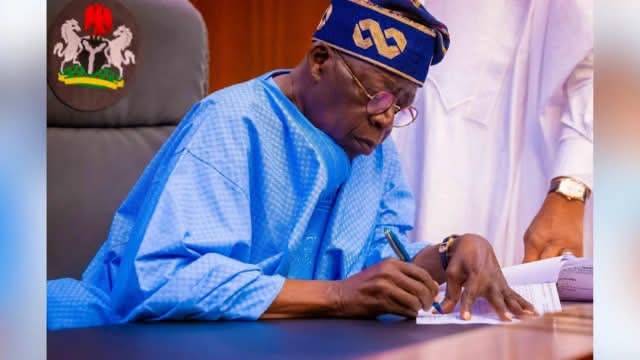
The ILT reminder is urgent and germane. Nigeria will be 66 on Thursday, but it has reeled from a tedious and chequered history, part of which was bloody and wasteful. Every independence anniversary, commentators wonder when Nigeria would admit its failings and attempt a total reboot. Indeed, no leader since independence had attempted anything significant about restructuring until President Bola Tinubu’s piecemeal approach begun nearly two years into his presidency. Since he started, he has done a few constitutional heavy liftings, some of them misunderstood, and some resisted and disallowed from being seamlessly executed. They include local government financial autonomy and state police. However, and eventually, these significant and structural reform policies will be made to work though they will be insufficient to reinvent a country that has since 1963 been moving steadily away from federalism.
As laudable as President Tinubu’s constitutional palliations are, they will in the short run amount to pouring new wine into old wineskin. As most vintners know, an old wineskin would be imperilled by any attempt to pour new wine into it. Nigeria’s superstructure is old and ossified, incapable of matching or sustaining digital age systems and modifications. It can no longer respond to changes and civilisational systems skewed by decades of religious, ethnic and social affiliations and loyalties. This is why fundamentally the country is in turmoil, and it is escapism to blame the turbulence on failed or distressed neighbouring states such as Libya. However, the insurgency and banditry in some parts of the country may in fact be a manifestation of deeper and divergent messages other than the influx of insurgents hooked on strange and messianic ideologies.
The courage to reboot the country is sorely needed. Most commentators have focused on political federalism, which is no doubt indispensable. But fiscal federalism helps in no small way in dealing with issues of failure of accountability, corruption, underdevelopment, perverted justice system, and even tyranny.
Pooling revenue together and sharing it among the lazy and the hard working alike and often in equal measure is a stultifying reprise of communism. This is partly why agitations for creation of more states and local governments are rife. Once created, indigenes of those states and councils relapse into complacency to await routine revenue allocation. Wage agitations also become countrywide and universal, and trade unions stubbornly insist on the right to paralyse the country over a small incident in a small part of the country, including provocations as menial as a state government insulting or harassing a union leader. Without fiscal federalism, it is impossible to unleash the country’s economic potentials or creative genius. Contemporary world history, especially of multiethnic and multireligious societies, should serve as examples for Nigeria to know that there is simply no way it can retain its present structure and hope to transit into the First World. Nigeria can’t have its cake and eat it.
For decades, Nigerian leaders had tiptoed around the weighty issue of restructuring and reposed hope and confidence in sermonising stability, national reorientation, and religious harmony. They had spread a panoply of stifling measures such as federal character, NYSC, untenable and poorly funded unity schools, revenue allocation, and, instead of economic and rational arguments, embraced regional balancing in location of industries, and security and educational institutions. For how long will they skirt gingerly around these retrogressive and unworkable policies? At 66 years of age, when the misguided adrenaline of youth has given way to the deep reflection of adulthood, it is time to summon the courage to reinvent Nigeria from its very foundations. The alternative is to continue to indulge in brinkmanship, waiting for the day when no one would be able to contain the fury indiscriminately unleashed as a result of pent-up frustrations.
NOTE: Views expressed by contributors are strictly personal and not of Theliberationnews