
The story of the Nigerian crisis of the 1960’s never ends. We keep hearing new facts, new twists.
A hero today, errant tomorrow. A cameo actor obscures a protagonist.
More puzzling are the contrasting accounts of primary sources. I am writing a book in which actual players give different takes on the same event.
Interests grapple with memory. Backgrounds crowd out perspectives. Time blurs details. Bias discolours certainties. It shows how history humbles a master storyteller. Hence it is presumptuous to write “the history” instead of “a history.” No one has the story, or can say they wrote “the book,” as Ojukwu harrumphed but was impotent to try.
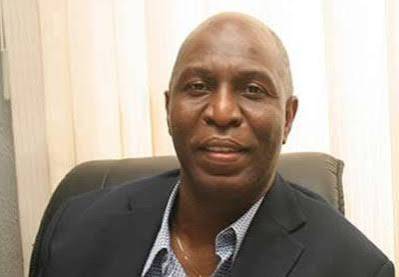
The latest are the recollections of Col. Sani Bello (rtd), former governor of Kano State. His main role in history was as the ADC to General Aguiyi-Ironsi, who took over power after the January 1966 coup, supposedly led by Kaduna Nzeogwu. Bello was with his boss the day he died. He did not, according to him, witness his killing but that of Col. Adekunle Fajuyi, governor of the Western State.
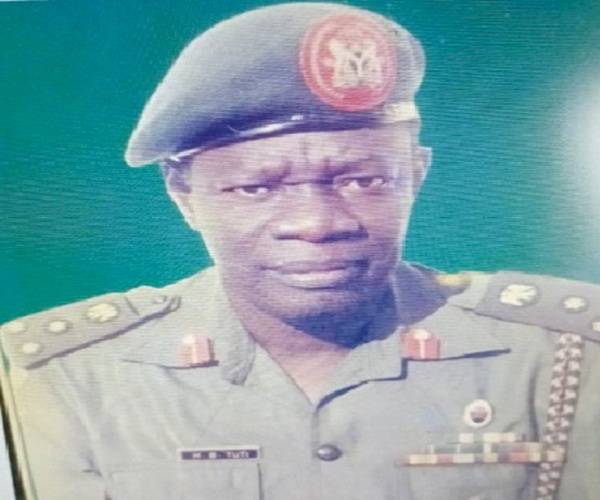
Bello spoke with JKD television to mark the 60th anniversary of Ironsi’s death. His interview threw up some questions? Who was the sergeant major charged to kill both senior officers? How come his rendering conflicts with the story handed down from decade to decade? The story almost deifies Fajuyi as a hero and martyred host The JKD interviewer did not ask Bello the name of the killer. This reporter learned from General Alabi Isama that the killer was Hebron Tuti. Here is Alabi Isama on him: “Sgt. Hebron Tuti was with me at the 3rd Battalion of the Nigerian Army in the Congo in 1961. He was part of the troops that Danjuma commanded to storm the Government House at Ibadan during July 66 coup that killed Ironsi and Fajuyi. It was Hebron Tuti that pulled the trigger that killed Ironsi and not Danjuma. Hebron rose to the rank of Major General in the Army before he passed on.”
The sergeant major took the supreme commander and governor past a railway crossing. He lined them up to be killed with Sani Bello and Andrew Nwankwo, also an ADC. Bello said the coup plotters were drinking whiskey from the bottle. “They were not themselves. So, anything could have happened.”
Tuti cocked his gun and was about to pull the trigger. At that moment, he could have killed Bello and Andrew Nwankwo and Omar, who were the ADCs of both officers. Garba Dada, an adjutant at Ibadan, who also served under Isama, restrained the sergeant major. He asked the ADCs to jump into the Land Rover, while Ironsi and Fajuyi remained with him. While the three were joining Dada to enter the Land Rover, they heard a gunshot. Tuti killed Fajuyi because he was trying to flee. Sani did not see Fajuyi’s body, but “I heard the shot.” Dada, a lieutenant, freed the ADCs and asked Tuti to wait for further orders.
Sani Bello said Dada told him later that it was not the intention of the coup plotters to kill the two officers. They were to be held either in Ilorin or Bida prison. He said, the officers disappeared during the operation. They left a sergeant major and adjutant who was a lieutenant to despatch a colonel and supreme commander. Bello only mentioned T.Y. Danjuma in Ibadan. He ordered Ironsi and Fajuyi to “jump” into the Land Rover, the three ADCs with them. No Danjuma, no major, in the trip to the wilderness to eliminate the number one citizen in the country.
I was to go out with Ironsi day he was murdered
This raises a few questions. One, is it true that they did not intend to kill the officers? We need T.Y. Danjuma, the leader of the Ibadan putsch to shed his light on it. He gave the orders.
The other story is the legend around Fajuyi. If Bello’s account is right, then the familiar story runs foul. That story says Fajuyi was not a target, only Ironsi. Fajuyi, as a quixotic host, wanted to die with Ironsi. The story also says Danjuma was at the scene of their deaths. Bello who was there says no officer was present. Danjuma owes this nation the benefit of his testimony. Fajuyi has been made into a martyr. No one knows where the story comes from. It remains a lore of the times.
But a counter-narrative has been documented in the biography of Nigeria’s spy chief and inspector general of Police M.D. Yusufu. The book, written by Ayo Opadokun, is titled: Aristocratic rebel. Yusufu says Fajuyi was a target of the July 1966 coup. He, according to the spy chief, trained the Igbo officers in Abeokuta who took part in the January failed putsch. The same night Nzeogwu was training the officers in the north. It was a routine annual training in the army. Nzeogwu exploited it for the night of slaughter. Some top sources in the military caution any conclusions that Fajuyi was involved in the coup simply because he trained the officers. He also had Yoruba officers in the Abeokuta training and they were not involved in the coup. One of them was Col. Bamgboye. Maybe, Fajuyi was a victim by association. We shall never know. If you train soldiers and they do good things, the officer takes credit. If bad, he takes the fall. Was it what happened? Or did Fajuyi transmit codes to the soldiers involved but men like Bamgboye did not catch the hint? We may never know.
Now, on his heroism, why did he want to flee? Why was Danjuma not with them? One would expect that a senior man would accompany them if the plan was to keep them alive or take them on a trip as far as Ilorin and Bida. Sani Bello was a garrison commander at Bonny Island during the war.
In his book: The Tragedy of Victory, Isama narrates efforts to save Bello when he was shot.
“I monitored his problem when he was shot in the foot at Bonny. It was at night, and our helicopter had no night flight capability. Flt Lt. Filani was the pilot. On his advice, we lined up vehicle lights at night for take-off and landing, and I ordered that he be brought to Calabar. He probably would have bled to death as Biafra troops surged. I sent two officers to replace him. On the second day, he flew to Lagos.”
Garba Dada, formerly Garba Paiko, died a lieutenant colonel. The TV interview with Col. Bello could have benefitted from more contexts.
It happened in a political time, with a lot of ethnic tensions and widespread killings. Igbo pogrom followed, and the Ironsi murder happened in the context of the evisceration of a generation of Igbo officers. There were also questions as to whether the Nzeogwu coup could have precipitated a military take over. They did not succeed. Should Ironsi have taken over? The parliament was the soul of the republic and it was still intact. The lawmakers had agreed to make Dipcharima from today’s Borno state acting prime minister. Both Richard Akinjide and Shehu Shagari testified to this as lawmakers. Nwafor Orizu reportedly colluded with Ironsi. Ironsi was reported to have read the riot act to the parliament, just as Abacha did to Shonekan, and took over. In his new book: My Life of Duty and Allegiance, Gen. Yakubu Gowon writes: “I found the story of unforced hand-over of political leadership to the military a little incredulous, as the acceptance of such an “offer” was at variance with my expectation of a loyal army that was to have supported the government of the day against an internal force or enemy. But I was constrained by the code of military ethics and discipline to fall in line (Pages 188-189).”
The civil war saga rages on.
NOTE: Views expressed by contributors are strictly personal and not of Theliberationnews.