

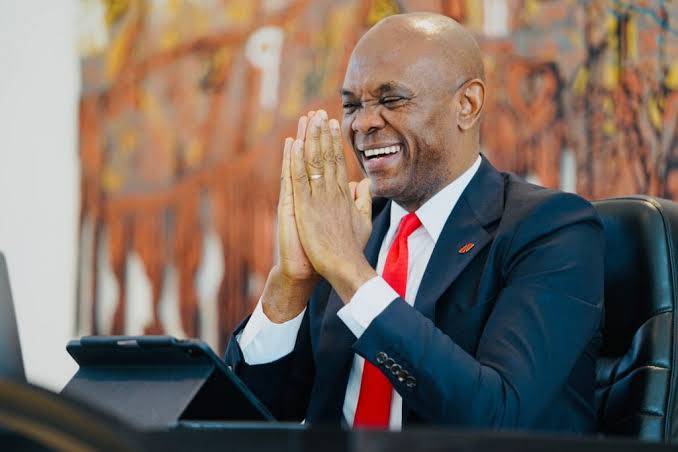

I had intended to make my intervention on this matter a passive one. After all, I made a post last night in which, although briefly, I stated my position clearly. But I became even more concerned after reading some of the arguments being advanced in defence of the young lady who looked a 63-year-old man in the face and said, “Good morning, Tony,” all in the name of house style.
House rules, organisational culture and corporate conventions do not — and cannot — replace cultural intelligence, emotional intelligence, common sense, basic etiquette or the rudimentary upbringing that teaches us how to navigate society and respond appropriately to cultural nuances.
We are a people with culture. The absence of cultural intelligence cannot simply be excused because an organisation operates a first-name policy. Many things in life, including certain forms of familiarity, are earned. You do not automatically appropriate a level of familiarity that the relationship has not established.
Education and exposure are certainly no licence for poor behaviour. If anything, they should refine judgement, deepen sensitivity and improve one’s ability to read a room. Sometimes, education merely reveals how much worse a person might have turned out without it.
Those who introduced first-name culture into the workplace probably did so largely to flatten hierarchy, ease communication and create a less intimidating work environment. But if they had anticipated a generation that might interpret such informality without context, discretion or boundaries, perhaps they would have added a caveat: apply with judgement.
First, everyone has a right to determine how they wish to be addressed. That much should not be controversial. But there is also a clear difference between “Tony” and “TOE”, just as there is a difference between calling someone “Babatunde”, “Tunde” or “BRF”. Context matters. Relationship matters. Familiarity matters. Age, environment and social convention matter too.
Trying too hard to appear unconventional or intellectually liberated should not require abandoning common sense.
Even if we accept, without conceding, that using first names is the culture of her organisation, was that gathering an office meeting? Was it a banking hall or an internal corporate environment where the convention automatically applied? An organisation may adopt a policy designed to reduce tension and flatten hierarchy within the workplace, but that policy does not erase an individual’s upbringing or suspend the cultural standards that operate outside that environment.
I have a close family friend whose children call their parents by their first names. They live in the United States and that is the practice within their home. Yet those same children address older family friends as “Uncle” and “Aunty” and will even go on their knees to greet. They understand perfectly that what obtains within the four walls of their home is not necessarily transferable to every social setting.
That is the point: context and discretion.
So, those defending the incident solely on the basis of “house style” may need to interrogate the broader implications of that position. Organisational culture should not become an excuse for dispensing with social intelligence, courtesy and respect.
Sir Tony, perhaps this episode also speaks to a larger responsibility for your generation. There is an urgent need to help re-groom an increasingly impressionable younger generation around values, respect, judgement and cultural awareness. Your foundation could perhaps take that conversation further by investing more deliberately in values education and cultural intelligence.
And the earlier we begin, the better.
Because if simple courtesy is increasingly being dismissed as backwardness, and indiscretion celebrated as enlightenment, then we may have a much bigger problem on our hands.
Olawale Olaleye is a Lagos-based journalist.