
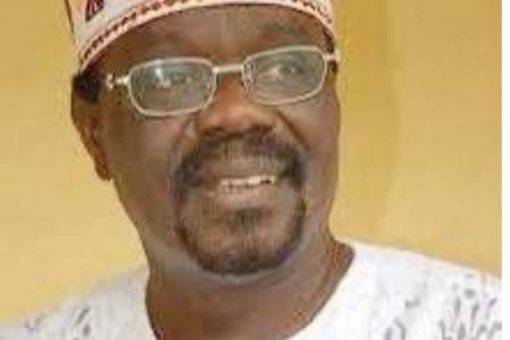
After a fruitless search at three of the major bookshops in Lagos for a copy of veteran journalist, fiery columnist, consummate wordsmith, versatile thinker, fearless critic, experienced administrator and understated mystic, Akogun Tola Adeniyi’s new autobiography, evocatively titled ‘Chapters of Destiny’, I finally got a confirmation from a leading bookshop in Ibadan of the availability of what will no doubt become a classic of narrative self -portraiture. Even as I eagerly await the delivery of my copy, I still feel compelled to offer readers today what I consider to be a prologue to my review of the book shortly.
I have written a number of times about my indebtedness to Akogun Adeniyi whose incisive, vigorous, courageous, polemical columns, particularly in the Daily Times of the mid to late seventies and then in the undying Nigerian Tribune of a good part of the Second Republic birthed in me the desire to pursue journalism as a career. The Daily Times, which had become a veritable institution under the leadership of the iconic Alhaji Babatunde Jose, was synonymous with Nigerian journalism at the time. I was an avid reader of the newspaper which my father bought daily and a major attraction for me was the famous ‘Aba Saheed’ column, which was perhaps the most famous pseudonym in Nigerian journalism under which rubric Chief Adeniyi wrote.
Although not a university graduate himself, Jose was the visionary leader who ushered in university graduates into Nigerian journalism and Tola Adeniyi was one of the beneficiaries of that vision. I was attracted to Aba Saheed’s journalistic writings by the vigour of his prose, the lucidity of his thought, the rigour of his logic, the energy of his articulation and, above all, the audacity of his boldness and courage. The Aba Saheed’ column blossomed at the height of military dictatorship although in the light of the country’s latter experiences, the Gowon regime was benevolent and benign.
The Daily Times under Jose had a policy of fighting and exposing the growing corruption of the Gowon administration and the newspaper conglomerate ‘s columnists, not least Chief Tola Adeniyi, were the leading protagonists in the war against venality and impunity in governance. When General Gowon, in 1974, shocked the nation by announcing that his regime’s earlier promise to hand over power to a democratically elected government in 1976, was no longer feasible, Aba Saheed published a daredevil, audaciously provocative column titled ‘Death I Salute you!’.
He reminded the military dictatorship of the fleeting ephemerality of human existence and the transience of power. Thousands of copies of that edition of the Daily Times were confiscated and burnt by marauding soldiers across the country largely on account of that blunt truth spoken to power.
Aba Saheed’s admonition in that epic column is certainly still timeless truth relevant to these times of stealing, kleptocratic politicians in underdeveloped countries of Africa and emergent ‘Trumpian’ megalomaniacs even in the most advanced democracies of our world. I have personally borrowed the title, ‘Death I Salute you’! for some of my articles as we all too often confront mortals with feet of clay masquerading as eternal giants. As a form three student at St Anthony Secondary School in Ilorin, I remember carrying a slim copy of Aba Saheed’s collected columns titled ‘The Lunatic’ in my pocket virtually all the time. I read the essays repeatedly and they instilled in me the idea and vision of journalism as a high calling predicated on a sacrificial commitment to the public good.
I have no doubt that Akogun ‘s memoirs will make for riveting reading. I look forward to learning how he came about the Aba Saheed’ pseudonym as I have read a number of conflicting accounts of this. By the nature of the vocation and profession, journalism demands that its practitioners relate closely with critical actors in private and public spheres of society. A journalistic memoir is thus necessarily a rendering of parts of the history of particular phases in the evolution will be of a polity.
Akogun Adeniyi’s ‘Chapters of Destiny’ will be an invaluable addition to a growing corpus of journalistic memoirs such as Nnamdi Azikiwe’s ‘My Odyssey ‘, Babatunde Jose’s ‘Walking a Tight Rope’, Aremo Segun Osoba’s ‘Battlelines’, Yakubu Mohammed ‘s ‘Beyond Expectations’ or Peter Enahoro’s ‘Thus Spake the Thunder’.
I do not include Chief Obafemi Awolowo ‘s autobiography because although he started out as a journalist, he had nothing but contempt for the profession describing journalists as constituting the ‘floatsam and jetsam’ of the society of the time. Ironically, journalism was a key contributory factor to the immortal Awo’s epochal career as a journalist and statesman. His history -laden and trail-blazing ‘Nigerian Tribune’ is the oldest private newspaper and one of the most successful media enterprises in post-colonial Nigeria. Indeed, journalism has contributed invaluably to the evolution of the Nigerian polity at critical periods particularly the anti-colonial struggles as well as the opposition to military dictatorship and civilian misrule in post-independence Nigeria.
In a second phase of Akogun Tola Adeniyi’s career, he was a key supporter of Chief Awolowo’s Unity Party of Nigeria (UPN) in the Second Republic as a leading columnist with the Tribune titles. His ‘Till Death Do us Part’ column in that newspaper offered the most pungent and unsparing criticism of the incompetent, vision-famished and incomparably venal NPN administration of President Shehu Shagari in the Second Republic. It is a testimony to his fiercely independent spirit that Akogun Tola Adeniyi moved on from the Tribune when he became disillusioned with the politics of the UPN and went on to achieve success in his business and other endeavors. There will certainly be details of these and allied issues in the memoir.
A graduate of Theatre Arts from the University of Ibadan, he remains one of the most gifted wordsmiths of Nigerian journalism across generations. I recall that a number of times, he wrote entire full-page columns made up only of single words, not regular, complete sentences.
Yet, the seemingly disjointed words made eminent sense in the final analysis. I have not seen any other columnist try this experiment in Nigerian journalism. It was not surprising that Akogun Adeniyi at the University of Ibadan famously adapted Chinua Achebe’s classic, ‘Things Fall Apart’ for the stage. After his wedding, the famous novelist hosted the newly wedded Adeniyi’s in his house on their honeymoon. As I eagerly await my copy of this momentous book, I will keep readers posted on my adventures through its thrilling pages.